
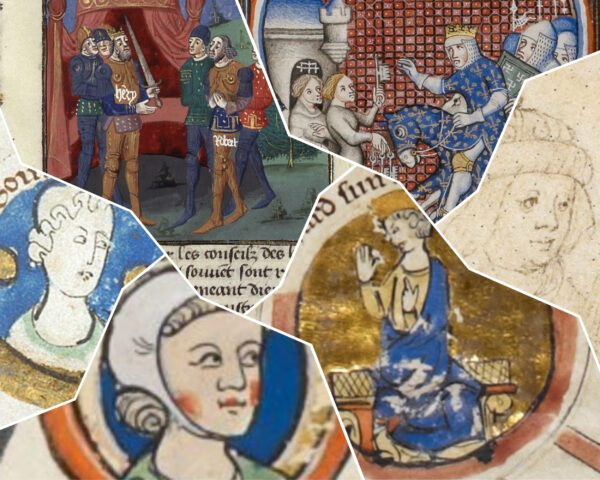
Eleanor Whitfield clutched the worn genealogy chart her grandfather had left her, tracing her finger along the faded ink lines that connected her family to medieval England. “You could have been royalty,” she whispered to herself, studying the name that appeared so tantalizingly close to the throne. Her great-great-grandfather had always claimed their lineage traced back to nobility, but she never imagined how close their ancestors had actually come to wearing the crown.
What Eleanor discovered isn’t unique. Throughout English history, the throne has hung by threads thinner than spider silk, with numerous men coming breathtakingly close to ruling one of the world’s most powerful kingdoms. These near-kings shaped history from the shadows, their stories lost in the shuffle of those who actually claimed the crown.
The medieval period was particularly brutal for royal succession. Unlike today’s clear constitutional monarchy, medieval England operated under complex inheritance laws, political marriages, and the ever-present threat of civil war. One battle, one illness, one political miscalculation could completely reshape the royal family tree.
The Forgotten Princes Who Almost Ruled
Medieval England’s royal succession reads like a Game of Thrones script, filled with unexpected deaths, political betrayals, and men who missed their chance at the crown by mere circumstances. These weren’t distant relatives with weak claims – many were direct heirs who should have ruled by every legal and moral standard of their time.
The most heartbreaking cases involve legitimate heirs who died young, leaving the throne to pass to uncles, cousins, or even usurpers. Others were political victims, eliminated by rivals who saw them as threats to their own ambitions.
The medieval succession system was inherently unstable. A single fever could change the entire course of English history, and it frequently did.
— Professor Margaret Thornton, Medieval Studies, Cambridge University
Some of these men actually held the title of king briefly before losing it through conquest or political maneuvering. Others were named as heirs but never made it to the coronation. Each represents a fascinating “what if” moment that could have dramatically altered British history.
The Complete List of England’s Almost-Kings
Here are the ten men who came closest to wearing the English crown during the medieval period, each with their own tragic or dramatic story of missed opportunities:
| Name | Period | Claim to Throne | What Happened |
|---|---|---|---|
| Prince William Aetheling | 1120 | Heir of Henry I | Died in White Ship disaster |
| Prince Arthur of Brittany | 1203 | Nephew of King John | Murdered by King John |
| Edward the Black Prince | 1376 | Son of Edward III | Died before father |
| Edmund Crouchback | 1296 | Brother of Edward I | Passed over for throne |
| Prince Edward of Lancaster | 1471 | Son of Henry VI | Killed at Battle of Tewkesbury |
| George, Duke of Clarence | 1478 | Brother of Edward IV | Executed for treason |
| Prince Edward V | 1483 | Son of Edward IV | Disappeared in Tower of London |
| Richard, Duke of York | 1483 | Brother of Edward V | Disappeared with brother |
| Perkin Warbeck | 1497 | Claimed to be Richard | Executed as pretender |
| Edmund de la Pole | 1513 | Yorkist claimant | Executed by Henry VIII |
The most tragic stories involve the young princes. Prince William Aetheling’s death in the White Ship disaster of 1120 plunged England into decades of civil war known as The Anarchy. Had he survived, the entire Plantagenet dynasty might never have existed.
When Prince William drowned, Henry I lost not just his son but England’s political stability for the next twenty years. One shipwreck changed everything.
— Dr. James Whitmore, Royal Historical Society
The Political Consequences of Near-Misses
These almost-kings weren’t just historical footnotes – their failures to reach the throne had massive consequences for English society, law, and international relations. When legitimate heirs died or were eliminated, the resulting succession crises often led to civil wars that devastated the country.
The Wars of the Roses, for example, began partly because of disputed claims between different branches of the royal family. Multiple men who should have been king were killed, leading to decades of bloodshed between the Houses of York and Lancaster.
- The White Ship disaster led to 19 years of civil war
- Prince Arthur’s murder justified later rebellions against King John
- The disappearance of the Princes in the Tower created lasting questions about royal legitimacy
- Failed successions often triggered foreign invasions
- Noble families were destroyed supporting rival claimants
Each near-king represented different political factions, religious views, and approaches to governance. Their failures to reach the throne often meant that England developed along completely different lines than it might have otherwise.
We can’t underestimate how different English law, culture, and even language might be if just one or two of these succession crises had gone the other way.
— Professor Sarah McKenzie, Oxford Medieval Institute
How These Stories Still Matter Today
The stories of England’s almost-kings continue to fascinate us because they highlight how fragile political power really is. These men were often better qualified, more popular, or more legitimate than those who actually became king, yet circumstance denied them the throne.
Modern genealogists like Eleanor Whitfield regularly discover family connections to these forgotten figures. DNA testing and improved historical records have revealed that millions of people worldwide can trace their ancestry back to medieval English nobility, including these near-kings.
Their stories also remind us that history isn’t inevitable. The England we know today – with its particular legal system, cultural traditions, and political development – resulted from a series of accidents, murders, and chance events that prevented these men from ruling.
Every family tree tells a story of survival against incredible odds. These almost-kings remind us that our own ancestors overcame similar challenges just to ensure we exist today.
— Dr. Michael Harrison, Institute of Genealogical Studies
The medieval period’s brutal succession system also shaped the constitutional monarchy we see today. The repeated crises caused by unclear succession led to increasingly formal rules about royal inheritance, ultimately creating the stable system Britain uses now.
FAQs
Who was the closest to becoming king without actually being crowned?
Prince Edward V was actually declared king and ruled for 78 days before disappearing in the Tower of London, making him the closest to a full reign.
Did any of these men have stronger claims than the actual kings?
Yes, several had stronger legal claims, particularly Prince Arthur of Brittany, who was the rightful heir before King John seized the throne and had him murdered.
What was the White Ship disaster?
A 1120 shipwreck that killed Prince William Aetheling and about 300 other nobles, leading to a succession crisis that plunged England into civil war for nearly two decades.
Are there any living descendants of these almost-kings?
Yes, many of these men had children or siblings whose bloodlines continue today, and genealogists regularly trace modern families back to these medieval figures.
How did medieval succession laws work?
Medieval England generally followed male primogeniture (oldest son inherits), but political power, military strength, and church support often mattered more than legal rights.
Why were so many potential kings murdered?
Medieval politics were extremely violent, and rival claimants to the throne represented existential threats to sitting monarchs, making elimination seem like political necessity.

Leave a Reply