
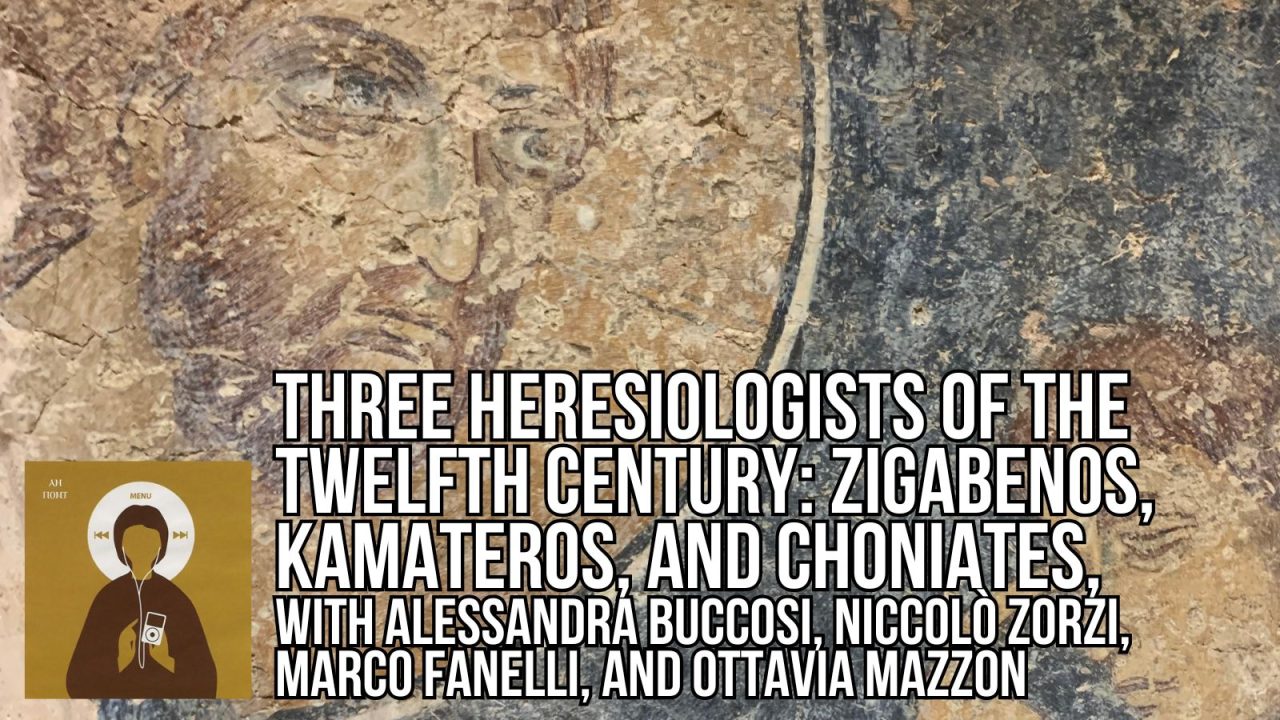
What did it mean to be a heretic in twelfth-century Byzantium — and who got to decide? Those questions, debated in imperial courts and monastery scriptoria nearly a thousand years ago, are now drawing fresh attention from medieval scholars working to bring these obscure but important texts back into the light.
A recent episode of the academic podcast Byzantium & Friends, hosted by Anthony Kaldellis, a Professor at the University of Chicago, gathered four researchers to discuss three major heresiological works from the twelfth century. The conversation centered on figures most people outside Byzantine studies have never heard of: Zigabenos, Kamateros, and Choniates — writers who spent their careers cataloguing, condemning, and arguing against religious deviation in the medieval Greek-speaking world.
The episode is notable not just for its scholarly depth but for what it represents: a coordinated effort across multiple Italian universities to publish, study, and even exhibit these texts in a museum setting — making centuries-old theological disputes accessible to a broader public.
Who Were the Twelfth-Century Heresiologists?
Heresiology — the systematic study and refutation of heresy — was a serious intellectual enterprise in medieval Byzantium. These were not fringe writers. They were scholars working close to imperial and ecclesiastical power, tasked with defining the boundaries of Orthodox Christian belief at a time when those boundaries were fiercely contested.
The three figures at the center of this project each produced significant texts in the twelfth century, a period of remarkable intellectual activity in the Byzantine world. Their works addressed both internal Christian disputes and the broader religious tensions of the era, including conflicts with Rome and encounters with other faiths and sects.
Euthymios Zigabenos, Andronikos Kamateros, and Niketas Choniates each approached heresiology from a distinct angle, and the researchers involved in this project have each taken responsibility for one author — a division of labor that reflects both the complexity of the material and the collaborative nature of the scholarship.
The Scholars and Their Research
The podcast episode brought together researchers from two Italian universities with deep expertise in Byzantine studies. Their roles and institutional affiliations are as follows:
| Researcher | Institution | Focus |
|---|---|---|
| Alessandra Bucossi | Ca’ Foscari University of Venice | Andronikos Kamateros; project co-organizer |
| Niccolò Zorzi | University of Padua | Project co-organizer and discussant |
| Marco Fanelli | Ca’ Foscari University of Venice | Euthymios Zigabenos |
| Ottavia Mazzon | University of Padua | Niketas Choniates |
The episode structure reflects the collaborative nature of the project. Kaldellis first leads a broader conversation with Bucossi and Zorzi about the challenges of publishing and studying these texts. That discussion is then followed by individual presentations: Fanelli on Zigabenos, Bucossi on Kamateros, and Mazzon on Choniates.
Why Publishing These Texts Is Harder Than It Sounds
One of the more practical threads running through the episode is the challenge of getting medieval heresiological texts properly published and studied. These are not works that have been continuously read, translated, and commented on like more famous Byzantine sources. Some have received limited critical attention; others exist in manuscript form that requires significant philological work before they can be made widely accessible.
This is where the collaboration between Ca’ Foscari University of Venice and the University of Padua becomes significant. Scholars at both institutions have been working to bring these texts into modern scholarly conversation — editing them, contextualizing them, and now presenting them to the public through a museum exhibition.
The exhibition itself produced an open-access catalogue, which is available online. That decision to make the catalogue freely accessible reflects a broader commitment in the project to reach audiences beyond specialist journals and academic conferences.
From the Archive to the Exhibition Hall
Perhaps the most striking aspect of this project is the museum dimension. Translating twelfth-century Byzantine theological disputes into a format that works for general museum visitors is a genuine curatorial challenge. How do you present a heresiological text — essentially a document designed to define and condemn religious error — in a way that feels meaningful and accessible to someone walking through an exhibition?
The researchers involved have clearly thought carefully about this. The podcast episode specifically addresses how the central concerns of these texts can be presented in a museum exhibition, suggesting that the visual and material culture of Byzantine Christianity offers a way in that pure textual scholarship cannot always provide.
The open-access catalogue associated with the exhibition is a resource for anyone who wants to follow up on the scholarly work behind the displays. It represents a relatively rare example of academic Byzantine research being packaged for a broader audience without sacrificing intellectual rigor.
Why This Moment in Byzantine Studies Matters
Interest in Byzantine intellectual history has been growing steadily in recent years, partly driven by scholars like Kaldellis who have worked to make the field more visible and its sources more accessible. The Byzantium & Friends podcast itself is part of that effort — a long-running series that brings specialist conversations to a general audience through platforms including Podbean, Spotify, and Apple Podcasts.
The focus on heresiology is particularly timely. Religious boundary-drawing, the politics of orthodoxy, and the question of who gets to define legitimate belief are themes that resonate well beyond the medieval Mediterranean. Twelfth-century Byzantine writers were grappling with questions about authority, identity, and difference that remain genuinely difficult — and their methods of argumentation, their rhetorical strategies, and even their anxieties look surprisingly familiar when examined closely.
For scholars, the practical value of this project lies in the editorial and philological work being done on texts that have not always received the attention they deserve. For general readers, the museum exhibition and its open-access catalogue offer a point of entry into a world that is rarely visible outside specialist circles.
Frequently Asked Questions
What is heresiology?
Heresiology is the systematic study and refutation of heresy. In the Byzantine context, it involved cataloguing beliefs deemed contrary to Orthodox Christian teaching and constructing arguments against them.
Who are the three twelfth-century heresiologists discussed in this project?
The three figures are Euthymios Zigabenos, Andronikos Kamateros, and Niketas Choniates, each of whom produced significant heresiological texts in twelfth-century Byzantium.
Where can I access the museum exhibition catalogue?
The open-access catalogue for the museum exhibition organised by the researchers is available online, as noted on the Medievalists.net episode page.
Who hosts the Byzantium & Friends podcast?
The podcast is hosted by Anthony Kaldellis, a Professor at the University of Chicago. It is available on Podbean, Spotify, and Apple Podcasts.
Which universities are involved in this research project?
The project involves scholars from Ca’ Foscari University of Venice and the University of Padua.
Is the full podcast episode publicly available?
Yes, the episode is available through the Byzantium & Friends podcast on Podbean, Spotify, and Apple Podcasts, as listed on the Medievalists.net website.
Leave a Reply