
For decades, ordinary Americans dug through kitchen drawers, emptied piggy banks, and squinted at pocket change chasing the same impossible dream — finding a 1943 copper penny. Now, one of the rarest and most storied coins in American history is heading to auction again, and the collector world is paying close attention.
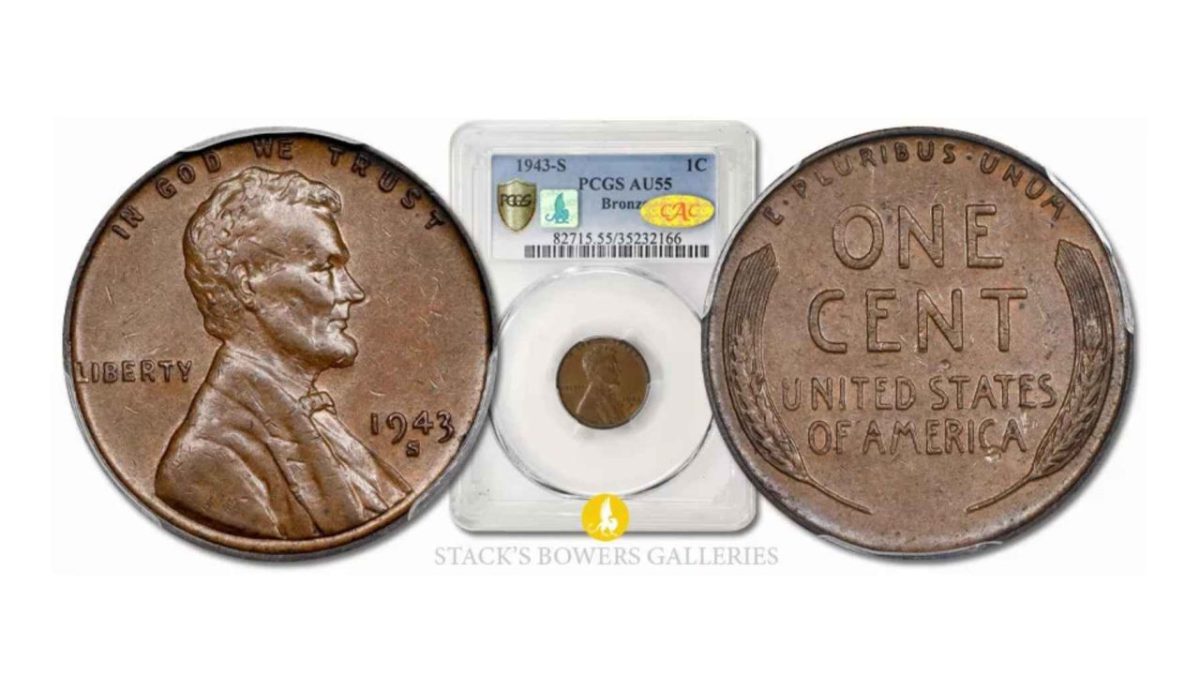
Stack’s Bowers Galleries is offering a 1943-S Lincoln cent struck on a bronze planchet, graded AU-55 by PCGS and approved at the Gold level by CAC. According to Stack’s Bowers, it is the only 1943 bronze cent from any U.S. Mint facility to carry Gold CAC approval — a distinction that sets it apart even within this already extraordinary category of error coins.
The auction was set for March 10. But the significance of this coin goes far beyond a single sale date. This is a piece of American history that turned millions of everyday people into amateur treasure hunters, and that story is still very much alive.
Why a Penny Became One of America’s Most Wanted Coins
The origin of the 1943 bronze cent is rooted in World War II. Copper was classified as a critical war material, needed for ammunition casings, electrical wiring, and military equipment. In response, the U.S. Mint made a dramatic switch in 1943 — instead of the traditional bronze composition, cents that year were struck on zinc-coated steel planchets.
The result was the so-called “steel penny,” a coin that looked noticeably different from its predecessors and has its own collector following today. But here’s where the story gets strange: a small number of bronze planchets from the previous year’s production were left in the coin presses when the switchover happened. A handful of 1943 cents were accidentally struck on those leftover bronze planchets before anyone noticed.
Nobody knows exactly how many of these error coins exist. The number is believed to be extremely small — which is precisely what makes them so valuable and so mythologized. For generations, the 1943 copper penny became the coin everyone hoped to find. It was the numismatic equivalent of a lottery ticket hiding in plain sight.
What Makes This Particular 1943 Bronze Cent Stand Out
Not all 1943 bronze cents are equal. The U.S. Mint operated multiple facilities, and examples from different mint marks carry different levels of rarity and demand. The coin going up for auction through Stack’s Bowers carries an “S” mint mark, meaning it was produced at the San Francisco Mint — one of the facilities that struck cents during the wartime transition.
The grading details matter here. A coin graded AU-55 by PCGS sits in “About Uncirculated” territory — meaning it shows only the slightest signs of wear, with most of its original mint detail intact. That’s a strong grade for a coin of this age and rarity. The added Gold CAC approval signals that the coin not only met PCGS standards but was independently judged to be a premium example within that grade.
Stack’s Bowers has noted that this is the only 1943 bronze cent from any U.S. Mint facility to hold Gold CAC approval. In a category where every known specimen is already a significant rarity, that distinction is meaningful to serious collectors.
| Detail | Specifics |
|---|---|
| Coin Type | 1943-S Lincoln Cent, Bronze Planchet (Error Coin) |
| Auction House | Stack’s Bowers Galleries |
| Auction Date | March 10 |
| PCGS Grade | AU-55 (About Uncirculated) |
| CAC Approval Level | Gold |
| CAC Distinction | Only 1943 bronze cent from any U.S. Mint with Gold CAC approval |
| Mint Facility | San Francisco (S Mint Mark) |
| Why It Was Created | Accidental strike on leftover bronze planchet during WWII copper shortage |
The Treasure Hunt That Gripped a Generation
What separates the 1943 copper penny from most rare coins is the way it captured the imagination of people who had never set foot in a coin shop. For much of the 20th century — particularly during periods when people were sorting through old change, estate collections, or inherited jars of coins — the 1943 copper cent was the coin everyone was quietly hoping to find.
The dream was simple and democratic: these coins had been in circulation. They looked like ordinary pennies. Anyone, in theory, could have one sitting in a forgotten change jar. That possibility, however remote, turned the coin into something more than a collectible. It became a piece of American folklore.
That cultural weight doesn’t disappear when a coin goes to auction. If anything, it amplifies the interest. Collectors who have spent years — sometimes decades — following the history of these coins watch each new sale closely, both for the record it might set and for the reminder of why they got into the hobby in the first place.
What This Sale Means for Coin Collectors and the Market
The reappearance of a top-tier 1943 bronze cent at auction is a significant event in the numismatic calendar. These coins don’t come to market frequently, and when they do, they tend to attract both seasoned collectors and broader media attention — which in turn brings new eyes to the hobby.
The Gold CAC designation adds a layer of credibility and market confidence that matters to buyers at the highest level. CAC, the Certified Acceptance Corporation, operates as an independent quality check on already-graded coins. A Gold approval signals that the coin is not just authentic and correctly graded — it’s considered a premium representative of that grade. For a coin as scrutinized as the 1943 bronze cent, that endorsement carries real weight.
Whether this auction sets a new benchmark or simply reinforces what the market already knows about these coins, the 1943-S bronze cent’s return to the block is a reminder that some stories in American collecting never really go quiet.
Frequently Asked Questions
What is the 1943 copper penny and why is it rare?
The 1943 copper penny is a Lincoln cent accidentally struck on a bronze planchet during World War II, when the U.S. Mint had switched to zinc-coated steel to conserve copper for the war effort. Only a very small number of these error coins exist, making them among the most sought-after coins in American numismatic history.
Which auction house is selling this coin and when?
Stack’s Bowers Galleries listed the coin for auction on March 10.
What grade does this 1943-S bronze cent carry?
The coin has been graded AU-55 by PCGS, which stands for About Uncirculated, and has received Gold-level approval from CAC.
What makes the CAC Gold approval significant?
According to Stack’s Bowers, this is the only 1943 bronze cent from any U.S. Mint facility to carry Gold CAC approval, making it uniquely distinguished even among other known examples of this rare error coin.
Where was this coin minted?
The coin carries an “S” mint mark, indicating it was struck at the San Francisco Mint.
How much will this coin sell for?
A specific sale estimate or result was not confirmed in the available source material at the time of publication.




Leave a Reply