
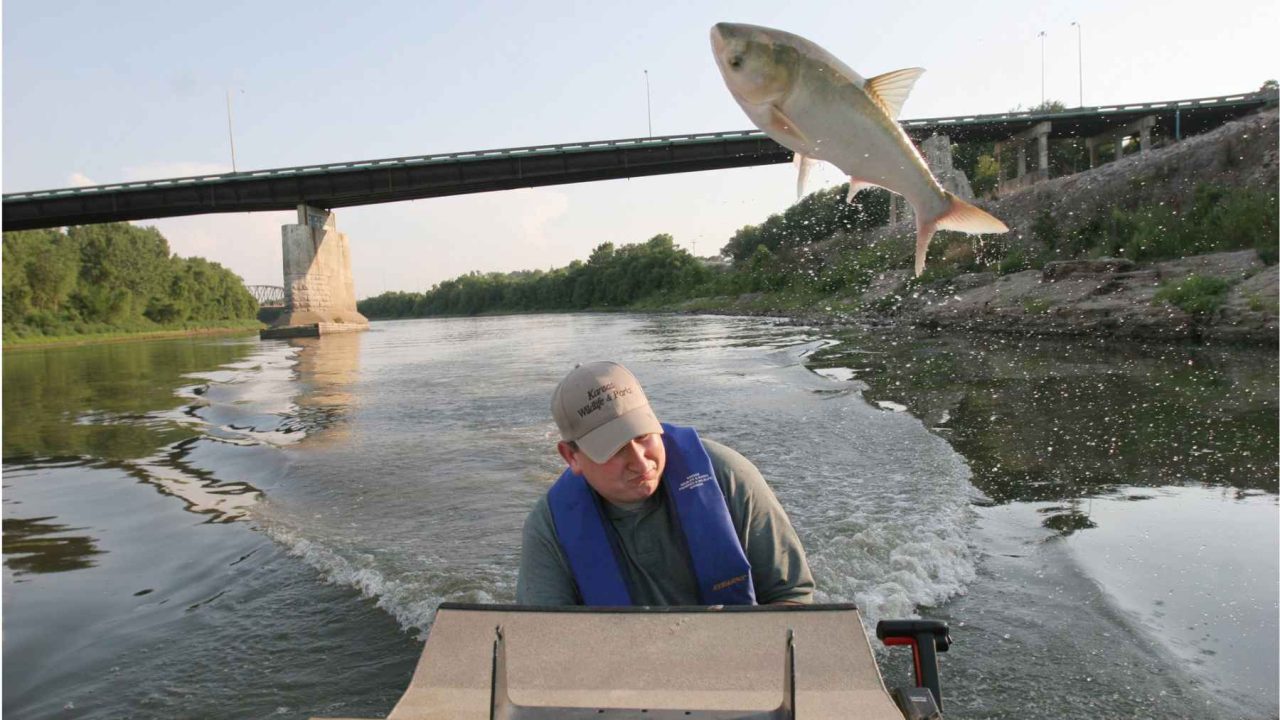
More than 109,000 pounds of invasive fish have been pulled from the Kansas River since 2022 — and the effort is still accelerating. In 2025 alone, biologists hauled out over 36,000 pounds. That is not a fishing story. That is a river system fighting for its life.
What makes this situation particularly striking is where it started. The fish now overwhelming the Kansas River were not accidents of nature or stowaways on cargo ships. They were brought here deliberately, as a solution to an environmental problem. Decades later, that solution has become one of the most difficult invasive species challenges in American waterways.
The Kansas Department of Wildlife and Parks has been running removal operations for four years, using electric stunning equipment to pull silver, bighead, and black carp from the river in enormous quantities. Officials say the work is essential — not just for the ecosystem, but for the safety of anyone who spends time on the water.
How a 1970s Fix Became a Modern Ecological Crisis
Asian carp were introduced to the United States from Asia in the 1970s with a straightforward purpose: to help clean aquaculture ponds. They are efficient filter feeders, capable of consuming large quantities of plankton and organic matter, which made them attractive to fish farmers looking for a natural, low-cost way to manage water quality.
The problem is that rivers do not stay contained. Over time, carp escaped from ponds into connected waterways and began spreading through the Mississippi River basin. What had worked in a controlled setting became catastrophic in the wild, where the fish had no natural predators, abundant food, and the ability to reproduce rapidly.
By the time scientists and wildlife managers understood the scale of what was happening, Asian carp had established themselves across vast stretches of American river systems. The Kansas River became one of many battlegrounds.
What Asian Carp Actually Do to a River
The ecological damage caused by Asian carp goes deeper than simply competing with native fish for space. These species feed heavily on plankton — the microscopic plants and animals that form the base of the aquatic food chain. For many native fish, plankton is a critical food source during the first months of life.
When carp consume plankton in large quantities, they effectively starve juvenile native fish before those fish ever have a chance to establish themselves. Studies in both North America and Europe have shown that carp stirring up sediments and devouring plankton can fundamentally transform a water body, turning clear, plant-rich environments into murky, degraded ones.
There is also a direct safety concern for people. Silver carp, in particular, are known to leap out of the water when startled by boat motors. A large fish launching itself into the air at speed poses a genuine physical danger to boaters, kayakers, and anyone else on the water during busy summer weekends — which is part of why Kansas officials have framed population reduction as both an ecological and a public safety priority.
The Numbers Behind the Kansas River Removal Campaign
The scale of what biologists are dealing with becomes clearer when the removal data is laid out directly. The Kansas Department of Wildlife and Parks has been tracking results since the campaign intensified in 2022.
| Year | Approximate Pounds Removed |
|---|---|
| 2022–2024 (combined) | ~73,000 lbs |
| 2025 | ~36,000 lbs |
| Total (2022–2025) | ~109,000 lbs |
The three species targeted by the Kansas campaign each present their own challenges:
- Silver carp — known for leaping behavior that creates hazards for boaters
- Bighead carp — heavy plankton consumers that compete directly with native species
- Black carp — feed on mollusks, threatening native mussel and snail populations
The removal method — stunning fish with electricity and then hauling them out — may sound severe, but wildlife managers and the broader science community regard it as a necessary intervention in a river system that has been overwhelmed by fast-breeding invaders.
Who Bears the Real Cost of This Invasion
The most direct impact falls on native fish species that cannot compete with carp for food and habitat. When plankton disappears, the fish that depend on it in their early life stages struggle to survive. Over time, that pressure reshapes the entire ecological balance of a river.
Boaters and recreational water users face a different kind of consequence. The leaping behavior of silver carp has been well documented across multiple U.S. river systems, and the Kansas River is no exception. Officials have specifically cited the risk of carp striking boaters as one of the motivations for the removal program, particularly given how heavily the river is used during summer months.
The broader region also has a stake in the outcome. Healthy river systems support fishing, tourism, and the ecological services — clean water, flood management, wildlife habitat — that communities depend on even when they do not think about them directly.
What the Campaign Is Trying to Achieve
The stated goal of the Kansas removal effort is not total eradication, which wildlife managers generally acknowledge is not realistic for an established invasive species. Instead, officials say the aim is to reduce carp populations enough to give native fish a realistic opportunity to recover and to lower the risk of injury to people on the water.
Whether four years of intensive removal can shift the balance in a meaningful way remains an open question. The fish reproduce quickly, and the broader Mississippi River basin continues to serve as a reservoir from which carp can recolonize upstream areas. Sustained, long-term effort appears to be the only realistic path forward.
What started as a practical solution to a pond management problem in the 1970s has become a decades-long lesson in the unpredictable consequences of moving species across ecosystems. The Kansas River is one of many places still paying that bill.
Frequently Asked Questions
Why were Asian carp brought to the United States in the first place?
They were introduced from Asia in the 1970s to help clean aquaculture ponds, where their plankton-feeding behavior was seen as a low-cost, natural water management tool.
How did Asian carp end up in the Kansas River?
The fish escaped from aquaculture ponds into connected waterways over time and spread throughout the Mississippi River basin, eventually reaching the Kansas River.
How much fish has been removed from the Kansas River?
Biologists from the Kansas Department of Wildlife and Parks have removed approximately 109,000 pounds of invasive Asian carp since 2022, with more than 36,000 pounds removed in 2025 alone.
Which species of Asian carp are being targeted in Kansas?
The removal campaign targets three species: silver carp, bighead carp, and black carp, each of which causes different types of ecological damage.
Are Asian carp dangerous to people?
Silver carp are known to leap out of the water when startled by boat motors, posing a physical safety risk to boaters and recreational water users — a concern Kansas officials have cited alongside the ecological damage.
Can Asian carp be fully eliminated from the Kansas River?
Total eradication of an established invasive species is generally not considered realistic; the goal of the Kansas campaign is to reduce populations enough to allow native fish to recover and lower safety risks for people on the water.



Leave a Reply