
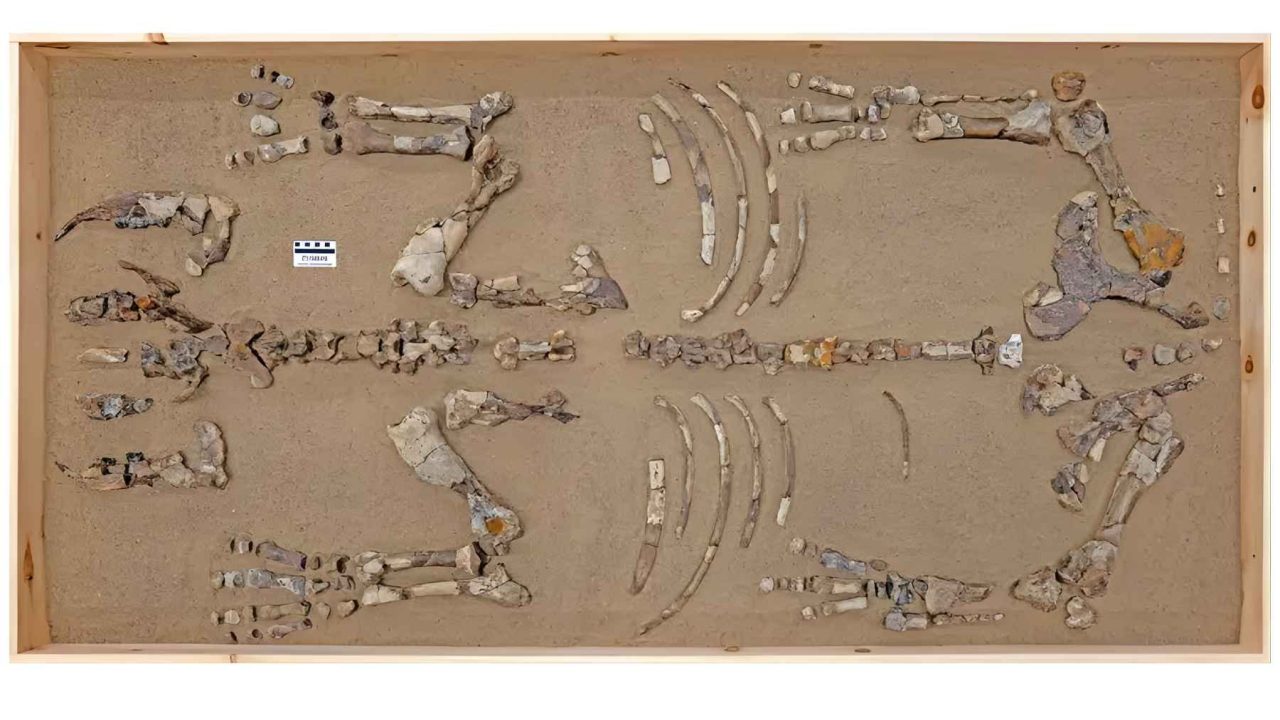
Twenty-three million years ago, a rhinoceros was walking across what is now the Canadian High Arctic — and scientists are only just finding out about it. The discovery, described in a study published in Nature Ecology & Evolution on October 28, 2025, has introduced the world to a creature that has no business existing where it was found, at least according to everything researchers thought they knew about ancient animal migration.
The fossil was recovered from Devon Island in Nunavut, one of the most remote and desolate places on Earth. It belongs to a newly named species called Epiaceratherium itjilik — and that species name is not accidental. “Itjilik” means “frosty” or “frost” in Inuktitut, the language of the Inuit people who have long inhabited the Arctic. It is a fitting tribute to an animal that apparently had no problem living near the top of the world.
But this is not just a story about a strange fossil in an unexpected place. It is a story about what that fossil tells us — about ancient corridors between continents, about how land mammals spread across the globe, and about how the Arctic itself may have functioned very differently from what scientists once assumed.
The Most Northerly Rhino Ever Found
The specimen comes from fossil-rich lake sediments inside Haughton Crater on Devon Island. Dating to the Early Miocene, roughly 23 million years ago, it holds the record as the most northerly rhinoceros species ever described. That alone would make it remarkable. What makes it genuinely significant is what it implies about the routes ancient animals used to move between landmasses.
Epiaceratherium itjilik was relatively small and slight for a rhino. Researchers describe it as similar in size to a modern Indian rhinoceros, though without a horn. Examination of its teeth — moderate wear suggesting the animal was in early to mid adulthood when it died — gave scientists a window into its age and life stage at the time of death.
The genus Epiaceratherium was previously known from Europe and Asia. Finding a member of that group this far north and this far into North America is the kind of discovery that forces paleontologists back to the drawing board on what they thought they understood about Miocene-era biogeography.
Why the Arctic Was a Corridor, Not a Wall
The bigger scientific story here is not just about rhinos. It is about what this discovery suggests regarding the North Atlantic and the passageways available to land mammals during the Early Miocene.
For a long time, the prevailing assumption was that the North Atlantic represented a significant barrier to the movement of large land animals between the Old World and the New. The Devon Island rhino challenges that view directly. Researchers argue that the North Atlantic may have remained passable for land mammals much longer than previously believed — and that the Arctic, rather than acting as an impenetrable wall, may have functioned as an active corridor when environmental conditions aligned in the right way.
That reframing matters enormously. If animals like Epiaceratherium itjilik were making their way this far north and west during the Early Miocene, it opens up serious questions about which other species may have used similar routes — and which migration pathways scientists may have been underestimating or overlooking entirely.
Key Facts About Epiaceratherium itjilik
| Feature | Detail |
|---|---|
| Species name | Epiaceratherium itjilik |
| Meaning of “itjilik” | “Frosty” or “frost” in Inuktitut |
| Age of fossil | Approximately 23 million years old (Early Miocene) |
| Discovery location | Haughton Crater, Devon Island, Nunavut, Canada |
| Study published | Nature Ecology & Evolution, October 28, 2025 |
| Size comparison | Similar to a modern Indian rhinoceros, but hornless |
| Estimated life stage at death | Early to mid adulthood (based on tooth wear) |
| Significance | Most northerly rhino species ever described |
- The genus Epiaceratherium was previously known only from Europe and Asia
- The fossil was recovered from ancient lake sediments, not permafrost
- Devon Island is part of Nunavut, Canada’s northernmost territory
- The find directly challenges long-held assumptions about Early Miocene migration routes
What This Means for How We Understand Ancient Migration
Paleontology rarely delivers clean, simple answers — and this discovery is no exception. The presence of a European and Asian genus this deep into the North American Arctic at 23 million years ago raises more questions than it immediately resolves.
Researchers now have to consider seriously how Epiaceratherium itjilik got there. Did it cross via a land bridge that connected landmasses during periods of lower sea levels? Did it travel through a high-latitude corridor that remained open longer than scientists had modeled? The evidence from Devon Island points toward the Arctic having been a functional passageway — not a frozen dead end — at least during parts of the Early Miocene.
The implications ripple outward. If the migration models for rhinos need to be revised, so might the models for other large mammals of the same era. The Arctic fossil record is notoriously difficult to build because of the harshness of the environment and the remoteness of the sites. Every find from places like Devon Island carries outsized weight precisely because there are so few of them.
What Researchers Are Looking At Next
The October 2025 study formally names and describes the species, but the work it generates is really just beginning. Scientists studying Miocene-era mammal distribution now have a confirmed data point in the High Arctic that was not there before — and that data point demands explanation.
Future paleontological work in Nunavut and other high-latitude sites could either support or complicate the corridor hypothesis. If more species from European or Asian lineages turn up in similar deposits, the case for a long-open northern passage becomes significantly stronger. If Epiaceratherium itjilik remains an outlier, researchers will need to explain how a single genus made it this far while others apparently did not.
Either way, the “polar rhino” of Devon Island has already done something important: it has made scientists look at the ancient Arctic with fresh eyes, and it has made the map of prehistoric animal migration a great deal more complicated — and more interesting — than it was before.
Frequently Asked Questions
What is Epiaceratherium itjilik?
It is a newly described rhinoceros species from the Early Miocene, approximately 23 million years old, discovered on Devon Island in Nunavut, Canada. It is currently the most northerly rhino species ever found.
What does the name “itjilik” mean?
The species name “itjilik” means “frosty” or “frost” in Inuktitut, the language of the Inuit people of the Canadian Arctic.
Did this rhino have a horn?
Based on
Where exactly was the fossil found?
The fossil was recovered from fossil-rich lake sediments inside Haughton Crater on Devon Island, part of Canada’s Nunavut territory.
Why does this discovery matter scientifically?
It challenges the assumption that the North Atlantic was a firm barrier to land mammal migration during the Early Miocene, suggesting the Arctic may have served as an active corridor between continents far longer than previously believed.
Where was the study published?
The study describing the new species was published in Nature Ecology & Evolution on October 28, 2025.



Leave a Reply