
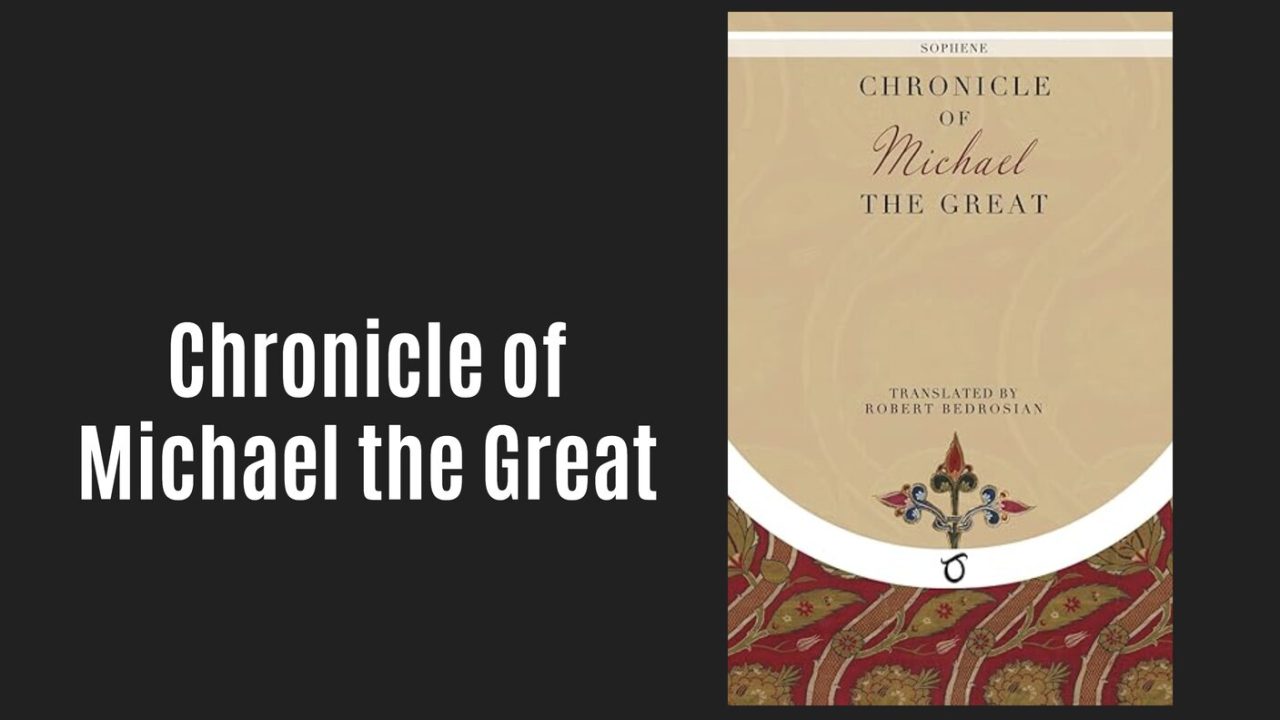
Professor Elena Vasquez had been waiting for this moment for nearly a decade. When the package arrived at her university office last Tuesday morning, her hands trembled slightly as she unwrapped the fresh translation of Michael the Great’s Chronicle. “This is like finding a missing piece of history,” she whispered to her research assistant, carefully turning the pages of what many scholars consider one of the most important medieval texts most people have never heard of.
For centuries, this massive historical work remained locked away in ancient Syriac, accessible only to a handful of specialized scholars. Now, thanks to new publishing efforts, English-speaking readers can finally dive into this treasure trove of medieval knowledge that spans continents and cultures.
What Makes Michael the Great’s Chronicle So Special
Michael the Syrian, known as Michael the Great, wasn’t just any medieval chronicler. This 12th-century Syriac Orthodox patriarch created something extraordinary: a comprehensive world history that bridges East and West like no other medieval text.
His Chronicle covers an incredible span of time, from the creation of the world according to biblical tradition all the way to his own era in the 1190s. But what sets this work apart isn’t just its scope—it’s Michael’s unique perspective as someone living at the crossroads of civilizations.
This chronicle gives us insights into medieval life that you simply can’t find anywhere else. Michael had access to sources that have been lost to time, making his work invaluable for understanding the medieval world.
— Dr. James Morrison, Medieval Studies, Oxford University
Unlike many Western chroniclers of his time, Michael wrote from the perspective of the Eastern Christian world. This means readers get a completely different view of major historical events, including the Crusades, the rise of Islam, and the Byzantine Empire’s struggles.
The Chronicle of Michael the Great, translated into English by Robert Bedrosian as a composite of the two main Classical Armenian editions of the text. Out today in paperback and hardback! pic.twitter.com/hiLLgjlrIN
— Sophene (@SopheneBooks) March 4, 2025
The Chronicle is massive—we’re talking about a work that spans multiple volumes and covers everything from political upheavals to natural disasters, from religious conflicts to cultural exchanges. Michael didn’t just record events; he analyzed them, offering insights that modern historians still find valuable today.
Inside the Chronicle: What You’ll Actually Find
When you crack open Michael the Great’s Chronicle, you’re not getting a dry recitation of dates and battles. This medieval masterpiece is packed with vivid details about daily life, political intrigue, and cultural observations that bring the past to life.
Here’s what makes this chronicle a must-read for anyone interested in medieval history:
- Unique Eastern Perspective: Most medieval chronicles we have come from Western Europe. Michael offers the Eastern Christian viewpoint on major events
- Multilingual Sources: Michael could read Greek, Arabic, and Syriac, giving him access to sources other chroniclers couldn’t use
- Cross-Cultural Insights: Living in a region where Christianity, Islam, and various cultures intersected, Michael provides unparalleled cultural analysis
- Lost Historical Details: Many of Michael’s source materials have since disappeared, making his Chronicle our only window into certain historical events
- Personal Observations: As a church leader, Michael witnessed many events firsthand and provides eyewitness accounts
The Chronicle covers major historical periods and events that shaped the medieval world:
| Time Period | Key Topics Covered | Unique Insights |
|---|---|---|
| Early Christian Era | Rise of Christianity, Church councils | Eastern Orthodox perspective on theological disputes |
| Islamic Conquest Period | Muslim expansion, Christian-Muslim relations | Firsthand accounts from Christian communities under Islamic rule |
| Crusades Era | Military campaigns, political alliances | How the Crusades affected Eastern Christians caught in the middle |
| 12th Century | Contemporary politics, natural disasters | Eyewitness accounts and personal experiences |
Michael’s Chronicle is like having a conversation with someone who lived through some of history’s most dramatic moments. His writing style is engaging, and his insights are often surprisingly modern in their analytical approach.
— Dr. Sarah Chen, Byzantine History Institute
Why This Matters for Modern Readers
You might wonder why a medieval chronicle written nearly 900 years ago should matter to you today. The answer lies in how Michael’s work fills crucial gaps in our understanding of the past and offers perspectives that remain relevant.
For history enthusiasts, the Chronicle provides access to stories and viewpoints that have been largely missing from popular historical narratives. Most medieval history taught in schools focuses heavily on Western European perspectives. Michael’s work offers a completely different lens through which to view the same time period.
The Chronicle is particularly valuable for understanding the complex relationships between different religious and cultural groups during the medieval period. Michael lived in a world where Christians, Muslims, and various ethnic groups had to coexist, negotiate, and sometimes conflict with each other. His observations provide insights into how different communities navigated these relationships.
What strikes me most about Michael’s writing is how he manages to be both a product of his time and surprisingly objective in his analysis. He offers criticism and praise across religious and cultural lines in ways that feel very modern.
— Professor David Khalil, Middle Eastern Studies
For scholars and students, the Chronicle opens up new research possibilities. Many graduate students are already using newly available translations to explore questions that couldn’t be properly investigated before due to language barriers.
The work also provides valuable context for understanding current Middle Eastern dynamics. The regions Michael wrote about—modern-day Syria, Turkey, Iraq, and surrounding areas—remain geopolitically important today. His observations about cultural tensions, religious differences, and political alliances offer historical perspective on contemporary issues.
Getting Your Hands on the Chronicle
The recent publication efforts have made Michael the Great’s Chronicle more accessible than ever before. Several academic publishers have released new translations and editions, making this historical treasure available to English-speaking readers for the first time in comprehensive form.
Most university libraries now carry recent editions, and several versions are available for purchase through major book retailers. Some publishers have even released digital editions, making it easier to search through the massive text for specific topics or time periods.
The demand for these new translations has been incredible. We’re seeing interest not just from academics, but from general readers who want to explore medieval history from a fresh perspective.
— Maria Rodriguez, Academic Publishing Specialist
For readers new to medieval chronicles, starting with specific sections rather than attempting to read the entire work from beginning to end might be the best approach. Many modern editions include helpful introductions and notes that provide context for Michael’s references and observations.
FAQs
Who was Michael the Great?
Michael the Syrian was a 12th-century Syriac Orthodox patriarch who lived from 1126 to 1199 and created one of the most comprehensive medieval world histories.
Why is his Chronicle considered so important?
It provides a rare Eastern Christian perspective on medieval events and preserves information from sources that have since been lost to history.
How long is the Chronicle?
The complete work spans multiple volumes and covers world history from biblical times to the late 12th century, making it one of the longest medieval chronicles ever written.
Do I need to be a scholar to read it?
While the Chronicle is detailed and comprehensive, modern translations include helpful notes and introductions that make it accessible to general readers interested in medieval history.
What languages was it originally written in?
Michael wrote primarily in Syriac, but he incorporated information from Greek, Arabic, and other sources, making his work uniquely multilingual for its time.
Where can I find recent translations?
Most university libraries carry new editions, and several are available through academic publishers and major book retailers, including digital versions.
Leave a Reply