
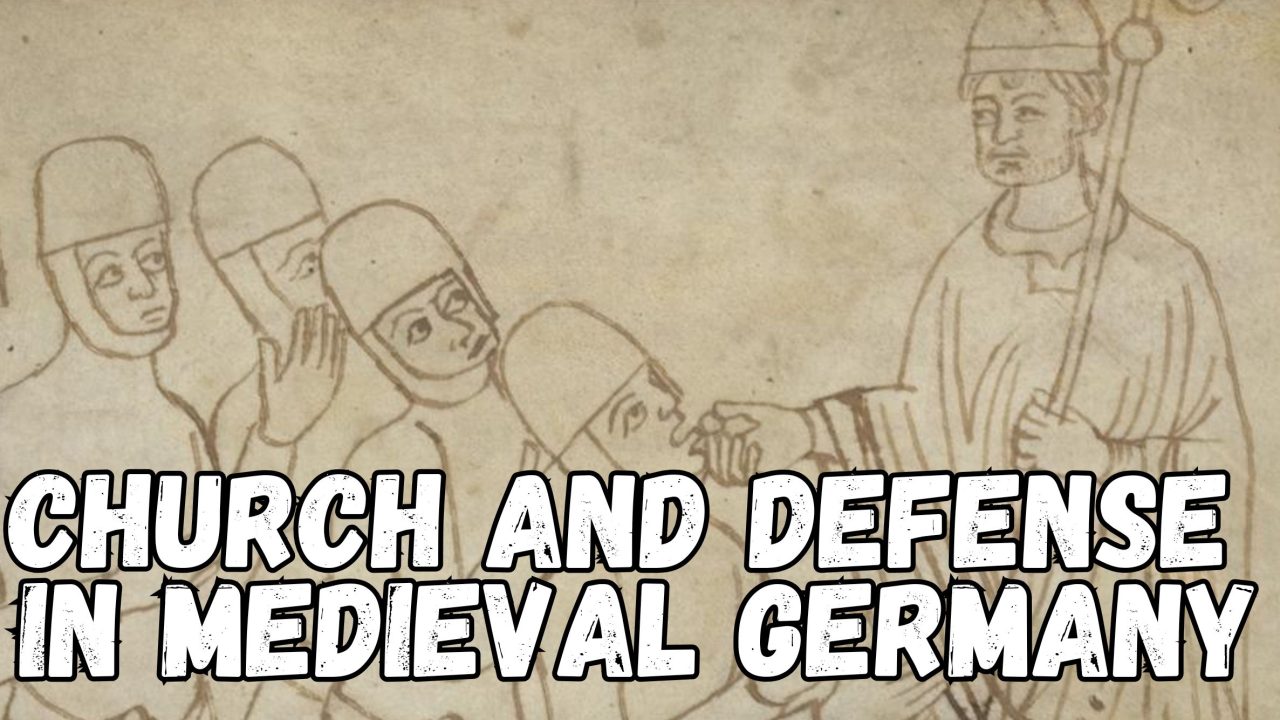
What do a bishop, an abbot, and a medieval fortress have in common? In tenth-century Germany, quite a lot — and historians are only now beginning to fully understand why.
A growing body of scholarship is reshaping how we think about the medieval church’s role in military affairs. While most people associate medieval clergy with prayer, scripture, and ceremony, research into the Ottonian dynasty of Germany reveals a strikingly different picture: bishops and abbots were routinely tasked with organizing fortifications and mobilizing local communities to defend the realm. These weren’t rogue warrior-priests acting on personal ambition. They were doing it on behalf of the king.
The story of how religious leaders became defense administrators in medieval Germany cuts against almost every assumption modern readers bring to the subject — and it opens a window onto how power, faith, and military necessity were deeply intertwined in the early medieval world.
How the Ottonian Kings Built a Defense System Around the Church
The Ottonian dynasty, which ruled the German kingdom from the early tenth century onward, inherited a governing model from their Carolingian predecessors. Central to that model was a royal monopoly on the right to build and license fortifications. No castle, no wall, no defensive structure could go up without the king’s say-so.
This mattered enormously for how defense actually worked on the ground. Because the Ottonian kings couldn’t be everywhere at once — and because a professional standing army in the modern sense simply didn’t exist — they needed trusted local agents to manage territorial security. The church stepped into that gap.
Bishops and abbots, already embedded in local communities and possessing significant administrative resources, became the king’s men when it came to organizing defenses. This wasn’t incidental. According to research by historian David Bachrach, prelates in Ottonian Germany frequently shouldered the responsibility for overseeing territorial defense — not out of personal military ambition, but as an extension of royal authority.
This is a crucial distinction. Earlier scholarship on warrior-prelates tended to focus on clerics who led armies or fought in battles for their own political interests. What Ottonian Germany reveals is something different: a systematic, institutionalized role for church leaders in the service of the ruler’s defensive strategy.
Why This Chapter of History Has Been Overlooked
The scholarly gap here is real and acknowledged. As Bachrach notes, while recent decades have produced detailed studies of bishops in Aragon, Castile, England, Poland, and Italy — clerics leading forces on campaign or even fighting directly in combat — the defensive dimension of the church’s military role has received far less attention.
Scholars like Friedrich Prinz and Leopold Auer did important earlier work on warrior prelates serving in the armies of Charlemagne and Otto the Great. But even that scholarship largely focused on offensive military participation rather than the quieter, less dramatic work of fortification oversight and community mobilization.
The result is what researchers describe as a significant lacuna — a gap in our understanding of how medieval kingdoms actually kept themselves safe. Defense, it turns out, was often less about pitched battles and more about walls, local organization, and administrative networks. And in Ottonian Germany, the church ran much of that network.
The Scope of Clerical Involvement in Medieval German Defense
To understand the scale of what bishops and abbots were doing, it helps to think about what “defending the realm” actually meant in practical terms during this period.
- Fortification oversight: Church leaders were entrusted with managing the construction and maintenance of defensive structures in their territories.
- Community mobilization: Bishops and abbots organized local populations — the people living on church lands — to contribute to defensive efforts.
- Royal representation: Acting as agents of the king, prelates enforced the crown’s monopoly on fortification rights at the local level.
- Territorial administration: The church’s existing administrative infrastructure made it a natural vehicle for coordinating defense across large areas.
| Role | Who Was Involved | Primary Function |
|---|---|---|
| Fortification oversight | Bishops, abbots | Managing defensive construction on behalf of the king |
| Community mobilization | Bishops, abbots, abbesses | Organizing local populations for defensive purposes |
| Royal licensing enforcement | Bishops | Upholding the crown’s monopoly on building fortifications |
| Territorial defense coordination | Prelates generally | Administering security across church-held territories |
Notably, abbesses also appear in this picture — a reminder that women in positions of religious authority were not entirely removed from the practical demands of medieval governance and security.
What This Tells Us About Medieval Power and the Church
The Ottonian case reveals something fundamental about how power worked in the early medieval world. The line between religious authority and political authority was not just blurry — it was deliberately engineered to be that way.
Kings relied on bishops and abbots because the church had what the crown often lacked at the local level: administrative reach, community trust, economic resources, and literate personnel capable of managing complex logistics. Handing defense responsibilities to prelates wasn’t a sign of royal weakness. It was a rational strategy for projecting royal power into territories the king could not personally oversee.
At the same time, this arrangement placed enormous practical burdens on church leaders. Organizing fortifications and mobilizing communities required time, money, and political skill — resources that had to be balanced against the spiritual and ecclesiastical duties that were, in theory, a prelate’s primary concern.
What Researchers Are Still Working to Understand
The scholarship on this topic is still developing. Bachrach’s work points to Ottonian Germany as a particularly important case study, but the broader question of how church leaders contributed to territorial defense — as opposed to offensive military campaigns — remains underexplored across medieval Europe.
Future research is likely to examine how the Ottonian model compared to practices in other kingdoms, how individual bishops and abbots navigated the tension between royal service and ecclesiastical independence, and what the physical evidence of fortifications built under clerical oversight can tell us about how defense actually functioned on the ground.
For now, what’s clear is that the medieval church was not simply a spiritual institution standing apart from the rough business of war and governance. In Ottonian Germany, it was woven into the very fabric of the kingdom’s survival.
Frequently Asked Questions
Who were the Ottonian kings, and when did they rule?
The Ottonian dynasty ruled the German kingdom following the Carolingian period. Their practices in church-state relations and defense administration are the focus of this area of scholarship.
Why were bishops and abbots given defense responsibilities in medieval Germany?
According to the research, Ottonian kings entrusted bishops and abbots with organizing fortifications and mobilizing local communities because these church leaders had the administrative resources and local presence needed to manage territorial defense on behalf of the crown.
Did abbesses also play a role in medieval German defense?
Yes —
Which scholars have studied warrior-prelates in medieval Europe?
What countries have been studied for bishops’ military roles beyond Germany?
Recent scholarship cited in the source has examined the military roles of bishops in Aragon, Castile, England, Poland, and Italy.
What is the main gap in existing scholarship that this research addresses?
Researchers have noted that while clerical participation in offensive military campaigns has been well studied, the role of prelates in territorial defense — particularly in service of the ruler rather than their own interests — has been largely missing from both older and newer scholarship.

Leave a Reply