
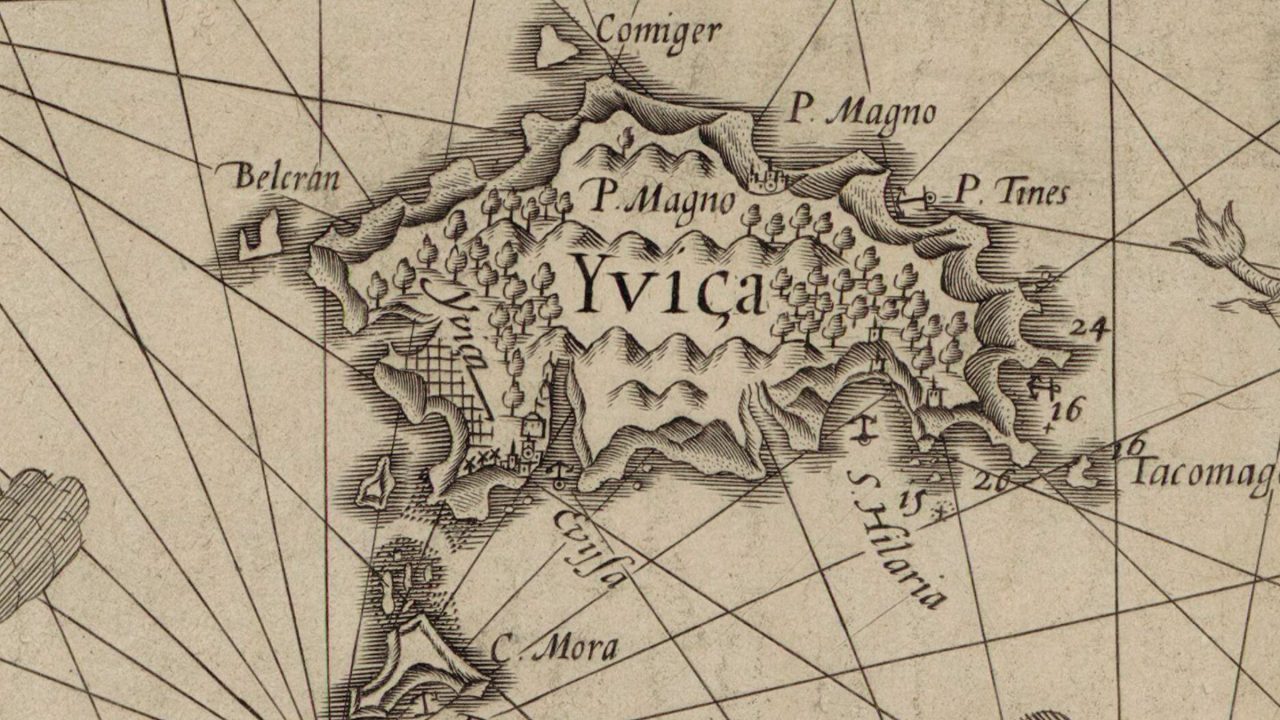
Thirteen skeletons buried in a medieval Muslim cemetery on Ibiza have just rewritten what historians thought they knew about life on this small Mediterranean island more than a thousand years ago. Ancient DNA extracted from those remains tells a story that no written record could — one of extraordinary human movement, connecting a tiny island outpost to a world stretching from Europe deep into sub-Saharan Africa.
The findings, published in Nature Communications, are drawing serious attention from researchers who study the medieval Islamic world. What they reveal about Ibiza’s population between the tenth and twelfth centuries is far more surprising than anyone expected.
Most people today think of Ibiza as a party destination. In the Middle Ages, it was something else entirely — a crossroads.
How a Small Island Became Part of a Global Network
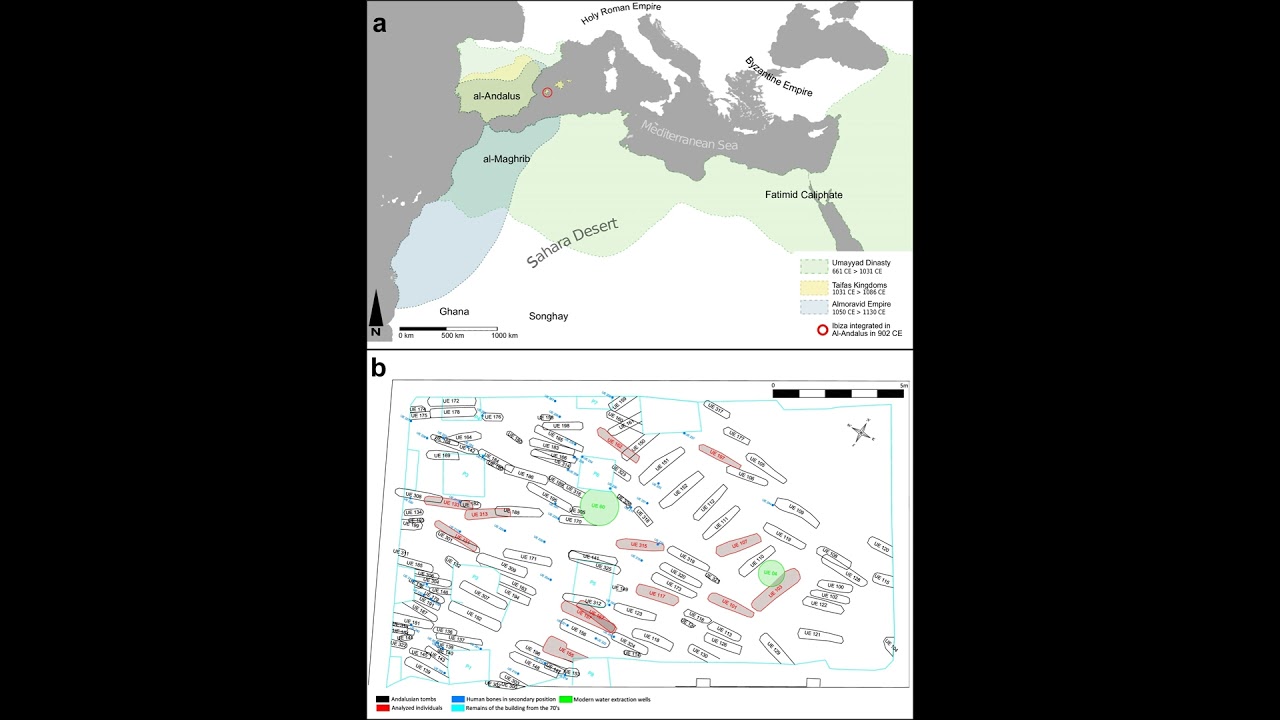
Ibiza entered the Islamic world in 902, when it was conquered by the Umayyad Emirate of Córdoba. Settlement followed quickly, within little more than a single generation, and by the twelfth century the island had grown into a modest but functioning urban centre within al-Andalus — the Arabic name for Muslim-controlled Iberia.
Its position mattered enormously. Sitting along key maritime routes, Ibiza was not some forgotten outpost at the edge of the known world. It was a node in a living network that connected the Iberian Peninsula, North Africa, and the broader Mediterranean. Ships passed through. People arrived and stayed. Communities formed from populations that had originated in places very far apart.
That geographic reality is exactly what the DNA evidence now confirms — and quantifies in ways that are genuinely striking.
What the DNA Study Actually Found
Researchers analysed genetic material from 13 individuals buried in the Maqbara of Madina Yabisa, a Muslim cemetery discovered in Ibiza town. The site originally held around 125 burials. Those interred were laid according to Islamic customs — positioned on their right side and oriented toward Mecca, typically in simple graves consistent with the religious practices of the period.
The cemetery dates to between the tenth and twelfth centuries, placing these individuals squarely within the era of Umayyad and post-Umayyad rule over the island.
The genetic results revealed a population that was anything but homogeneous. The individuals showed ancestry connections reaching across a remarkably wide geographic range — from Europe to North Africa and even into the Sahel region of sub-Saharan Africa. This was not a settled, locally-rooted community that had lived on the island for generations. It was, genetically speaking, a meeting point.
| Detail | Information |
|---|---|
| Cemetery name | Maqbara of Madina Yabisa |
| Number of individuals analysed | 13 |
| Original cemetery size | Approximately 125 burials |
| Date range of burials | 10th to 12th centuries |
| Year Ibiza entered Islamic world | 902 (conquered by Umayyad Emirate of Córdoba) |
| Ancestry connections identified | Europe, North Africa, and the Sahel |
| Study published in | Nature Communications |
Why This Discovery Changes the Picture of Medieval Ibiza
Before this study, the assumption about medieval Ibiza was fairly straightforward — a small island on the periphery of al-Andalus, inhabited largely by settlers from the Iberian Peninsula and North Africa. The genetic evidence challenges that picture directly.
The presence of ancestry linked to the Sahel region — the broad belt of land south of the Sahara — is particularly significant. It points to connections that extended well beyond the Mediterranean world that historians typically focus on when studying medieval Iberia. Trade networks, migration patterns, and the movement of people across vast distances appear to have touched even this relatively small island community.
Researchers argue the diversity uncovered reflects centuries of migration, trade, and cultural exchange — not just a single wave of settlers arriving after the 902 conquest, but an ongoing flow of people arriving from multiple directions across the medieval period.
For historians of the medieval Islamic world, this matters because it reinforces a broader point: al-Andalus was not a closed society. It was deeply embedded in long-distance networks that moved goods, ideas, and people across continents. Ibiza, precisely because of its maritime position, may have been more exposed to that mobility than its size would suggest.
The Part of This Story Most Reports Are Missing
What makes this study methodologically valuable is that it uses the bodies themselves as the historical record. Written sources from medieval Ibiza are sparse. The island was not a major administrative centre, and the documentary record left behind is thin compared to larger cities in al-Andalus.
Ancient DNA fills that gap in a way that no amount of archival research can. The bones do not lie about where a person’s ancestors came from. And in this case, they are telling a story of remarkable human mobility across what was, in medieval terms, an enormous geographic range.
The burial customs observed at the site — Islamic in practice, with individuals oriented toward Mecca — also confirm that this was a genuinely Muslim community, not a mixed or ambiguous one. The people buried here were part of the Islamic world, even as their genetic origins stretched across multiple continents.
What Comes Next for This Research
The study is part of a growing body of ancient DNA research that is reshaping how scholars understand the medieval Mediterranean. Similar work has been carried out at other sites across Iberia and North Africa, and each new dataset adds resolution to a picture that was previously drawn almost entirely from texts and archaeology.
Future research at the Maqbara of Madina Yabisa and comparable sites across the Balearic Islands could expand the sample size well beyond 13 individuals, potentially clarifying which ancestry patterns were consistent across the population and which reflect individual migration stories. Whether the remaining burials at the site will be subject to further genetic analysis has not yet been confirmed.
What is already clear is that medieval Ibiza was far more connected to the wider world than its size and historical profile would suggest — and that the people buried in its cemeteries carried that global story in their DNA.
Frequently Asked Questions
When did Ibiza become part of the Islamic world?
Ibiza was conquered by the Umayyad Emirate of Córdoba in the year 902, with settlement following within about a generation.
Where was the medieval cemetery located?
The cemetery, known as the Maqbara of Madina Yabisa, was discovered in Ibiza town and originally contained around 125 burials.
How many individuals were included in the DNA study?
Researchers analysed genetic material from 13 individuals buried at the site between the tenth and twelfth centuries.
What regions did the ancestry of these individuals connect to?
The DNA evidence revealed connections to Europe, North Africa, and the Sahel region of sub-Saharan Africa.
Where were the study’s findings published?
The research was published in Nature Communications.
Were the individuals buried according to Islamic customs?
Yes — those interred at the site were laid on their right side and oriented toward Mecca, consistent with Islamic burial practices of the period.
Leave a Reply