
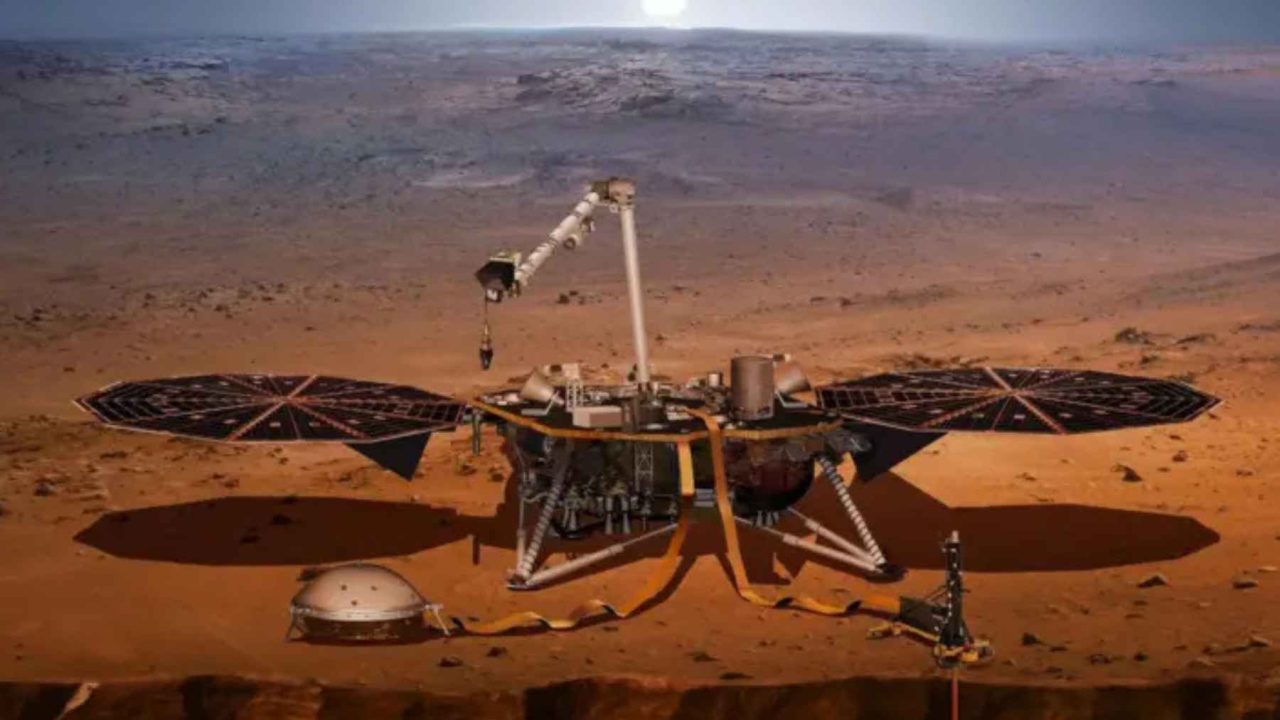
During a season when Mars was supposed to be holding its water safely underground, something unexpected happened. A short-lived but intensely dusty storm sent water vapor surging to altitudes of 60 to 80 kilometers above the Martian surface — reaching up to ten times the usual amount at those heights. And it didn’t stay local. The excess moisture spread rapidly around the entire planet.
That discovery, made by an international team led by scientists at the Instituto de Astrofísica de Andalucía (IAA-CSIC) and the University of Tokyo, is raising serious questions about how well we actually understand Mars’s water cycle — and how fast the planet may be losing what little water it has left.
The finding matters not just for planetary science. Understanding how Mars lost its water is directly tied to understanding whether it ever supported life, and whether it could support future human missions. This latest observation suggests the planet’s water loss may be more erratic — and more dramatic — than anyone expected.
What the Spacecraft Actually Captured
The storm occurred during Martian Year 37, specifically during northern summer — a period that climate models had long treated as relatively calm and stable for Mars’s water budget. Northern summer was considered a “safe” season because the air is typically colder and cleaner, conditions that cause water to freeze into clouds rather than escape upward into the atmosphere.
That assumption turned out to be wrong, at least on this occasion.
Three separate spacecraft caught the event in action: the ExoMars Trace Gas Orbiter, NASA’s Mars Reconnaissance Orbiter, and the Emirates Mars Mission (EMM). Together, their instruments watched water vapor climb far higher than expected over high northern latitudes, then disperse globally in a rapid spread that researchers had not anticipated during this season.
The result was striking. Hydrogen escape to space — the process by which Mars gradually bleeds water into the void — jumped by approximately two and a half times compared with the same season in previous years. In straightforward terms, the planet briefly opened a much wider drain on its remaining water supply.
Why This Particular Storm Was So Unusual
Dust storms on Mars are not rare. The planet experiences them regularly, and scientists have known for some time that large regional or global dust storms can warm the atmosphere and lift water vapor to high altitudes where it becomes vulnerable to solar radiation and escapes as hydrogen.
What made this event different was the timing. It happened during a season when that kind of disruption was not supposed to occur. The northern summer period had been treated in climate models as a window of relative safety — a time when Mars was not expected to be losing significant amounts of water to space.
The storm challenged that assumption directly. Even a short-lived, localized dust event during an otherwise calm season proved capable of triggering a substantial spike in water loss. That has significant implications for how scientists model Mars’s long-term water history.
Key Data From the Discovery
| Detail | Finding |
|---|---|
| Event period | Martian Year 37, northern summer |
| Water vapor altitude reached | 60 to 80 kilometers above the surface |
| Water vapor increase at altitude | Up to ten times the usual amount |
| Hydrogen escape rate increase | Approximately 2.5 times compared to same season in prior years |
| Spacecraft that observed the event | ExoMars Trace Gas Orbiter, Mars Reconnaissance Orbiter, Emirates Mars Mission |
| Research institutions leading the study | IAA-CSIC (Spain) and University of Tokyo (Japan) |
- The storm was described as short-lived but highly dusty
- Water vapor spread rapidly around the entire planet after the initial surge
- The event occurred at high northern latitudes before dispersing globally
- Northern summer had previously been modeled as a stable, low-loss season for Martian water
What This Means for Mars’s Vanishing Water
Mars today is a cold, dry desert. But the evidence etched into its surface — ancient riverbeds, lake basins, mineral deposits that only form in the presence of liquid water — tells a very different story about its past. Billions of years ago, Mars almost certainly had liquid water on its surface. That water is now gone, and scientists have spent decades trying to understand exactly how and how quickly it disappeared.
The leading explanation involves a process called atmospheric escape. Over time, solar radiation breaks water molecules in the upper atmosphere apart into hydrogen and oxygen. The hydrogen, being extremely light, escapes into space. Do that enough times over enough years, and an entire ocean can vanish.
What this new research suggests is that the pace of that loss may not be as steady or predictable as models assumed. If short-lived dust storms during supposedly “safe” seasons can spike hydrogen escape by two and a half times, then the total amount of water Mars has lost over its history — and the speed at which it lost it — may need to be recalculated.
For researchers planning future crewed missions to Mars, the findings also carry a practical edge. Any long-duration human presence on Mars would depend partly on accessing whatever water remains. Understanding how and when that water moves — and escapes — is essential planning information.
What Researchers Are Watching Next
The three-spacecraft observation network that captured this event represents a significant improvement in Mars monitoring capability. Having multiple orbiters from different space agencies — European, American, and Emirati — watching the planet simultaneously allowed scientists to track the water vapor as it moved from a regional surge to a global spread in real time.
Researchers will likely be looking closely at whether similar short-lived storms during northern summer produce comparable spikes in water escape, or whether the Martian Year 37 event was an outlier. If it turns out that even minor storms during calm seasons can meaningfully accelerate water loss, the implications for understanding Mars’s long-term climate evolution are significant.
The study adds to a growing body of evidence that Mars’s atmosphere is more dynamically unpredictable than early models suggested — and that the planet’s remaining water may be more vulnerable than previously thought.
Frequently Asked Questions
What caused the sudden burst of water vapor on Mars?
A short-lived but intensely dusty storm during Martian Year 37 lofted water vapor far higher than expected during northern summer, a season previously considered stable for the planet’s water budget.
How high did the water vapor travel?
Instruments detected water vapor surging to altitudes of approximately 60 to 80 kilometers above the Martian surface, reaching up to ten times the usual concentration at those heights.
Which spacecraft observed the event?
Three orbiters captured the data: the ExoMars Trace Gas Orbiter, NASA’s Mars Reconnaissance Orbiter, and the Emirates Mars Mission.
How much did hydrogen escape increase during the event?
Hydrogen escape to space increased by approximately two and a half times compared with the same season in previous Martian years.
Who led the research behind this discovery?
The study was led by scientists at the Instituto de Astrofísica de Andalucía (IAA-CSIC) in Spain and the University of Tokyo in Japan.
Does this change what we know about Mars losing its water?
It strongly suggests that water loss on Mars may be more erratic and unpredictable than climate models assumed, particularly because this spike occurred during a season previously thought to be safe from significant atmospheric water escape.


Leave a Reply