
Of all the figures in the Christian tradition, few have haunted the Western imagination quite like Judas Iscariot. His name has become a synonym for betrayal itself — and yet, according to scholarship on medieval thought, the Middle Ages understood him in a far more complicated, and more unsettling, way than we do today.
For modern audiences, Judas is reduced to a single act: the kiss. That one gesture in the Garden of Gethsemane has come to define him entirely. But medieval theologians, writers, and spiritual thinkers were far more preoccupied with what happened after the betrayal — with his despair, his self-condemnation, and his refusal to seek forgiveness. That distinction, scholars argue, is what made Judas so morally powerful in medieval culture.
Researcher Lorris Chevalier has examined how medieval writers transformed this brief biblical figure into one of the era’s most complex moral myths — not simply a villain, but something closer to a tragic anti-hero whose story carried urgent warnings for every Christian soul.
Why Judas Fascinated the Medieval Mind
The medieval Church was deeply interested in the mechanics of sin and salvation. Where did a soul go wrong? What separated the damned from the redeemed? Judas offered a uniquely troubling case study — because his failure was not, strictly speaking, the betrayal itself.
As Chevalier’s research makes clear, medieval theologians drew a sharp and deliberate contrast between Judas and Saint Peter. Peter, after all, had also failed Christ — denying him three times on the night of his arrest. By any measure, that was a serious act of cowardice and betrayal. And yet Peter is venerated as a saint and the founder of the Church.
The difference, in medieval theological thinking, came down to one thing: what each man did next. Peter wept, repented, and threw himself on divine mercy. Judas, though he confessed his sin with the words peccavi — “I have sinned” — did not seek forgiveness. He despaired. And in medieval Christian thought, despair was not merely a feeling. It was a theological catastrophe, a rejection of God’s capacity to forgive.
That act of closing the door on mercy was considered, in many ways, a greater spiritual failure than the betrayal itself.
The Hanged Man, Not the Betrayer
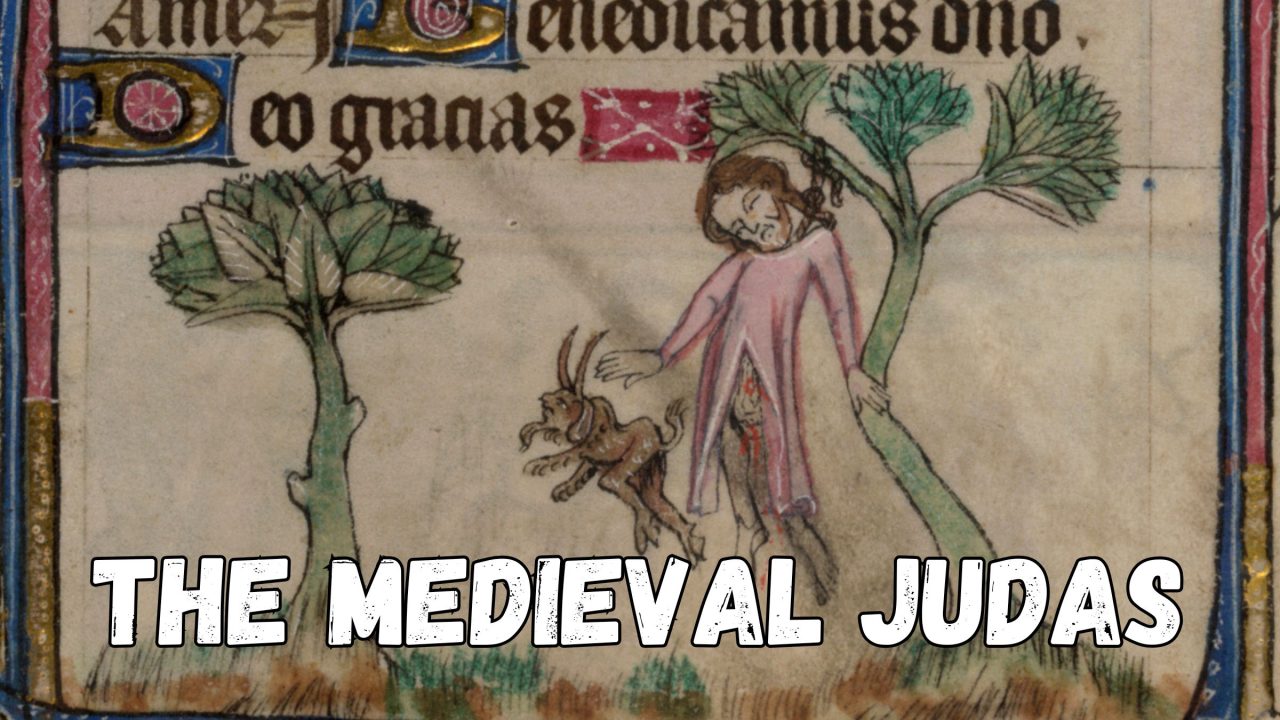
This is where medieval culture diverged most strikingly from our own. Today, the dominant image of Judas is the kiss — the moment of treachery in the garden. In the Middle Ages, the defining image was something far darker: the hanged man.
Chevalier’s work shows that medieval writers and artists returned again and again to the figure of Judas suspended, a symbol not of crime but of irreversible self-condemnation. The hanging represented despair made permanent — a soul that had placed its own judgment above God’s mercy and lost everything as a result.
This shift in emphasis transformed Judas from a simple villain into something more philosophically disturbing. He became a mirror held up to every believer: a warning that sin alone does not damn you, but the refusal to believe in redemption might.
How Medieval Writers Shaped the Judas Myth
The biblical account of Judas is remarkably thin. The Gospels give him very little interiority — we know what he did, but almost nothing of why, or what he truly felt. That silence, paradoxically, made him more useful to medieval writers, not less.
Chevalier notes that the scriptural gaps became narrative opportunities. Medieval authors filled in those silences with elaborated legends, moral allegories, and psychological depth that the original texts simply do not contain. Over centuries, Judas was shaped into a full anti-hero: a figure with recognizable human flaws — envy, despair, existential isolation — whose story carried meaning precisely because it resonated with ordinary moral experience.
This process of mythologizing a biblical figure was not unusual in the Middle Ages. But Judas received particular attention because the theological stakes of his story were so high. He embodied a specific, nameable sin — desperatio, despair — that medieval spiritual writers considered one of the most dangerous traps a Christian soul could fall into.
| Figure | Failure | Response | Medieval Outcome |
|---|---|---|---|
| Saint Peter | Denied Christ three times | Repented and sought mercy | Venerated as a saint |
| Judas Iscariot | Betrayed Christ | Confessed but despaired; did not seek forgiveness | Symbol of damnation and irreversible loss |
Envy, Despair, and the Architecture of a Moral Myth
Medieval writers did not simply portray Judas as evil. They gave him a psychological profile — one built around envy and despair in particular. These were not random character flaws. Both were recognized categories in medieval moral theology, and both were considered especially corrosive to the soul.
Envy corrodes from the inside, turning a person against the good they see in others. Despair closes off the future entirely, making redemption feel impossible. Together, they create a figure who cannot receive grace even when it is offered — and that, Chevalier’s research suggests, is precisely what made Judas so compelling as a moral symbol.
He was not a monster. He was a recognizable human being whose ordinary spiritual failures led, step by step, to an irreversible end. That is what made him frightening to a medieval audience — and what kept writers returning to his story for centuries.
Why This Medieval Reimagining Still Resonates
Chevalier observes that the fascination with Judas has never really stopped. Writers, novelists, and dramatists continue to reinterpret his life and motives in the twenty-first century, suggesting that the questions his story raises — about guilt, forgiveness, and the point of no return — remain very much alive.
What medieval culture contributed to this ongoing conversation was a specific and sophisticated framework: the idea that Judas’s real tragedy was not what he did to Christ, but what he refused to believe about mercy. That reframing turned a biblical footnote into one of the most psychologically rich figures in Western moral tradition.
The Middle Ages, in other words, did not simply retell the Judas story. They rebuilt it from the ground up — and the version they built has proved remarkably durable.
Frequently Asked Questions
How did medieval thinkers view Judas differently from modern audiences?
Medieval culture focused less on the kiss of betrayal and more on Judas’s despair and refusal to seek forgiveness, making the hanged man — not the betrayer — the defining image of his story.
Why was despair considered so serious in medieval Christian thought?
Despair was seen as a theological failure — a rejection of God’s capacity to forgive — which medieval writers considered potentially more damning than the original sin itself.
What separated Judas from Saint Peter in medieval theology?
Both men failed Christ, but Peter repented and sought divine mercy while Judas confessed his sin yet turned to despair instead of forgiveness, which is why Peter was venerated and Judas became a symbol of damnation.
Why did medieval writers expand so much on the biblical account of Judas?
The Gospels provide very little detail about Judas’s inner life or motives, and medieval authors used those scriptural gaps as opportunities to build elaborate legends and moral allegories around his figure.
Who is Lorris Chevalier?
Lorris Chevalier is the researcher whose work, as featured on Medievalists.net, examines how medieval writers transformed Judas Iscariot into a complex moral and mythical anti-hero.
What sins were most associated with Judas in medieval writing?
Medieval writers most frequently associated Judas with envy and despair — two recognized categories in medieval moral theology that were seen as especially destructive to the soul’s relationship with God.

Leave a Reply