
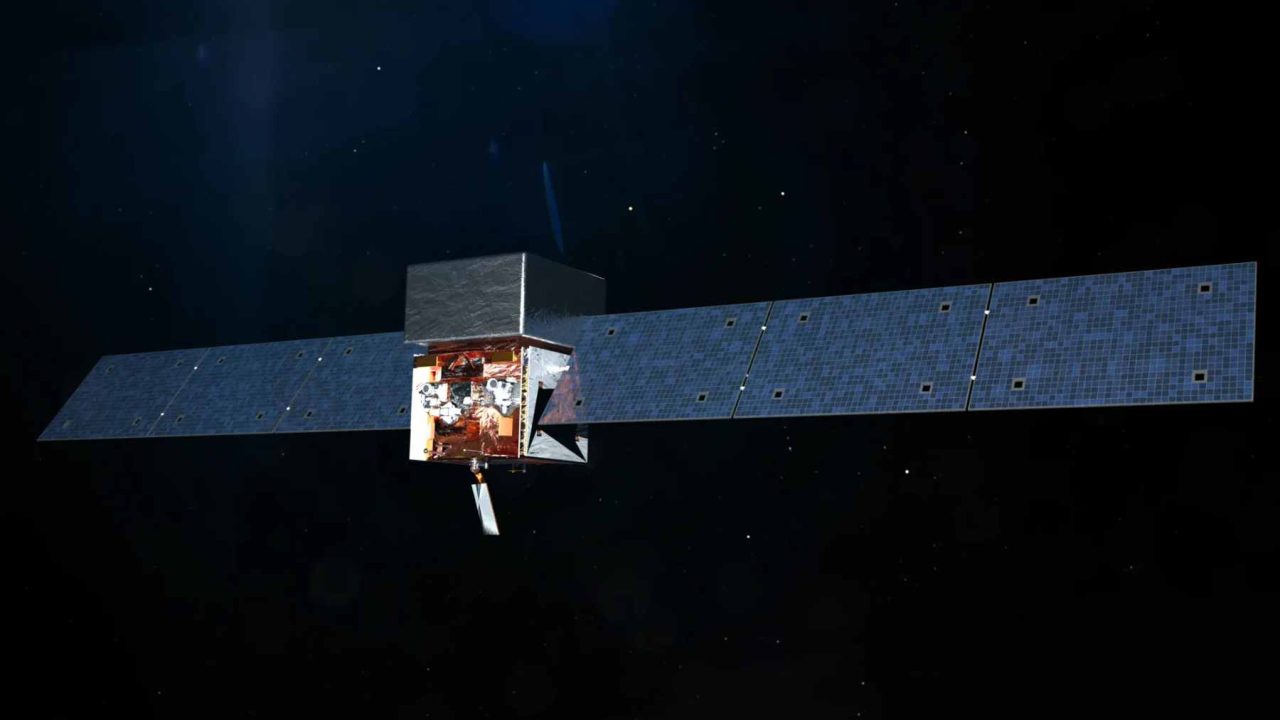
A cosmic explosion detected in July 2025 lasted for roughly 25,000 seconds — nearly seven full hours — making it the longest gamma-ray burst ever recorded by astronomers. That single number rewrites what scientists thought they knew about some of the most violent events in the universe.
The event, officially named GRB 250702B, didn’t just nudge the record forward. It shattered it. The previous record holder, GRB 111209A, had held the title for years with a duration of around 15,000 seconds. GRB 250702B ran for nearly twice as long — and the leading explanation for how that happened is extraordinary: a black hole may have been consuming a companion star from the inside out.
For most people, gamma-ray bursts are distant, abstract phenomena. But for the astronomers who study them, events like this are rare windows into the extreme physics that shape how stars are born, evolve, and die across the cosmos. This one kept researchers on edge for the entire duration — watching, measuring, and trying to make sense of something they had never quite seen before.
What a Gamma-Ray Burst Actually Is — and Why This One Is Different
Gamma-ray bursts are intense flashes of high-energy radiation. They are powered by jets of matter moving at nearly the speed of light, and they are typically triggered by one of two scenarios: a massive star collapsing under its own gravity, or two dense stellar remnants colliding and merging.
Most bursts fall into one of two categories. Short bursts last less than two seconds and are generally linked to colliding neutron stars. Long bursts last more than two seconds and are associated with the collapse of massive stars. A typical long burst runs out of energy in tens of seconds. Even an unusually extended one might stretch to a few minutes.
Seven hours is in a different category entirely. GRB 250702B didn’t just break the record — it exposed a potential mechanism that astronomers are still working to understand. The current leading hypothesis is that the burst was powered by a black hole actively feeding on a companion star, with the star’s material being drawn in and converted into the jets that produce the gamma-ray emission. That process, if confirmed, would represent a fundamentally different engine than what drives most gamma-ray bursts.
The Numbers Behind GRB 250702B
The data collected from multiple space-based detectors paints a striking picture when placed alongside what scientists previously considered exceptional.
| Event | Duration (seconds) | Notable Detail |
|---|---|---|
| Typical long gamma-ray burst | Tens of seconds | Standard stellar collapse |
| GRB 111209A (previous record) | ~15,000 seconds | Former longest burst on record |
| GRB 250702B (new record) | ~25,000 seconds | Possible black hole feeding event |
Key characteristics of GRB 250702B based on available source data:
- Duration of approximately 25,000 seconds — roughly seven hours of active gamma-ray emission
- Data gathered from several space-based detectors working in combination
- Duration nearly twice as long as the previous record holder
- Proposed mechanism: a black hole consuming a companion star from within
- Classified under the broader category of long gamma-ray bursts, though far outside the typical range
Why the “Black Hole Eating a Star from the Inside” Theory Matters
The phrase sounds almost cinematic, but the science behind it is grounded in real astrophysical processes. The hypothesis being considered is that a black hole, already present inside or forming within a stellar system, began drawing in material from a companion star over an extended period. That sustained feeding process would provide the energy needed to keep the gamma-ray jets active for hours rather than seconds.
If this interpretation holds up, it would mean that GRB 250702B belongs to a rare and poorly understood subclass of gamma-ray bursts — ones that aren’t simply the product of a single catastrophic collapse, but rather an extended interaction between two objects. That distinction forces astronomers to consider whether other long-duration bursts in the historical record might have had similar origins that were previously overlooked.
Gamma-ray bursts are already among the most energetic events in the known universe. An event that sustains that energy output for seven hours raises serious questions about the upper limits of what these systems can produce — and how long they can stay active.
What This Means for How We Study the Universe
Astronomers have long used gamma-ray bursts as tools to study the distant universe. Because they are so bright, they can be detected across enormous distances, effectively acting as beacons that illuminate the space — and the material — between their origin point and Earth. The longer a burst lasts, the more data scientists can collect about both the event itself and the environment it passes through.
An event like GRB 250702B, lasting nearly seven hours, would have given observatories an unusually long window to gather that kind of data. Scientists note that events like this are among the best available tools for probing how stars live and die far across the cosmos — and a seven-hour example provides a dataset that shorter bursts simply cannot match.
The fact that multiple space-based detectors were involved in capturing GRB 250702B also reflects how modern astronomy handles these fast-moving events. No single instrument catches everything, and combining data from different platforms gives researchers a more complete picture of what happened and when.
What Comes Next in Understanding GRB 250702B
The record has been confirmed, but the interpretation is still being worked through. Scientists are now focused on understanding whether the black hole consumption model fully explains the duration and energy profile of the burst, or whether other mechanisms need to be factored in.
The findings are expected to prompt a reassessment of other ultra-long gamma-ray bursts in the existing record — particularly GRB 111209A, the previous record holder — to determine whether similar dynamics might have been at work in those events as well.
For now, GRB 250702B stands as a stark reminder that the universe still has the capacity to produce phenomena that exceed our best working models. Seven hours of continuous gamma-ray emission was, until recently, simply not in the playbook.
Frequently Asked Questions
What is GRB 250702B?
GRB 250702B is a gamma-ray burst that lasted approximately 25,000 seconds — nearly seven hours — making it the longest gamma-ray burst ever recorded.
How does GRB 250702B compare to previous records?
The previous record holder, GRB 111209A, lasted around 15,000 seconds. GRB 250702B nearly doubled that duration.
What caused GRB 250702B to last so long?
The leading hypothesis is that a black hole was consuming a companion star from the inside, providing a sustained energy source that kept the gamma-ray jets active for hours.
How was GRB 250702B detected?
The event was captured using combined data from several space-based detectors working together to track the burst across its full duration.
Are gamma-ray bursts dangerous to Earth?
Will this discovery change how astronomers classify gamma-ray bursts?
Scientists are now reassessing how ultra-long gamma-ray bursts are understood and categorized, though formal reclassification has not yet been confirmed in the available source material.


Leave a Reply