
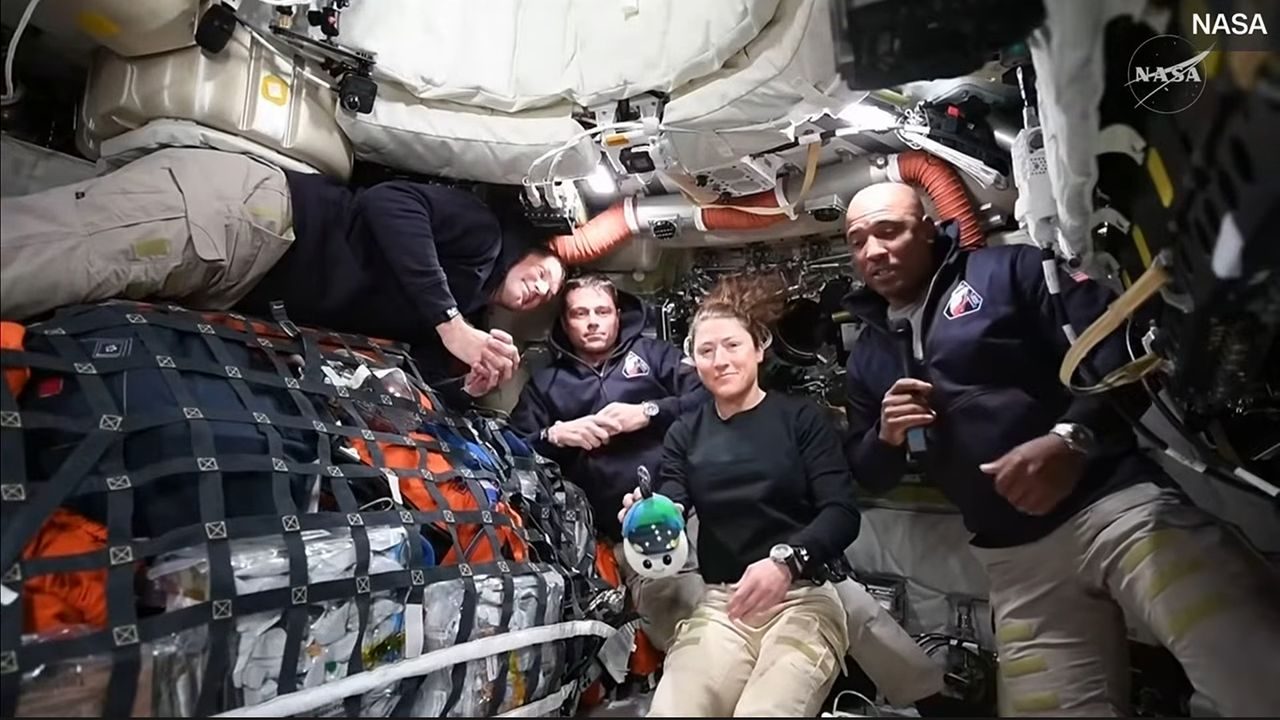
Two days into one of the most ambitious human spaceflight missions in decades, the crew of NASA’s Artemis II capsule sent back their first video messages from space — and the view left them searching for words.
The four astronauts aboard the Orion spacecraft gave the public a rare, unfiltered look at what deep-space travel actually feels like from the inside. And judging by their early dispatches, the experience is every bit as overwhelming as you’d imagine.
NASA astronaut Reid Weisman captured the moment simply:
“You can see the entire globe from pole to pole. It was the most spectacular moment…”
The crew also offered a lighter touch to go along with the awe, signing off with the kind of message that travels well across 200,000 miles of vacuum: “Trust us — you look amazing.”
Who Is Flying on Artemis II — and Why This Mission Is Different
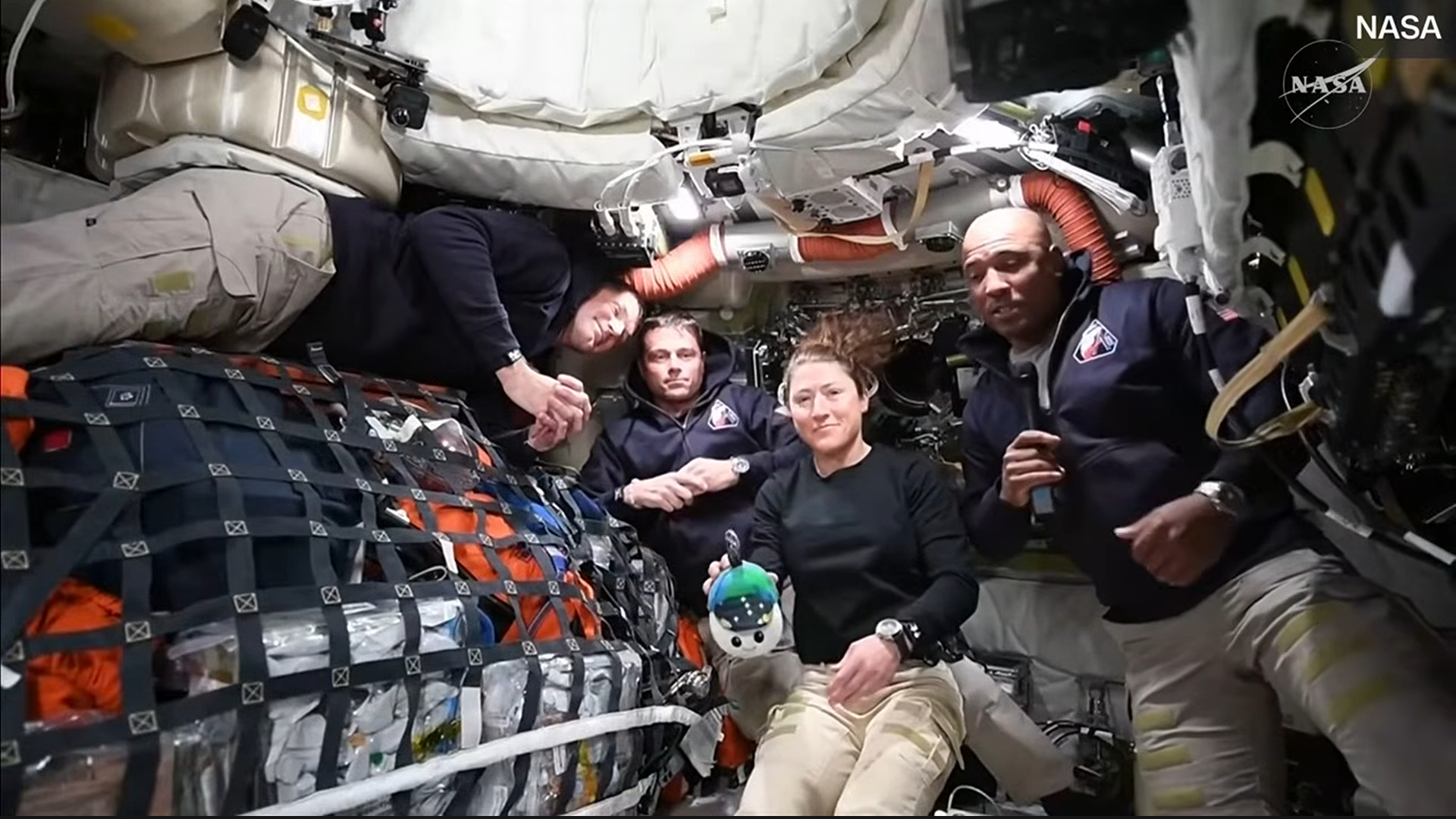
Artemis II is not just another orbital mission. It marks the first time human beings have traveled on a deep-space trajectory aboard the Orion spacecraft, representing NASA’s most significant crewed mission since the Apollo era.
The crew is made up of four astronauts from two countries, bringing together experience from across NASA’s astronaut corps and an international partner for the first time on a lunar-trajectory mission.
| Astronaut | Agency | Role |
|---|---|---|
| Reid Weisman | NASA | Commander |
| Victor Glover | NASA | Pilot |
| Christina Koch | NASA | Mission Specialist |
| Jeremy Hansen | Canadian Space Agency | Mission Specialist |
Jeremy Hansen, representing the Canadian Space Agency, is the first Canadian to travel on a lunar mission. For all four crew members, the journey represents a defining moment — not just personally, but for the future of human exploration beyond low Earth orbit.
What the Crew Saw Through Orion’s Windows
The first video broadcasts from the Artemis II crew came roughly two days into the mission, and the astronauts wasted no time describing what they were witnessing outside the Orion capsule’s windows.
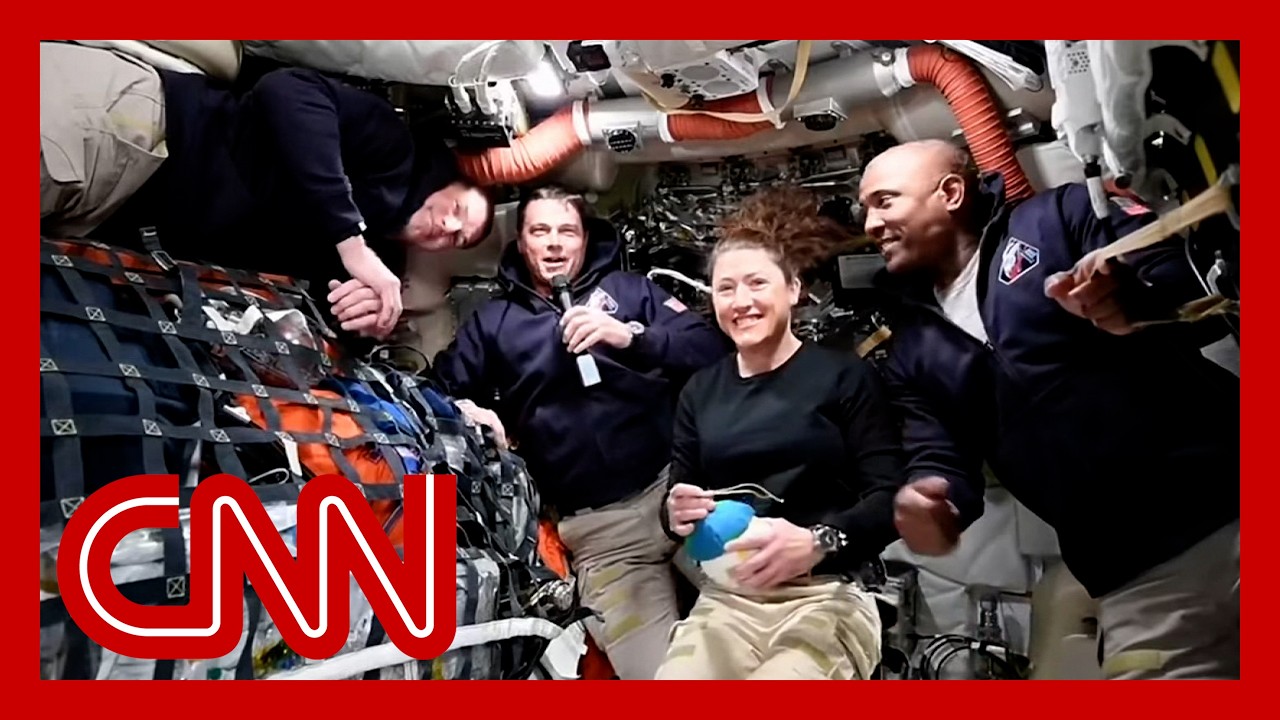

Weisman’s description of seeing the entire Earth from pole to pole in a single glance speaks to something that no photograph fully prepares you for. Astronauts across generations have described a similar effect — the sudden, visceral understanding of just how small and complete our planet looks from the outside. Scientists call it the “overview effect,” and Weisman’s words suggest the Artemis II crew felt it immediately.
The crew’s decision to pair that wonder with humor — reassuring people back home that they “look amazing” — also says something about the tone NASA is setting for this mission. These are not distant figures in helmets. They’re real people, and they want the public along for the ride.
Why Artemis II Matters Beyond the Headlines
It’s easy to read a story like this and think of it as a feel-good space moment. But the stakes behind Artemis II are genuinely significant.
This mission is a critical stepping stone toward Artemis III, which is planned to return humans to the lunar surface for the first time since Apollo 17 in 1972. Artemis II itself does not land on the Moon — its purpose is to test the Orion spacecraft and its systems with a live crew on a lunar flyby trajectory. Every system that works, every piece of data collected, every human response to deep-space conditions feeds directly into the planning for the landing mission that follows.
The inclusion of Christina Koch also carries historic weight. If Artemis III proceeds as planned, Koch is slated to become the first woman to walk on the Moon. Her presence on Artemis II is not symbolic — it’s operational preparation for that mission.
- Artemis II is the first crewed Orion deep-space mission
- The mission follows the uncrewed Artemis I test flight
- All four crew members are making history in different ways
- The mission tests life support, navigation, and crew systems ahead of a lunar landing
- Data and crew feedback from this flight will directly shape Artemis III planning
The Human Side of Deep-Space Travel
What the first crew broadcast made clear is that this mission is being communicated differently than space missions of the past. The astronauts are talking directly to the public, sharing personal reactions, and doing so with warmth and humor rather than technical briefings alone.
That approach matters. Public investment in space exploration — both financial and emotional — tends to follow moments of genuine human connection. The Apollo missions had their “one small step.” Artemis II, it seems, is building its own language for this era: grounded, honest, occasionally funny, and deeply aware that millions of people are watching from the globe the crew can now see all at once.
Whether the mission continues to deliver moments like this first broadcast remains to be seen. But the early signs suggest the Artemis II crew understands their role not just as test pilots and scientists, but as storytellers for a generation that has never seen humans travel this far from Earth.
What Comes Next for the Artemis II Mission
The mission is still in its early stages, with the crew approximately two days in at the time of the first broadcast. The Orion spacecraft will continue on its lunar flyby trajectory, with the crew conducting ongoing system checks and transmitting updates back to Earth.
NASA has not confirmed additional scheduled broadcast times based on the available source material, but the agency has signaled a strong commitment to public engagement throughout the mission. Follow-up crew messages and mission updates are expected as Orion continues its journey.
For now, the world has its first real glimpse of what four people see when they look back at Earth from the edge of deep space. And according to at least one of them, the view from up there is nothing short of spectacular.
Frequently Asked Questions
Who are the astronauts on Artemis II?
The crew consists of NASA astronauts Reid Weisman, Victor Glover, and Christina Koch, along with Canadian Space Agency astronaut Jeremy Hansen.
What did the Artemis II crew say in their first message from space?
NASA astronaut Reid Weisman described being able to see the entire Earth from pole to pole, calling it “the most spectacular moment.” The crew also signed off with the lighthearted message, “Trust us — you look amazing.”
When did the first Artemis II crew broadcast happen?
The first video messages were shared approximately two days into the mission, according to the available reporting.
Victor Glover playing with Rise while the rest of the crew answers questions from the press. pic.twitter.com/Xo47Ir5mkg
— Barry Bonzack (@bonzack) April 3, 2026
“I’m the space plumber, I’m proud to call myself the space plumber.”
Mission specialists like @Astro_Christina train for all roles so they can jump in wherever they’re needed. Sometimes that means fixing vital machinery, like the spacecraft toilet. pic.twitter.com/RGBWkwRgX7
— NASA (@NASA) April 3, 2026
Does Artemis II land on the Moon?
No — Artemis II is a lunar flyby mission designed to test the Orion spacecraft and its systems with a live crew, ahead of the planned Artemis III lunar landing mission.
Is Jeremy Hansen the first Canadian on a lunar mission?
Yes. Jeremy Hansen of the Canadian Space Agency is making history as the first Canadian astronaut to travel on a lunar trajectory mission.
What is the purpose of the Artemis II mission?
Artemis II is primarily a crewed test of the Orion spacecraft on a deep-space trajectory, gathering critical data on life support, navigation, and crew performance that will inform the Artemis III Moon landing mission.



Leave a Reply