
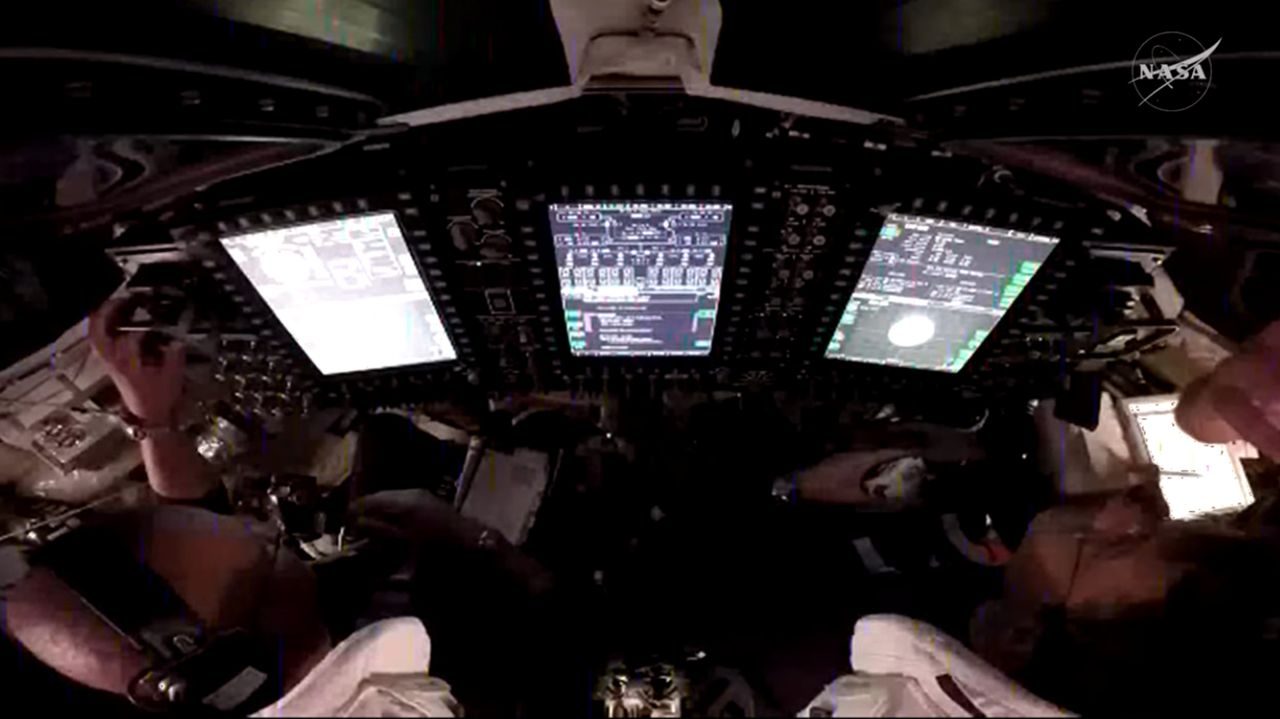
For the first time in more than 50 years, a crewed NASA spacecraft has broken free of Earth’s orbit and is heading toward the moon. That milestone happened Thursday, the day after Artemis II lifted off from Florida’s Space Coast — and it marks one of the most significant moments in human spaceflight since the Apollo era.
The mission launched Wednesday, April 1, at approximately 6:35 p.m. EDT. But the launch itself was only the beginning. The real turning point came Thursday, when the spacecraft executed what engineers call the translunar injection burn — a critical engine firing that pushed Orion out of Earth’s orbit and onto a trajectory toward the moon.
Four astronauts are on board, including NASA astronauts Victor Glover and Reid Wiseman, who were photographed inside the Orion capsule as the mission got underway. If everything goes according to plan, the crew will reach the moon in roughly four days.
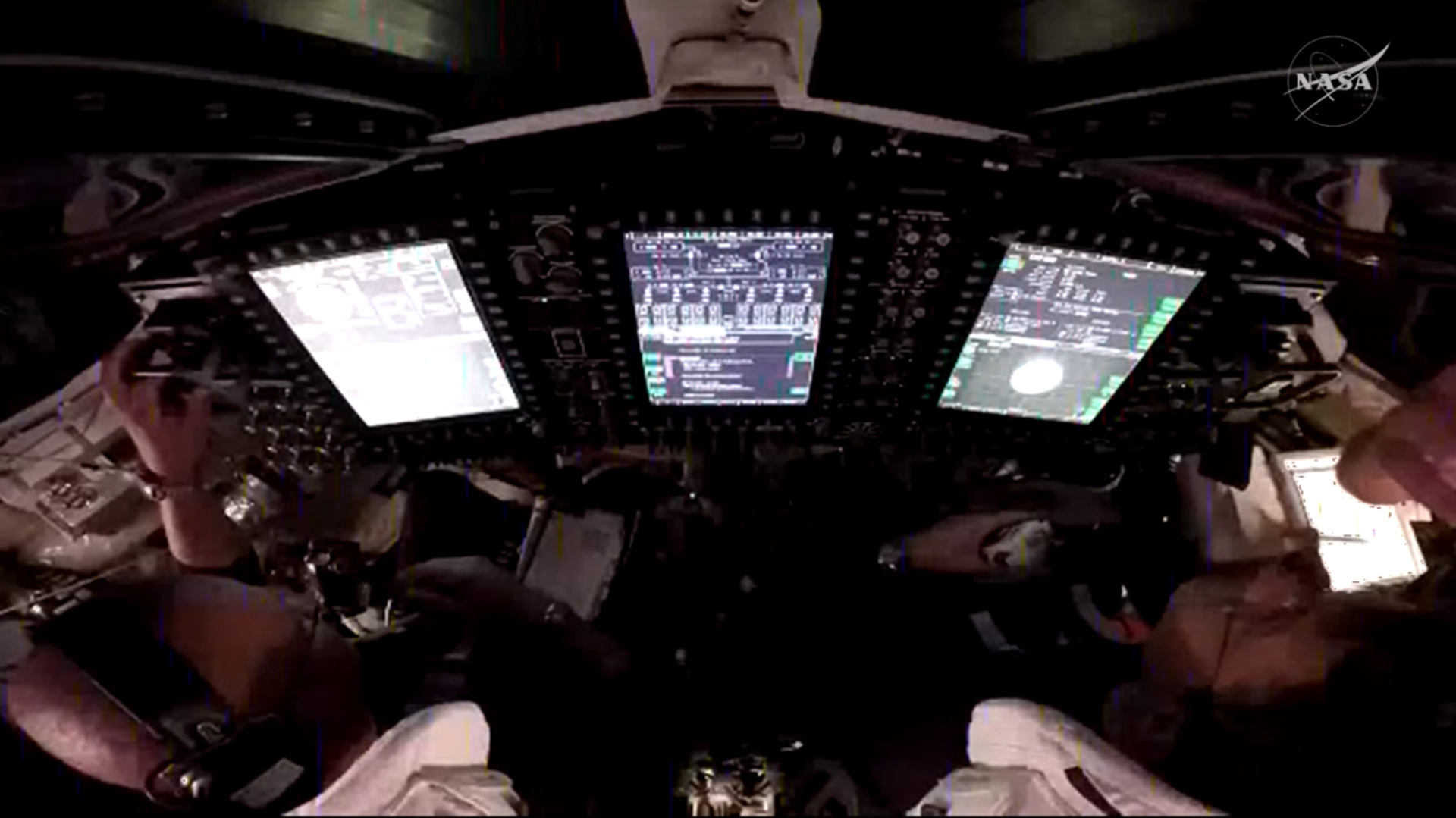
What the Translunar Injection Burn Actually Does
Most people understand that getting to space requires a rocket. What’s less obvious is that getting to the moon requires a completely separate, precisely timed engine burn that happens well after launch.
The translunar injection burn is that maneuver. Once a spacecraft reaches Earth’s orbit, it is essentially circling the planet — not going anywhere in particular. The translunar injection burn changes that. It fires the engines long enough and hard enough to overcome Earth’s gravitational pull and send the spacecraft on a curved path through deep space toward the moon.
According to the source reporting, this burn “propels Orion on a path toward the moon” — setting the trajectory for the lunar rendezvous roughly four days after the maneuver was completed. It’s a make-or-break moment. If the burn is off even slightly, the entire mission profile changes.
Key Facts About the Artemis II Mission
| Detail | Confirmed Information |
|---|---|
| Launch date | Wednesday, April 1 |
| Launch time | Approximately 6:35 p.m. EDT |
| Launch location | Florida’s Space Coast |
| Translunar injection burn | Completed Thursday, the day after launch |
| Spacecraft | Orion |
| Crew members named in source | Victor Glover, Reid Wiseman |
| Estimated time to lunar rendezvous | Approximately four days from the burn |
- Artemis II is a crewed mission, making it a major step beyond the uncrewed Artemis I flight
- The Orion spacecraft is the crew vehicle carrying the astronauts through deep space
- The mission represents the first time humans have been sent toward the moon since the Apollo program
- The translunar injection burn was the mission’s next crucial step after achieving Earth orbit
Why This Mission Matters Beyond the Headlines
It’s easy to see a space launch as a spectacle and move on. But Artemis II carries a weight that goes beyond the imagery of a rocket climbing through the Florida sky.
This is a crewed deep space mission — meaning human beings are now traveling beyond the protective bubble of Earth’s orbit for the first time in decades. Low Earth orbit, where the International Space Station lives, is still relatively close to home. The moon is roughly 239,000 miles away. The physics, the radiation environment, and the communication challenges are all fundamentally different at that distance.
Successfully completing the translunar injection burn means NASA has cleared one of the most technically demanding hurdles of the entire mission. The spacecraft is now committed to its path. There’s no casual turn back — the crew and mission controllers will need to execute a precise sequence of events over the coming days to ensure a safe lunar flyby and return to Earth.
For the broader Artemis program, which is designed to eventually return humans to the lunar surface, a successful Artemis II is essential. It validates the Orion capsule, the Space Launch System rocket, and the teams managing deep space human spaceflight — all of which need to perform flawlessly before NASA can attempt a landing mission.
What the Crew Is Facing Right Now
As of Thursday, the four astronauts aboard Orion — including Glover and Wiseman — are traveling through deep space, moving farther from Earth with every passing hour.
The days ahead will involve continuous systems monitoring, communication checks with mission control, and preparation for the lunar flyby. The moon rendezvous, expected approximately four days after the translunar injection burn, will be a defining moment — not a landing, but a close approach that tests the spacecraft’s navigation and the crew’s readiness for future missions that will go further still.
Mission controllers on the ground are tracking every aspect of Orion’s trajectory in real time. Any deviation from the expected flight path would require a correction burn, and the team is prepared to make those adjustments if needed.
What Happens Next for Artemis II
With the translunar injection burn successfully completed, the Artemis II crew is now roughly four days away from reaching the moon. The mission is not a lunar landing — it is a crewed flyby, designed to test systems and validate the deep space flight profile that future Artemis missions will depend on.
After the lunar rendezvous, the spacecraft will use the moon’s gravity to help slingshot it back toward Earth, where the crew will eventually re-enter the atmosphere and splash down. The precise timeline for splashdown has not been detailed in the available reporting, but the overall mission arc follows a there-and-back trajectory built around the lunar flyby.
Each successful step — launch, translunar injection, lunar flyby, and re-entry — builds the foundation for the missions that come after, including the eventual crewed lunar landing that the Artemis program has been working toward for years.
Frequently Asked Questions
When did Artemis II launch?
Artemis II launched on Wednesday, April 1, at approximately 6:35 p.m. EDT from Florida’s Space Coast.
What is the translunar injection burn?
It is a critical engine firing that pushes the Orion spacecraft out of Earth’s orbit and onto a trajectory toward the moon, sending the crew into deep space.
Who are the astronauts on Artemis II?
NASA astronauts Victor Glover and Reid Wiseman are confirmed crew members named in the available source reporting. The full crew roster has not been detailed in
When will Artemis II reach the moon?
Based on available reporting, the spacecraft is expected to rendezvous with the moon approximately four days after the translunar injection burn was completed on Thursday.
Will Artemis II land on the moon?
No — Artemis II is a crewed flyby mission, not a lunar landing. It is designed to test the Orion spacecraft and deep space systems for future Artemis missions.
What happens after the lunar flyby?
The spacecraft is expected to use the moon’s gravity to return toward Earth, where the crew will re-enter the atmosphere and splash down. Specific splashdown timing has not been confirmed in the available source material.



Leave a Reply