
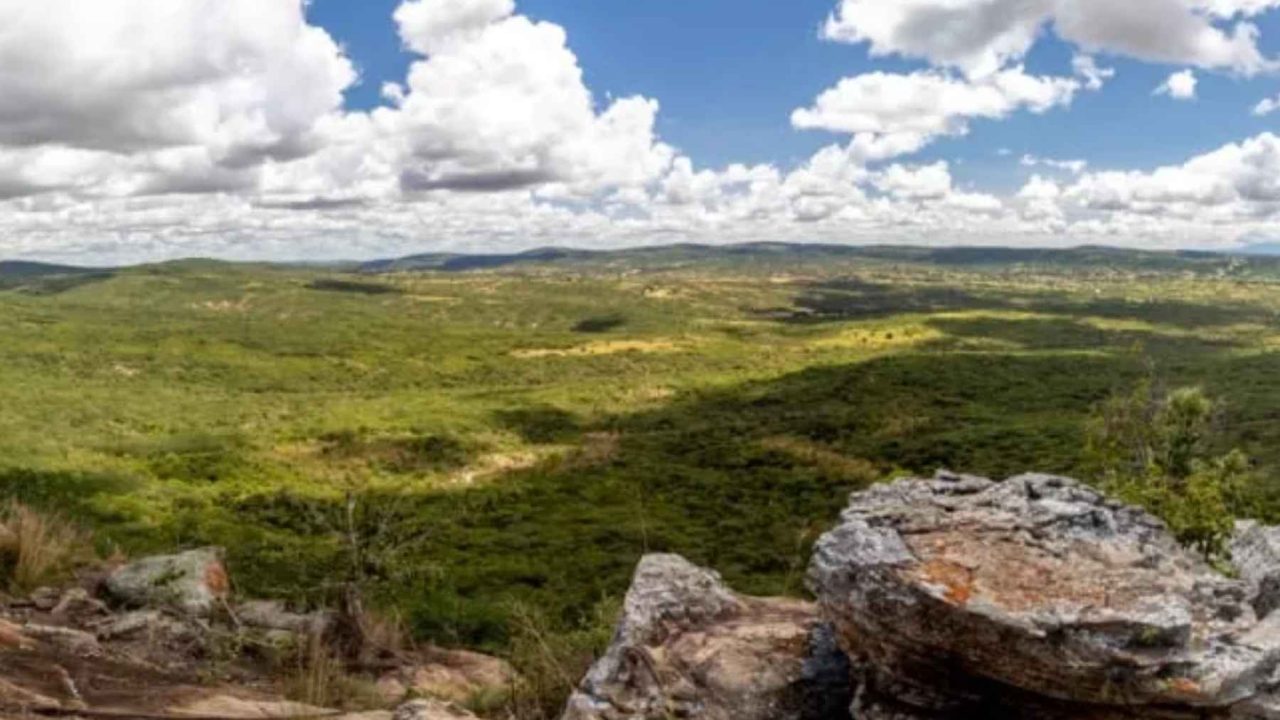
In central Tanzania, farmers are watching something happen that contradicts everything the world assumes about Africa’s landscape. Trees are growing back — not because anyone planted them, but because the land itself still had life stored underground, waiting for someone to give it a chance.
The stumps and root systems of trees cut down decades ago never fully died. They were dormant, sending up small shoots that most people dismissed as weak scrub. Now those shoots are being carefully selected and protected, and the results are quietly reshaping entire communities.
This is not a government reforestation program. There are no imported seedlings, no expensive nurseries, no outside contractors. It is farmers working with what was already there — and the results are drawing attention from researchers and environmental advocates around the world.
The Method Behind the Comeback: What FMNR Actually Is
The technique is called Farmer Managed Natural Regeneration, or FMNR. In Tanzania, it goes by a local name: “Kisiki Hai,” which reflects the idea that what looks like a dead stump is actually still alive beneath the surface.
The core principle is straightforward. When a tree is cut down in drylands, the root system often survives. Over time, that root system pushes up new shoots. Most farmers, or grazing animals, would cut or trample those shoots before they can develop. FMNR flips that habit entirely.
Instead of clearing those shoots away, farmers identify the strongest ones and prune the weaker ones back. This focuses the stored energy of the existing root system into fewer stems, allowing them to grow faster and stronger than they ever could starting from a seed. The farmer is not planting a tree. The farmer is redirecting a tree that was already trying to come back.
Protecting those chosen shoots from grazing animals and unnecessary cutting is the other critical piece. Once the trees gain enough height and strength, they become self-sustaining — and the landscape begins to change visibly within a few growing seasons.
Why This Matters More Than a Standard Tree-Planting Campaign
Conventional reforestation efforts face enormous obstacles. Seedlings require water, protection, and consistent care. In dryland environments like central Tanzania, survival rates for planted seedlings can be discouragingly low. The cost of large-scale planting programs is also significant, often putting them out of reach for the communities that need them most.
FMNR sidesteps most of those barriers. Because the root systems are already established, the regenerating trees are far more drought-resistant than seedlings. They have deep networks already in place, able to draw moisture and nutrients from soil that would defeat a newly planted tree. The investment required from farmers is time and knowledge, not money or imported materials.
Advocates for the approach point to this as one of its most powerful qualities: it puts ecological restoration directly in the hands of local farmers, using resources that were already present and ignored.
What the “Underground Forest” Concept Changes About How We See Degraded Land
One of the most striking ideas behind FMNR is the reframing of what degraded land actually is. Fields that appear barren — cracked earth, dry scrub, no visible canopy — may be sitting on top of what practitioners call an “underground forest.” Living root systems from trees felled years or decades ago can persist far longer than most people assume.
This changes the conversation about African drylands significantly. Rather than treating degraded land as something that needs to be rebuilt from scratch, FMNR treats it as something that needs to be unlocked. The infrastructure is already there. The biological potential is already there. What was missing was a management approach that recognized it.
| Approach | Method | Starting Point | Key Challenge |
|---|---|---|---|
| Conventional Reforestation | Planting new seedlings | Zero — bare ground | High seedling mortality in drylands, cost, water needs |
| FMNR (Kisiki Hai) | Managing natural regrowth from existing roots | Living root systems already underground | Changing farmer habits, protecting shoots from grazing |
Who Is Affected — and Why the Rest of the World Is Paying Attention
For the farming communities in central Tanzania directly practicing FMNR, the benefits go well beyond the visual return of trees. Trees in agricultural landscapes provide shade that reduces soil moisture loss, leaf litter that improves soil fertility, and in many cases, fruit, fodder, and timber that contribute directly to household income and food security.
Dryland farming is one of the most precarious ways to make a living on earth. Soil degradation, unpredictable rainfall, and loss of tree cover create a cycle that is very hard to break with conventional approaches. FMNR offers a way to interrupt that cycle using existing biological assets rather than external aid.
Beyond Tanzania, the broader significance is hard to overstate. Large portions of sub-Saharan Africa and other dryland regions globally sit on similar underground root networks — land that has been written off as too far gone to recover quickly or cheaply. If the principle holds across different soil types and climates, the implications for land restoration efforts worldwide are substantial.
Supporters argue that this model also empowers farmers as active environmental stewards rather than passive recipients of outside intervention, which tends to produce more durable, community-rooted change over time.
What Comes Next for FMNR and Natural Regeneration
The spread of FMNR depends heavily on knowledge transfer — farmers learning the pruning and protection techniques, and communities agreeing to manage grazing and cutting in ways that give regenerating trees room to grow. That kind of behavioral and social change takes time, but it does not require large capital investment or ongoing external support once it takes hold.
The fact that trees are visibly returning in places where no one planted them is already its own form of evidence. For communities watching it happen in real time, the argument for continuing and expanding the practice becomes increasingly self-evident.
Whether this approach can scale across the broader African continent — and what role it might play in global conversations about land restoration and climate resilience — remains an open and genuinely important question.
Frequently Asked Questions
What does FMNR stand for?
FMNR stands for Farmer Managed Natural Regeneration, a land restoration method that works by managing the natural regrowth of trees from existing root systems rather than planting new seedlings.
What is “Kisiki Hai”?
Kisiki Hai is the local Tanzanian name for FMNR, used by farming communities in central Tanzania who are practicing the technique.
Why don’t farmers just plant new trees instead?
Planting new seedlings in dryland environments is expensive and carries high mortality rates due to drought conditions. FMNR works with established root systems that are already drought-resistant, making it more practical and cost-effective for local farmers.
How does FMNR actually work in practice?
Farmers identify the strongest shoots growing from existing tree stumps, prune the weaker shoots away to concentrate the root system’s energy, and protect the selected shoots from grazing animals and unnecessary cutting until the trees are strong enough to sustain themselves.
Is FMNR being used outside of Tanzania?
Whether and how widely it is being applied in other countries has not been confirmed in the available reporting.
Does this approach require outside funding or government support?
Based on what has been reported, FMNR is farmer-led and does not depend on imported seedlings, expensive nurseries, or outside contractors — making it accessible to communities without significant external financial support.

Leave a Reply