
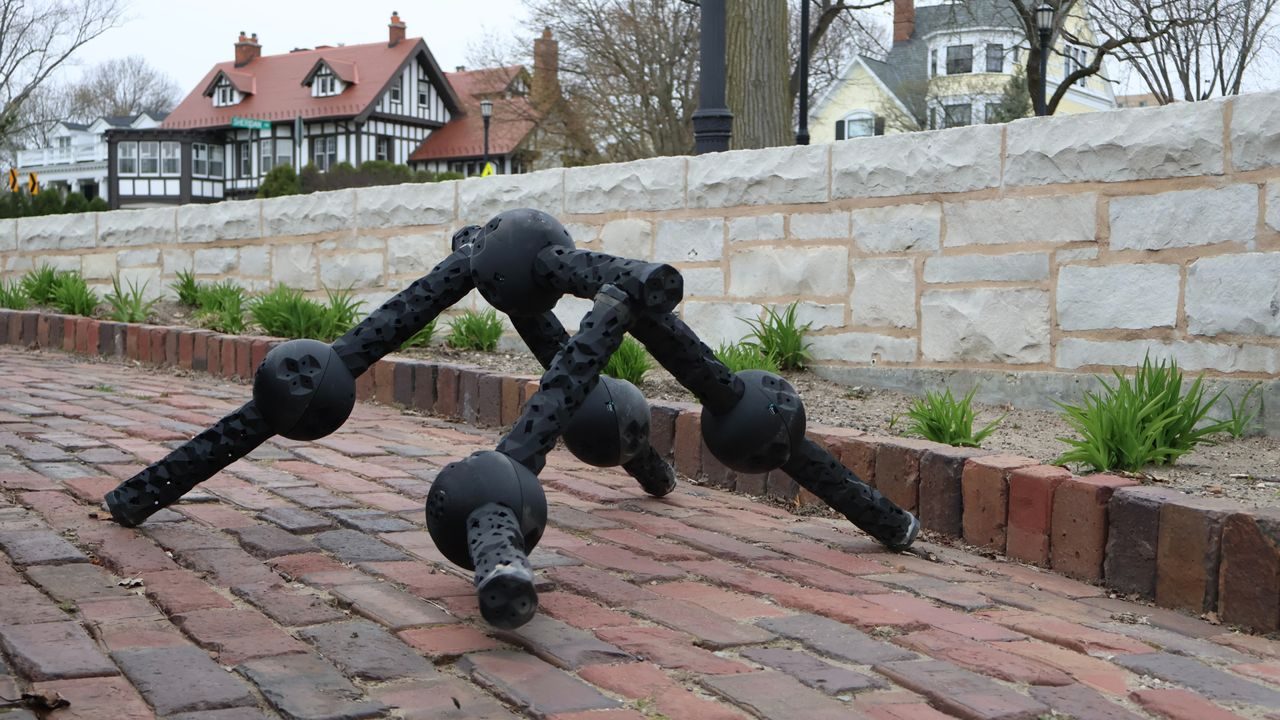
What if billions of years of natural evolution — the long, brutal process that shaped every creature on Earth — could be compressed into a matter of seconds? That’s not a thought experiment anymore. Researchers at Northwestern University have done something close to exactly that, using artificial intelligence to rapidly develop a new class of modular, Lego-like robots capable of navigating difficult terrain and continuing to function even after losing limbs.
The machines, which the researchers call “legged metamachines,” look awkward at first glance. But behind their ungainly appearance is something genuinely remarkable: an AI-driven design process that mimics the logic of evolution at a speed nature could never match. The implications stretch well beyond robotics labs.

This is one of those stories that starts with a robot and ends up saying something profound about life itself.
What These Robots Actually Are — and Why “Lego-Like” Matters
The term “modular” is key to understanding what makes these machines different. Like Lego bricks, the components of these robots can be combined, reconfigured, and swapped out. That design philosophy isn’t just about convenience in the lab — it directly enables one of the robots’ most striking abilities: recovering from damage.
When a legged metamachine loses a limb, it doesn’t simply stop working. It adapts. The robot is capable of continuing to move across terrain even in a significantly compromised state. That kind of resilience is rare in robotics, where most machines are designed for a specific configuration and fail unpredictably when that configuration is disrupted.
The modular structure also means the robots can, in principle, be assembled in many different configurations — each potentially suited to a different environment or task. Think of it less like a single fixed machine and more like a flexible platform.
How AI Compressed Billions of Years of Evolution Into Seconds
The most striking claim the Northwestern University team makes about this project is that their AI essentially replicated — at extraordinary speed — the kind of trial-and-error process that drove biological evolution over billions of years.
Natural evolution works by generating variation, testing it against the environment, and preserving what survives. It’s effective, but it operates on timescales that dwarf human history. What the AI system appears to have done is run a version of that same logic — generating, testing, and refining robot configurations — in a fraction of the time.
The researchers suggest this approach could offer real insight into how animals and humans evolved their own locomotion strategies. If an AI racing through simulated evolutionary pressure arrives at solutions that resemble biological ones, that tells us something meaningful about why living creatures are built the way they are.
It also opens a new path for robotics design — one where engineers don’t have to manually specify every parameter, but instead let an AI discover effective configurations through something resembling natural selection.
Key Features of the Legged Metamachines
| Feature | Description |
|---|---|
| Design Type | Modular, Lego-like construction |
| Development Method | AI-accelerated evolutionary design process |
| Terrain Capability | Autonomous navigation across varied terrain |
| Damage Recovery | Continues functioning after limb loss |
| Research Institution | Northwestern University |
| Potential Application | Overcoming mobility limitations in future robots |
- The robots are described as “legged metamachines” by their creators
- They can navigate autonomously without human guidance during operation
- The AI design process reportedly condensed what would naturally take billions of years into seconds
- The modular build allows for flexible configurations and real-time adaptation
- Researchers believe the machines may offer insight into the evolution of movement in living organisms
Why This Could Matter Beyond the Lab
Robotics that can recover from damage isn’t just an interesting engineering achievement — it has serious real-world implications. Search-and-rescue robots operating in disaster zones, for example, frequently encounter debris, falls, and physical damage. A machine that shuts down the moment a leg is compromised is far less useful than one that recalibrates and keeps moving.
The same logic applies to robots deployed in remote or hostile environments — deep-sea exploration, space missions, or hazardous industrial sites — where human repair is not an option. Resilience in the face of physical damage could be the difference between mission success and a very expensive pile of scrap.
Beyond practical applications, the researchers themselves point to a deeper scientific value. By studying how the AI arrived at effective designs, scientists may gain new understanding of why biological creatures evolved the body structures they did. The AI, in a sense, becomes a tool for reverse-engineering nature.
This kind of cross-pollination between robotics and evolutionary biology is still relatively rare, which makes the Northwestern team’s approach particularly worth watching.
What Comes Next for Legged Metamachines
The research is still at an early stage, and What the Northwestern University team has demonstrated so far is a proof of concept — one that shows the AI-driven evolutionary approach can produce functional, resilient robots.
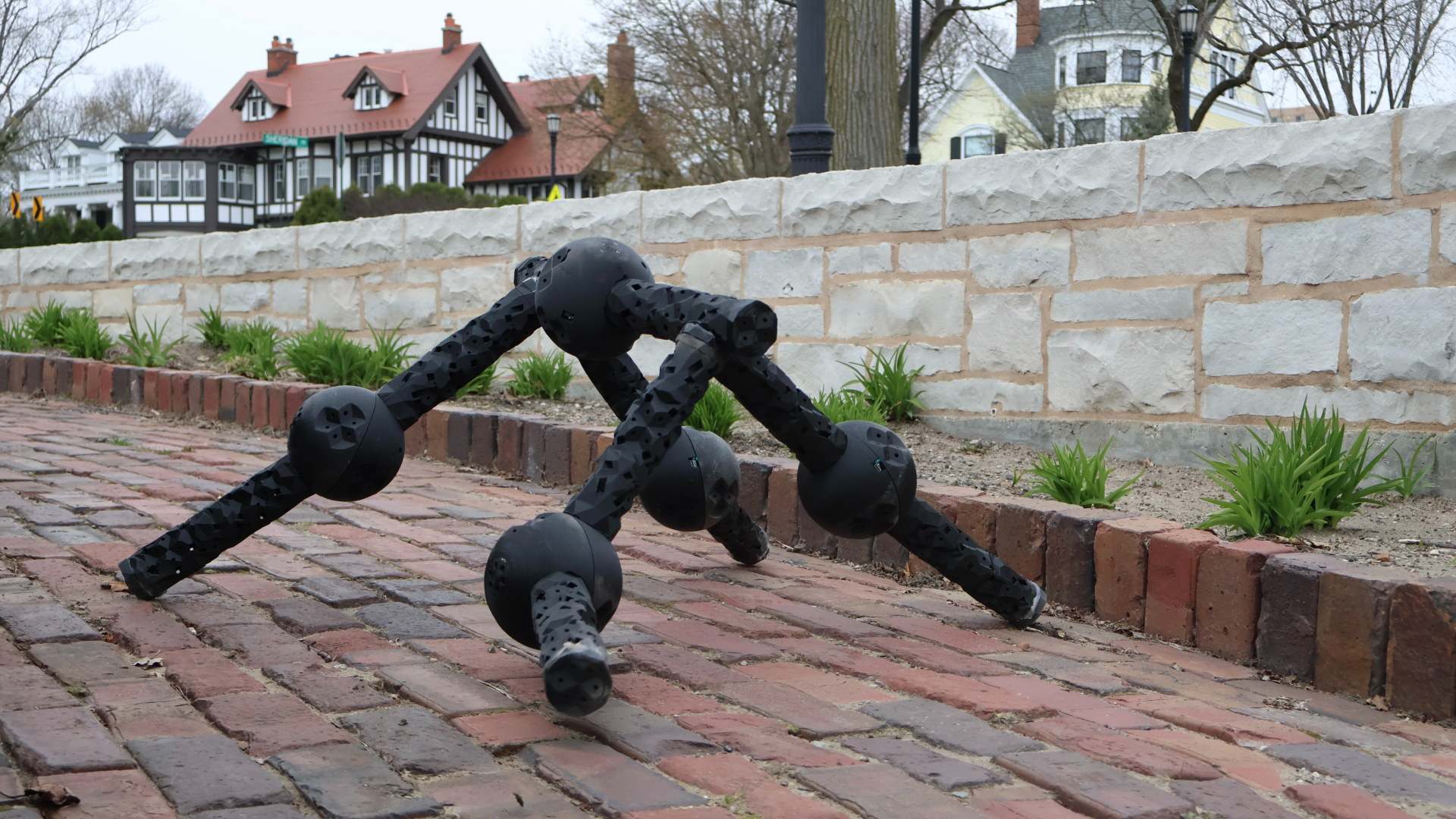
The next steps would logically involve testing across a wider range of environments and damage scenarios, refining the modular components, and exploring whether the AI design process can be extended to generate even more complex robotic systems.
Researchers also suggest this work could provide a clearer path for addressing mobility limitations in future robots more broadly — not just for this specific machine, but as a design philosophy that could influence how the next generation of autonomous systems is built.
Whether legged metamachines eventually show up in disaster response teams or deep-space missions remains to be seen. But the underlying idea — that AI can do in seconds what evolution took eons to accomplish — is already difficult to ignore.
Frequently Asked Questions
What are legged metamachines?
Legged metamachines are modular, Lego-like robots developed at Northwestern University that can navigate terrain autonomously and continue functioning even after losing limbs.
How did AI compress billions of years of evolution?
The AI used a rapid design process that mimics natural evolutionary trial-and-error, generating and refining robot configurations in seconds rather than over geological timescales.
Can these robots really keep moving after losing a limb?
According to the researchers, yes — the modular design and AI-driven adaptability allow the robots to continue operating even when severely damaged.
Who built these robots?
The robots were developed by researchers at Northwestern University as part of an ongoing robotics research project.
What could these robots be used for in the real world?
The researchers suggest the machines could help overcome mobility limitations in future robots, with potential applications in environments where physical damage and difficult terrain are expected challenges.
Does this research tell us anything about human or animal evolution?
The researchers believe it may — they suggest the AI design process could offer insight into how animals and humans evolved their own movement strategies, since the AI arrives at functional solutions through a process that mirrors natural selection.




Leave a Reply