
Hundreds of symbols. Thousands of artifacts. And after more than a century of scholarly effort, not a single confirmed translation. The written script of the Indus Valley Civilization remains one of the most stubborn unsolved mysteries in all of human history — and the question of whether it will ever be deciphered is more complicated than most people realize.
Around 4,000 years ago, one of the world’s oldest civilizations emerged across what is now Pakistan, western India, eastern Iran, and parts of Afghanistan. The people of this civilization — often called the Harappan civilization — built sizable cities and left behind a written script consisting of hundreds of distinct signs. Despite generations of researchers dedicating careers to cracking it, the script has never been decoded.
What makes this mystery so captivating isn’t just its age. It’s that we’re dealing with a civilization sophisticated enough to build planned urban centers, yet we still cannot read a single word they wrote. That gap between what we know and what remains hidden is what keeps archaeologists, linguists, and historians returning to this puzzle year after year.
What the Indus Valley Script Actually Looks Like
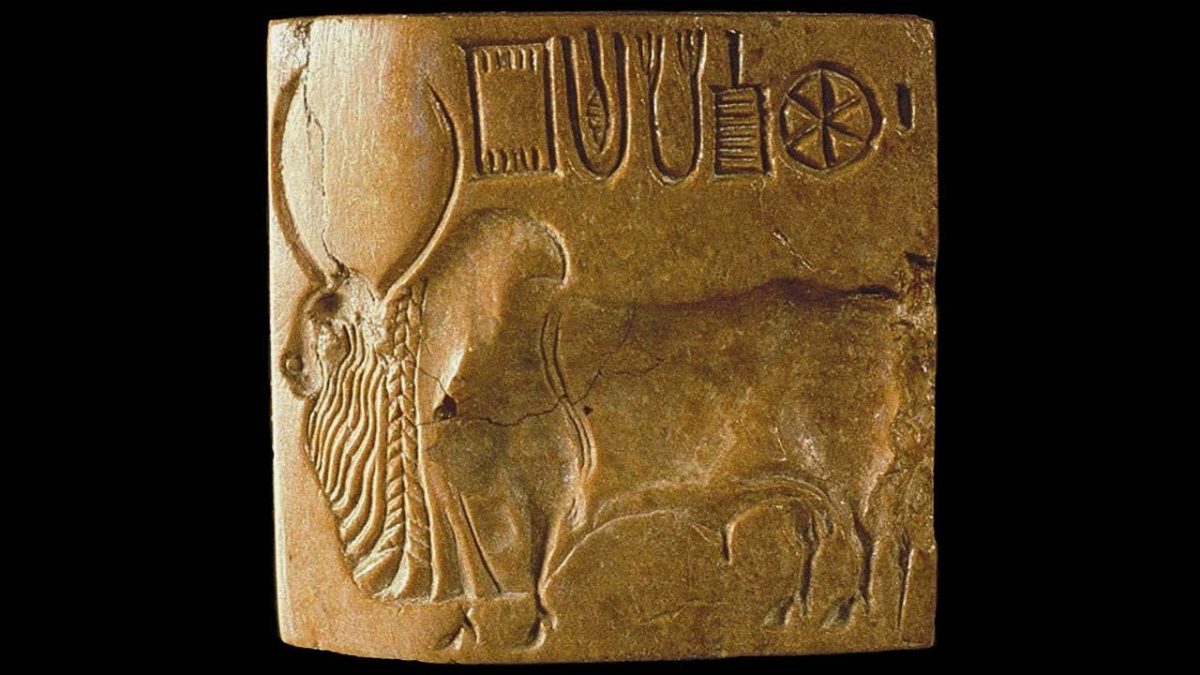
The signs, sometimes called Harappan script, are visually striking and varied in form. Some resemble a diamond with a square set into its corner. Others look like a U-shape with three “fingers” extending from each side. The script appears most commonly on small stone seals — compact objects that were likely used for trade or administrative purposes.
These seals have been found across the geographic range of the civilization, which stretched across a vast region encompassing modern-day Pakistan, western India, eastern Iran, and parts of Afghanistan. The consistency of the signs across such a wide area suggests a shared system of communication, though what exactly was being communicated remains unknown.
The script has never been found in long-form texts. Inscriptions tend to be short — often just a handful of signs — which is one of the central reasons decipherment has proven so difficult. Without longer passages, researchers have far less material to work with when trying to identify patterns, grammar, or meaning.
Why the Indus Valley Script Has Resisted Decipherment for So Long
Deciphering an ancient script typically requires at least one of two things: a bilingual text (like the Rosetta Stone, which provided parallel translations of Egyptian hieroglyphs) or a clear connection to a known language. The Indus Valley script has neither.
No bilingual inscription has ever been found that pairs Harappan signs with a known script. And the underlying language — if indeed there was just one — has not been definitively identified. Researchers have proposed connections to Dravidian languages, Indo-European languages, and other language families, but none of these theories has achieved broad scholarly consensus.
The shortness of the inscriptions compounds every other problem. Statistical and computational approaches have been applied to the script, with researchers attempting to analyze sign frequency, sequencing patterns, and structural rules. These methods have produced some intriguing findings, but none that have unlocked the script’s meaning in any verified way.
| Challenge | Why It Matters |
|---|---|
| No bilingual text discovered | Removes the most reliable path to decipherment used for other ancient scripts |
| Unknown underlying language | Without knowing the language family, linking signs to sounds or meanings is speculative |
| Short inscriptions only | Limits the data available for pattern recognition and linguistic analysis |
| Hundreds of distinct signs | Suggests a complex system, but the sheer variety makes classification difficult |
| No clear descendant script | Unlike some ancient scripts, Harappan has no obvious living or documented successor |
The Stakes: Why This Mystery Still Matters Today
The Indus Valley Civilization wasn’t a minor footnote. At its peak, it was one of the largest civilizations on Earth, rivaling ancient Egypt and Mesopotamia in scale and complexity. Its cities featured sophisticated drainage systems, standardized weights, and evidence of long-distance trade networks.
Yet because we cannot read their writing, an enormous portion of their inner life — their governance, their beliefs, their history as they recorded it — remains completely inaccessible. Every other major ancient civilization of comparable scale has left us texts we can read. The Harappans have not.
For scholars of South Asian history, the stakes are particularly high. Deciphering the script could reshape our understanding of the linguistic and cultural roots of the entire subcontinent. It could settle long-running debates about population movement, language spread, and the origins of later South Asian civilizations. The silence of the script isn’t just an academic puzzle — it’s a missing chapter in the story of human civilization.
Could Modern Technology Finally Crack It?
Researchers have increasingly turned to computational tools and artificial intelligence to tackle the Indus Valley script. Machine learning models have been used to analyze sign sequences and test whether the script shows the statistical properties expected of a true linguistic system — and some studies have suggested it does. That finding, while not a translation, at least supports the argument that the signs represent language rather than purely symbolic or decorative marks.
Still, technology alone cannot solve the core problem. Algorithms can identify patterns, but patterns need an anchor — a known reference point — to become meaning. Without a bilingual text or a confirmed language connection, even the most sophisticated software is working in the dark.
Some researchers remain cautiously hopeful that new archaeological discoveries could change everything. A single well-preserved bilingual inscription, found at the right site, could do in an afternoon what a century of scholarship has failed to accomplish. Others are less optimistic, noting that the civilization’s geographic range has been extensively excavated and no such breakthrough has emerged.
What Researchers Are Watching For
- New excavations in the Indus Valley region that might uncover longer inscriptions or bilingual texts
- Advances in computational linguistics that could extract more structural information from existing sign sequences
- Genetic and archaeological research that might narrow down the language family spoken by Harappan people
- Comparative analysis with other undeciphered or partially deciphered ancient scripts
The Indus Valley script has defeated every attempt at decipherment so far. Whether the next breakthrough comes from a lucky dig or a new algorithmic approach, the mystery endures — and so does the fascination it inspires.
Frequently Asked Questions
What is the Indus Valley script?
It is a written script consisting of hundreds of signs created by the Indus Valley Civilization, which flourished approximately 4,000 years ago across what is now Pakistan, western India, eastern Iran, and parts of Afghanistan. It has never been deciphered.
Why hasn’t the Indus Valley script been decoded yet?
The main obstacles are the absence of any bilingual text, uncertainty about the underlying language, and the fact that known inscriptions are very short, limiting the data available for analysis.
Where does the Indus Valley script appear most commonly?
The signs appear most frequently on small stone seals, which researchers believe were used for trade or administrative purposes.
Is the Indus Valley script considered a real writing system?
Some computational studies have found that the script shows statistical properties consistent with a genuine linguistic system, though this has not been universally accepted and the script itself remains undeciphered.
Could artificial intelligence decode the Indus Valley script?
Researchers have applied machine learning tools to the script with some interesting results, but without a bilingual reference text or confirmed language connection, AI alone cannot produce a verified translation.
What would deciphering the script mean for history?
It could fundamentally reshape our understanding of South Asian history, including the linguistic and cultural origins of the subcontinent, and fill in a major gap in the record of one of the ancient world’s largest civilizations.

Leave a Reply