
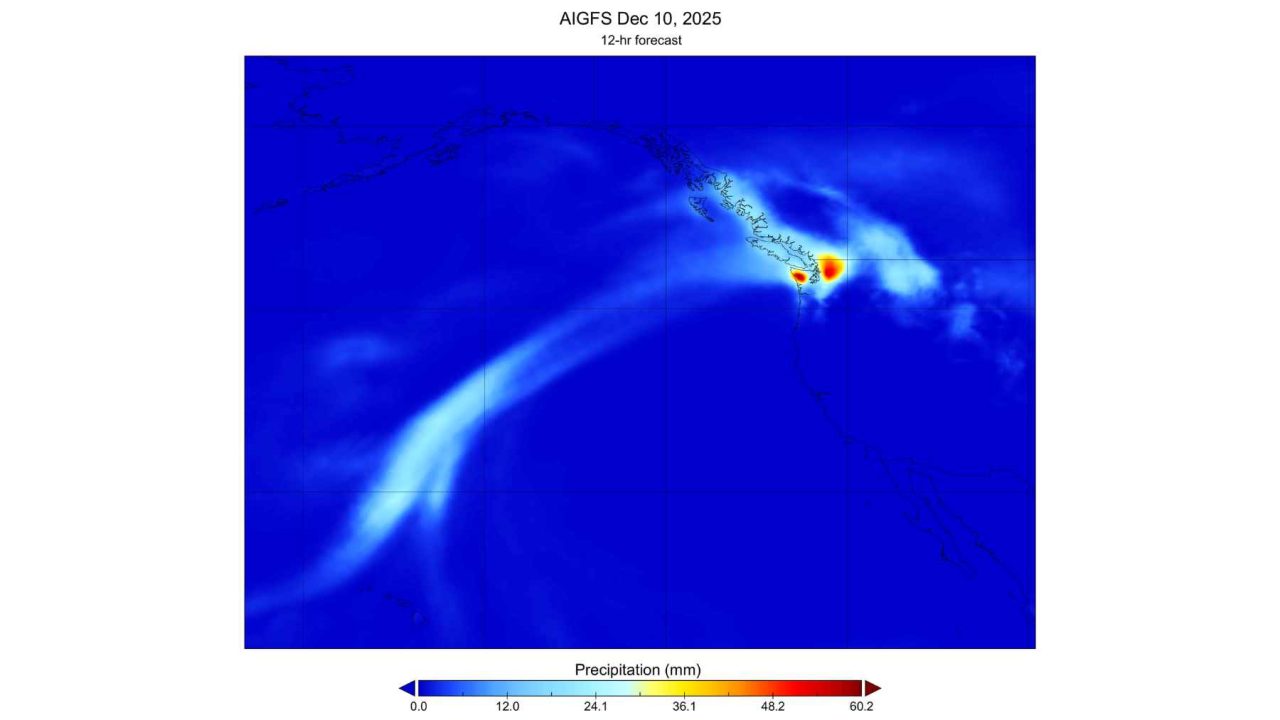
What if the most valuable thing artificial intelligence gives hurricane forecasters isn’t a perfect prediction — but just a few more hours to act? That question is no longer hypothetical. During the 2025 hurricane season, the National Hurricane Center began folding new AI weather prediction tools directly into real-time operations, using them as guidance alongside traditional forecast models.
The shift is significant. Hurricane decisions are made under extreme time pressure. When coastal communities are weighing evacuations and emergency managers are scrambling to position resources ahead of a storm, even a modest improvement in lead time can mean the difference between an orderly response and a chaotic one.
Both Google DeepMind and NOAA have confirmed that newer AI systems can produce large sets of storm outcome scenarios far faster than older physics-based approaches — though both organizations also stress that these tools remain experimental and do not replace official warnings.
Why Hurricane Forecasting Has Always Been So Hard
For decades, the backbone of hurricane forecasting has been numerical weather prediction. The process starts with current atmospheric conditions and then uses powerful supercomputers to solve the complex equations that govern how the atmosphere behaves over time. It’s extraordinarily sophisticated work — but it’s also slow, and the computational cost of running many different scenario variations is enormous.
AI models take a fundamentally different approach. Rather than solving physics equations from scratch, they are trained on decades of reanalysis data — historical datasets that blend real-world observations into a consistent, comprehensive picture of past weather patterns. Once trained, these models can generate forecasts at a fraction of the time it takes traditional methods.
That speed advantage is what makes AI particularly interesting for one of the most dangerous and least predictable aspects of hurricane behavior: rapid intensification. These are the sudden, dramatic surges in storm strength that can catch forecasters and the public completely off guard, turning a manageable storm into a catastrophic one within hours.
The Rapid Intensification Problem — and Why AI Could Help Solve It
Rapid intensification has long been one of the hardest challenges in tropical meteorology. A storm can go from a Category 1 hurricane to a Category 4 in less than 24 hours under the right oceanic and atmospheric conditions — and traditional models have historically struggled to capture those sudden shifts with enough reliability to be useful for emergency planning.
AI systems are beginning to show promise in detecting the precursors to these events before they unfold. By processing vast amounts of historical storm data, these tools can identify patterns that precede sudden intensification and flag them earlier in the forecast cycle.
This doesn’t mean AI predicts rapid intensification perfectly. It doesn’t. But even incremental improvements in early detection could give coastal communities and emergency managers more time to prepare — and in disaster response, time is the most precious resource there is.
How AI and Traditional Forecasting Are Being Used Together
It’s worth being clear about how these AI tools are actually being deployed right now. They are not replacing meteorologists or official warning systems. The National Hurricane Center is using them as supplementary guidance — one more input alongside the traditional models that forecasters have relied on for years.
The value, according to officials, lies in scenario planning. AI systems can rapidly generate a wide range of possible storm outcomes, giving forecasters a broader picture of uncertainty than they might otherwise have. That range of possibilities is especially useful when a storm is in a volatile phase and traditional models are showing wide disagreement.
| Approach | Method | Speed | Current Role |
|---|---|---|---|
| Numerical Weather Prediction | Solves atmospheric physics equations on supercomputers | Slower; computationally expensive | Primary forecast backbone |
| AI / Machine Learning Models | Trained on decades of historical reanalysis data | Significantly faster scenario generation | Experimental guidance tool |
Both approaches have real strengths. The physics-based models carry deep scientific grounding built over generations of research. The AI tools bring speed and the ability to process patterns across enormous datasets that no human team could review manually. The current thinking from forecasters is that the two are most powerful when used together.
What This Means for People in Hurricane-Prone Areas
For anyone living along a coastline that has faced hurricane evacuations, the practical stakes here are easy to understand. Evacuation orders work best when they come early. Traffic clears. Shelters have time to prepare. People with mobility challenges or complex logistics have time to make arrangements.
When a storm intensifies faster than models anticipated — as has happened in multiple recent hurricane seasons — those windows collapse. Communities end up evacuating into deteriorating conditions, or worse, they don’t evacuate at all because the storm didn’t look threatening until it was too late.
If AI tools can reliably push the warning window even a few hours earlier for rapidly intensifying storms, the downstream effects on public safety could be substantial. Officials have noted that faster scenario planning, specifically the ability to quickly model a wide range of potential storm tracks and intensity changes, is one of the clearest near-term benefits these systems offer.
What Comes Next for AI in Hurricane Forecasting
The 2025 hurricane season represented a meaningful first step — real operational use of AI tools at the National Hurricane Center, even in a supporting role. But both NOAA and Google DeepMind have been careful to frame the current state of these systems as experimental.
The path forward likely involves continued testing across multiple hurricane seasons, with forecasters evaluating how well AI guidance holds up against real storm behavior over time. Trust in any forecasting tool is built through verified performance, not promises — and that verification takes years of real-world data.
The broader question isn’t whether AI will eventually play a larger role in hurricane forecasting. Given the speed advantages and the scale of historical data these systems can draw on, that trajectory seems clear. The real question is how quickly the tools can be validated to a standard where forecasters feel confident leaning on them more heavily when lives are on the line.
Frequently Asked Questions
Is AI replacing human meteorologists at the National Hurricane Center?
No. AI tools are currently being used as supplementary guidance alongside traditional forecast models, not as a replacement for meteorologists or official warning systems.
Which organizations are involved in developing these AI hurricane tools?
Google DeepMind and NOAA are among the organizations working on AI weather prediction systems, according to
What is rapid intensification, and why is it so dangerous?
Rapid intensification refers to sudden, dramatic increases in storm strength over a short period of time. It is dangerous because it can outpace forecast models and leave communities with very little time to prepare or evacuate.
How do AI weather models differ from traditional forecasting methods?
Traditional numerical weather prediction solves atmospheric physics equations on supercomputers, while AI models are trained on decades of historical weather data and can generate scenario forecasts much faster.
Are these AI forecasting tools available to the public?
Their current use is described as operational guidance within the National Hurricane Center’s forecasting process.</p


Leave a Reply