
For months, one of the most closely watched entries in Airbus’s order book carried no name. Eight wide-body jets, worth hundreds of millions of dollars, logged under an anonymous buyer. Now the mystery is over — and the answer reshapes how one of North America’s biggest carriers plans to compete on some of the world’s most lucrative long-haul routes.
Airbus has officially confirmed that Air Canada is the customer behind a firm order for eight A350-1000 aircraft. The announcement, made on February 12, 2026, in Toulouse, France, puts a face to a deal that had quietly been sitting in the books since November 2025.
It is a significant moment — not just for Air Canada, but for the competitive landscape of long-haul international flying. The A350-1000 is not a short-haul workhorse. It is built for distance, and the routes it unlocks for Air Canada are exactly the kind that airlines fight hardest to win.
The Order That Was Hidden in Plain Sight
Airbus routinely logs orders from undisclosed customers while commercial negotiations or public announcements are still in progress. That is standard industry practice. But when eight A350-1000 jets appeared in the November 2025 order data under an unnamed buyer, speculation ran high about who was behind the commitment.
The answer, confirmed from Toulouse in February 2026, is Air Canada. The airline had already locked in the deal months before its name became public. The formal announcement simply put the record straight.
What makes this more than a routine fleet update is the aircraft itself. The A350-1000 is the largest and longest-range variant in the A350 family — a twin-aisle jet designed specifically for ultra-long-haul operations. Its capabilities point directly at markets that Air Canada has been working to grow.
What the A350-1000 Actually Makes Possible
The numbers behind this aircraft tell the story clearly. With a range of approximately 9,000 nautical miles — equivalent to around 16,000 kilometers — the A350-1000 can connect Canadian cities to destinations that were previously difficult or uneconomical to serve nonstop.
| Aircraft | Variant | Range | Aircraft Type |
|---|---|---|---|
| Airbus A350-1000 | Largest A350 variant | ~9,000 nautical miles (~16,000 km) | Wide-body twin-aisle |
That range puts the Indian subcontinent, Southeast Asia, and Australia within reach of direct flights from Canada — without the technical stops or connecting hubs that currently add hours to those journeys. For travelers, that means fewer layovers. For Air Canada, it means the ability to compete on premium international routes where margins are considerably higher than on domestic or short-haul flying.
These are not low-value markets. Routes connecting North America to South Asia and the Asia-Pacific region carry some of the strongest demand for business and premium economy travel. Winning a direct connection on those corridors can be enormously profitable — and right now, many of those routes are dominated by carriers from the Gulf region, South Asia, and East Asia.
Why This Deal Changes the Competitive Picture
Air Canada’s move into the A350-1000 signals a deliberate push toward newer, more fuel-efficient wide-body jets. Older long-haul aircraft burn more fuel and cost more to maintain. The A350-1000, with its composite construction and modern engines, offers meaningfully lower operating costs per seat — which matters enormously when you are trying to price competitively on routes where well-funded rivals are already established.
The timing also matters. Global demand for long-haul travel has been recovering strongly, and carriers that have the right equipment in place stand to benefit most from that growth. Committing to eight aircraft in late 2025 positions Air Canada to receive and deploy those jets as demand continues to build.
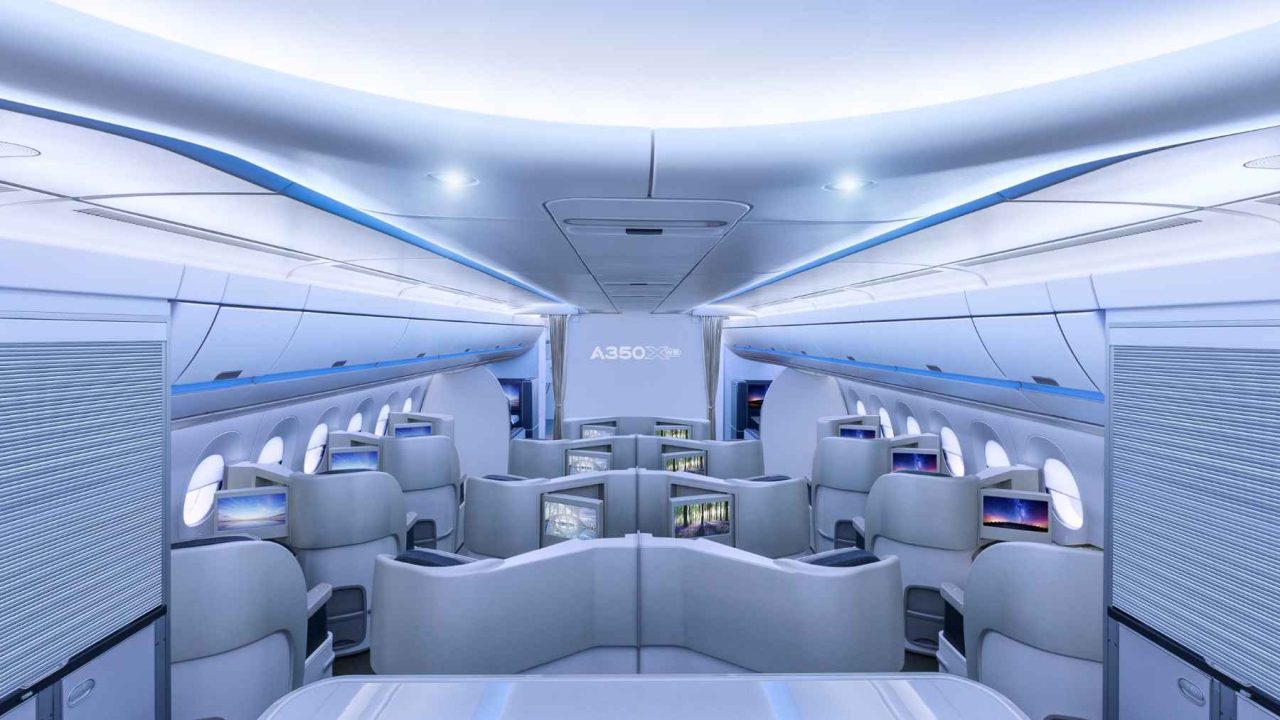
For passengers on those future routes, the A350-1000 also represents a tangible improvement in the flying experience. The aircraft is known for its wider cabin, lower cabin altitude, and higher humidity levels compared to older wide-bodies — features that reduce passenger fatigue on very long flights. On a journey from Toronto or Vancouver to Mumbai, Delhi, or Sydney, that difference is not trivial.
What This Means for the Battle Over Premium Routes
Long-haul aviation has always been a contest for the most profitable city pairs. Airlines that can offer nonstop service on high-demand routes hold a significant advantage — passengers, particularly business travelers, consistently prefer direct flights when they are available.
With eight A350-1000s on order, Air Canada gains the capacity to open or expand nonstop service to markets in South Asia, Southeast Asia, and potentially Australia. That puts the airline in direct competition with carriers that have historically owned those corridors. The announcement from Toulouse is, in effect, a declaration of intent.
The deal was confirmed just weeks after being logged — a sign that both Airbus and Air Canada were ready to move quickly once the commercial terms were settled. The aircraft will join a widebody fleet that Air Canada has been actively modernizing in recent years.
What Comes Next for Air Canada’s Long-Haul Fleet
The firm order is now on the books. The next steps involve delivery scheduling, cabin configuration decisions, and route planning — details that Air Canada has not yet made public as of the announcement date in February 2026.
What is clear is the direction. Eight A350-1000s represent a major capital commitment and a strategic signal. When those aircraft enter service, they will give Air Canada tools it does not currently have — range, efficiency, and passenger comfort on routes where the competition is fierce and the rewards are substantial.
The mystery buyer is no longer a mystery. And the routes those eight jets will eventually fly are likely to be watched closely by competitors across three continents.
Frequently Asked Questions
Who is the mystery customer that ordered eight Airbus A350-1000 aircraft?
Airbus confirmed that Air Canada is the buyer behind the order for eight A350-1000 jets, which had been logged under an undisclosed customer since November 2025.
When was the Air Canada A350-1000 order officially announced?
The announcement was made on February 12, 2026, in Toulouse, France, though the firm order itself was placed in November 2025.
What is the range of the Airbus A350-1000?
The A350-1000 has a range of approximately 9,000 nautical miles, or around 16,000 kilometers, making it capable of ultra-long-haul nonstop flights.
Which new routes could Air Canada operate with the A350-1000?
Based on the aircraft’s range, Air Canada could potentially serve markets in the Indian subcontinent, Southeast Asia, and Australia with nonstop flights from Canada.
How many A350-1000 aircraft did Air Canada order?
Air Canada placed a firm order for eight A350-1000 wide-body jets.
When will Air Canada receive the new aircraft?
Delivery timing has not yet been confirmed publicly as of the February 2026 announcement.




Leave a Reply