
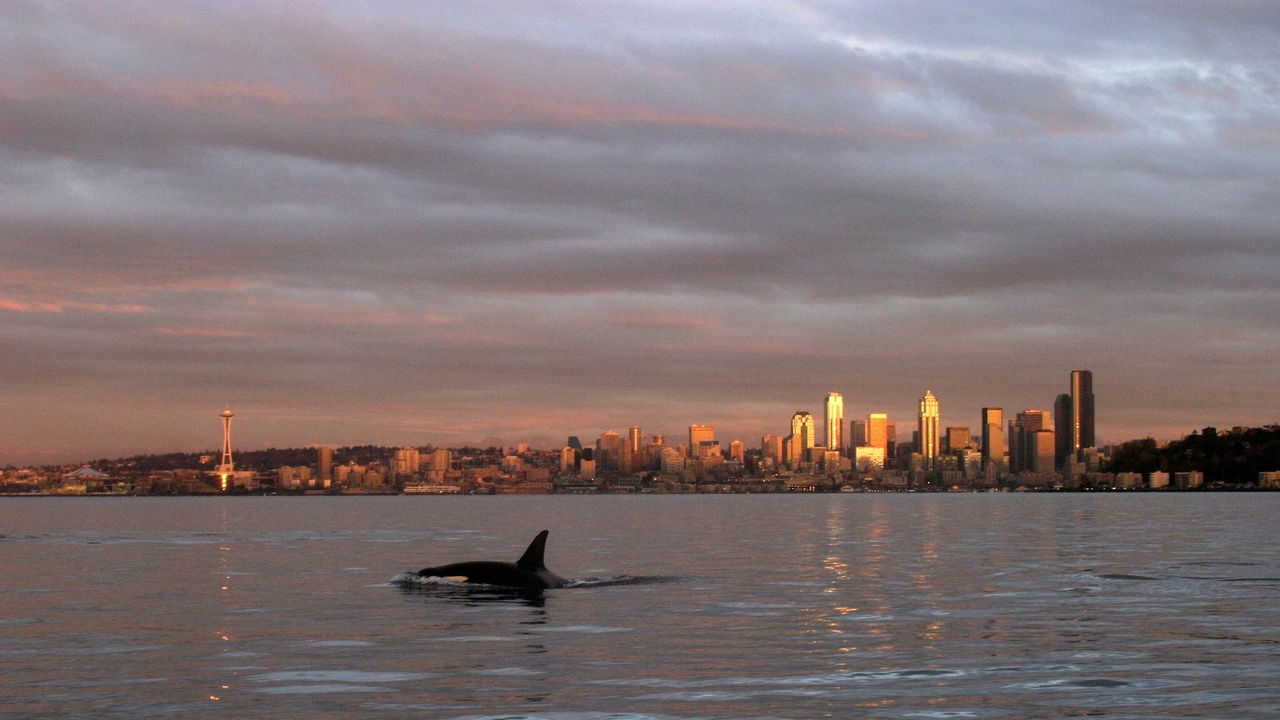
Three killer whales traveled somewhere between 1,500 and 2,000 miles from their known Alaskan territory to appear in the waters near Seattle — and scientists say they have no clear explanation for why.
The sighting, which occurred in March, has left marine researchers genuinely puzzled. These weren’t the orcas that locals and whale-watchers in the Pacific Northwest are used to seeing. These were mammal-eating killer whales — a behaviorally and ecologically distinct type — that had apparently made an extraordinary journey south from Alaskan waters to Elliott Bay, within sight of the Seattle skyline.
For the scientists who study these animals, the appearance of three previously undocumented orcas in local waters is the kind of event that raises far more questions than it answers.
Why These Orcas Near Seattle Are So Unusual
Not all killer whales are alike. Orcas are broadly divided into different ecotypes — populations that differ in behavior, diet, appearance, and culture. The three whales spotted near Seattle belong to a mammal-eating ecotype, meaning they hunt marine mammals like seals, sea lions, and other whales rather than fish.
This distinction matters enormously. Mammal-eating orcas and fish-eating orcas don’t mix socially, don’t share hunting strategies, and are genetically distinct enough that researchers treat them almost as separate populations. Seeing mammal-eating orcas this far south, in waters more commonly associated with the fish-eating resident orcas of the Pacific Northwest, is genuinely outside the norm.
Monika Wieland Shields, the director of the Orca Behavior Institute, captured the scientific mood around the sighting clearly.
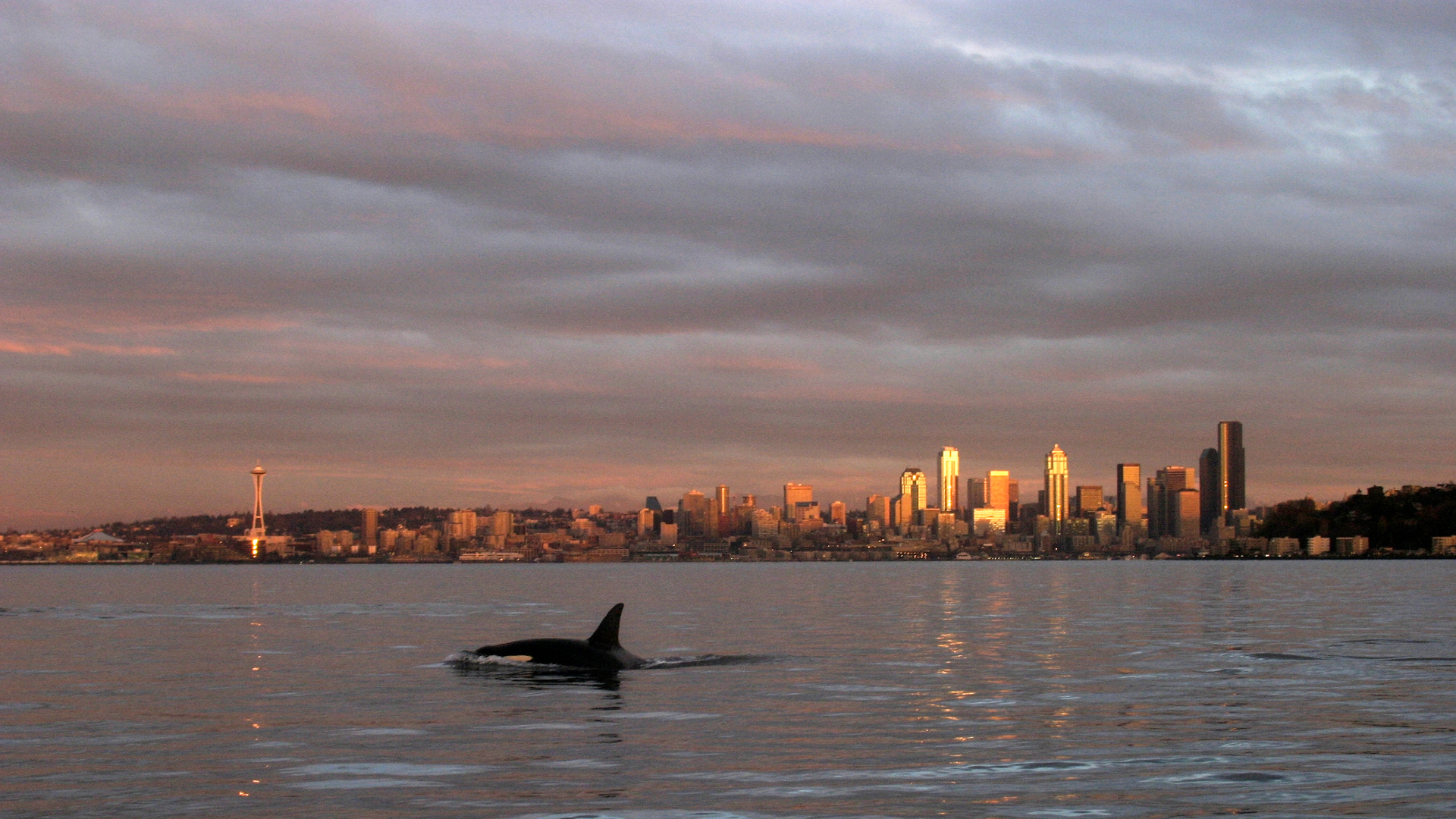
“It’s extremely rare to have previously undocumented killer whales show up in local waters, so it’s been very exciting to see them, and right now we have more questions than answers,” Shields said.
That phrase — more questions than answers — is doing a lot of work here. These are researchers who have spent careers studying orca populations. When they say they’re baffled, it means something.
What We Know About the Sighting So Far
The confirmed details of this event are striking on their own, even without a full explanation. Here’s what has been established from the source reporting:
- Three mammal-eating orcas were spotted in the Seattle area in March
- The whales are believed to have traveled from Alaska — a journey of approximately 1,500 to 2,000 miles (2,400 to 3,200 kilometers)
- The orcas were previously undocumented in local Pacific Northwest waters
- The sighting occurred in Elliott Bay, near the Seattle skyline
- Monika Wieland Shields, director of the Orca Behavior Institute, confirmed the unusual nature of the event
| Detail | Confirmed Information |
|---|---|
| Number of orcas spotted | Three |
| Orca type | Mammal-eating (transient ecotype) |
| Location of sighting | Elliott Bay, near Seattle |
| Estimated distance traveled | 1,500–2,000 miles (2,400–3,200 km) from Alaska |
| Month of sighting | March |
| Prior documentation in local waters | None — previously undocumented |
The Bigger Picture for Orca Research and Conservation
Events like this one matter well beyond the immediate excitement of an unusual sighting. When animals behave outside their known patterns — especially across distances this large — it can signal shifts in prey availability, ocean conditions, or population dynamics that researchers haven’t yet detected through other means.
Mammal-eating orcas, sometimes called transient or Bigg’s killer whales, are known to cover large ranges in pursuit of prey. But a journey of up to 2,000 miles into waters where this ecotype has not been previously documented is on a different scale entirely. It raises the possibility that something meaningful is changing in the marine environment — though researchers have not yet confirmed what that might be.
The fact that these three whales were “previously undocumented” is also significant from a research standpoint. Orca researchers maintain detailed catalogs of individual animals identified by their dorsal fins and saddle patches. If these whales weren’t in any existing catalog for Pacific Northwest waters, it means there was no prior record of them visiting this region — making their appearance in Elliott Bay a genuinely novel data point.
For local residents and the broader public, the sighting is a reminder that the ocean’s largest predators are still capable of surprising even the most experienced scientists. The Pacific Northwest has a deep cultural and scientific connection to its orca populations, and the arrival of unfamiliar whales from distant Alaskan waters cuts right to the heart of how much remains unknown about these animals.
What Researchers Are Watching For Next
With more questions than answers currently on the table, the scientific focus now shifts to observation and documentation. Researchers will likely work to formally identify the three individual whales using photographic identification techniques, cross-referencing their markings against Alaskan orca catalogs to determine their known range and history.
Whether the whales lingered in the Seattle area, moved on, or returned north has not been confirmed in the available reporting. Researchers will also be asking whether this represents a one-time anomaly or the beginning of a pattern — and whether environmental factors like prey distribution or ocean temperature played any role in pushing these animals so far from their usual territory.
For now, the scientific community is in a state of alert curiosity. A sighting this rare doesn’t come with easy explanations, and the researchers studying it are honest about that. The answers, when they come, could tell us something important about how these animals navigate a changing ocean.
Frequently Asked Questions
Where exactly were the orcas spotted near Seattle?
The three killer whales were seen in Elliott Bay, near the Seattle skyline, in March.
How far did these orcas travel to reach Seattle?
Researchers estimate the whales traveled approximately 1,500 to 2,000 miles (2,400 to 3,200 kilometers) south from Alaska.
What makes these orcas different from the ones usually seen in Pacific Northwest waters?
These are mammal-eating orcas, a distinct ecotype that hunts marine mammals rather than fish — different from the fish-eating resident orcas more commonly associated with the Pacific Northwest.
Had these specific orcas ever been seen in Seattle waters before?
No. According to researchers, the three whales were previously undocumented in local waters, making the sighting especially unusual.
Do scientists know why the orcas made this journey?
Not yet. Monika Wieland Shields of the Orca Behavior Institute stated that researchers currently have “more questions than answers” about the sighting.
Who is leading the research into this sighting?
Monika Wieland Shields, the director of the Orca Behavior Institute, has been cited as a key expert responding to the event.



Leave a Reply