
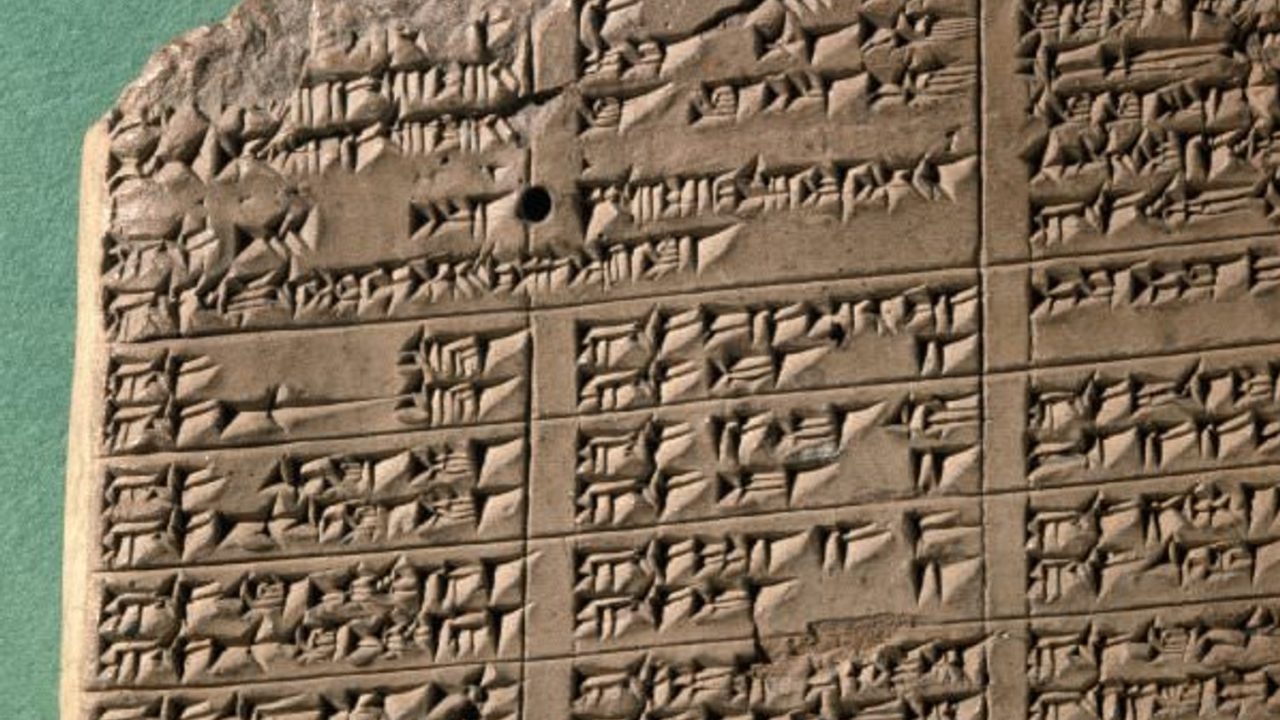
Dr. Elena Vasquez carefully brushed away 4,000-year-old dust from a clay tablet in her Baghdad laboratory, her hands trembling slightly as the ancient symbols became clear. What she expected to find was another mundane inventory of grain and livestock. Instead, the cuneiform markings told the story of a merchant’s daughter who defied her father to marry for love.
“I’ve been studying these tablets for twenty years,” she whispered to her assistant, “but moments like this still give me chills. This isn’t just record-keeping – it’s someone’s real life, preserved in clay.”
That moment perfectly captures the extraordinary journey of cuneiform writing, humanity’s first written language that evolved from simple trade records into epic tales of gods, heroes, and everyday people whose stories still move us today.
The Birth of Writing: When Merchants Needed Better Bookkeeping
Around 3200 BCE in ancient Mesopotamia, Sumerian merchants faced a growing problem. Their trade networks had become so complex that memory alone couldn’t track who owed what, which shipments were due, and how much barley was stored in the warehouses.
Their solution changed human civilization forever. Using reed styluses, they began pressing wedge-shaped marks into soft clay tablets. These weren’t letters as we know them – they were simple pictures and symbols representing objects, numbers, and basic concepts.
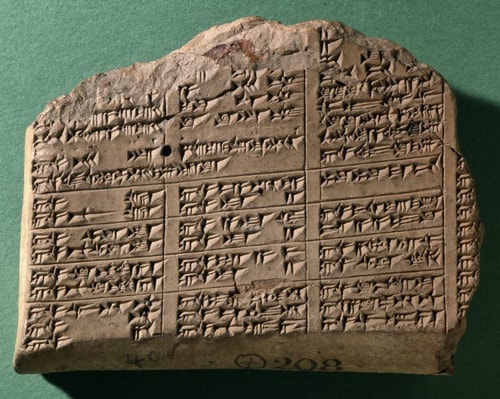
The earliest cuneiform tablets are essentially ancient spreadsheets. They’re all about sheep, grain, and silver – the practical stuff of commerce that made civilization possible.
— Dr. Irving Finkel, British Museum
But something remarkable happened over the centuries. What started as a bookkeeping system gradually transformed into something far more powerful: a way to capture human thoughts, emotions, and imagination in permanent form.
The symbols became more abstract, representing not just objects but sounds and ideas. Scribes developed shortcuts, combined symbols in new ways, and eventually created a writing system sophisticated enough to record everything from legal contracts to love poems.
What Made Cuneiform So Revolutionary
Unlike Egyptian hieroglyphs, which remained largely pictographic, cuneiform evolved into a true writing system capable of expressing complex abstract ideas. Here’s what made it so groundbreaking:
- Phonetic flexibility: Symbols could represent sounds, not just objects
- Grammar notation: Writers could indicate verb tenses, plural forms, and sentence structure
- Multiple languages: The same system worked for Sumerian, Akkadian, Babylonian, and Assyrian
- Durability: Clay tablets survived fires, floods, and thousands of years
- Mass production: Tablets could be quickly made and easily stored
| Time Period | Primary Use | Example Content |
|---|---|---|
| 3200-2800 BCE | Record keeping | Grain inventories, livestock counts |
| 2800-2000 BCE | Administration | Legal codes, royal decrees, contracts |
| 2000-1000 BCE | Literature | Epic of Gilgamesh, religious hymns |
| 1000-100 BCE | Scholarship | Mathematical texts, astronomical observations |
It’s amazing to think that the same writing system used to count sheep eventually gave us the world’s first epic poem. That’s like Excel evolving into Shakespeare.
— Dr. Amanda Podany, Cal Poly Pomona
From Mundane Records to Literary Masterpieces
The transformation wasn’t sudden. For over a thousand years, cuneiform remained primarily a tool for bureaucrats and merchants. But as the writing system matured, scribes began using it for increasingly sophisticated purposes.
Legal codes like Hammurabi’s famous laws showed that cuneiform could handle complex logical arguments and conditional statements. Royal inscriptions demonstrated its power for propaganda and historical record-keeping. Religious texts proved it could capture abstract spiritual concepts.
Then came the breakthrough: literature. The Epic of Gilgamesh, written around 2100 BCE, stands as humanity’s first great work of fiction. This wasn’t just storytelling – it was sophisticated narrative art, complete with character development, metaphor, and profound themes about friendship, mortality, and the meaning of life.
When you read Gilgamesh, you realize these ancient people were exactly like us. They worried about death, valued friendship, and struggled with loss. The clay tablets become a bridge across 4,000 years.
— Dr. Andrew George, University of London
Other literary works followed: creation myths like the Enuma Elish, the tragic tale of Inanna’s descent to the underworld, and countless hymns, prayers, and wisdom literature that reveal the rich inner lives of ancient Mesopotamians.
The Scribes Who Made It All Possible
Behind this literary revolution were the scribes – highly trained professionals who spent years mastering cuneiform’s hundreds of symbols and complex rules. These weren’t just copyists; they were the intellectuals of their age.
Scribal schools taught not only writing but mathematics, literature, history, and law. Students practiced by copying classic texts, gradually progressing from simple word lists to complex literary works. The best became court scribes, temple officials, or private secretaries to wealthy merchants.
Many scribes took pride in their work, sometimes adding personal notes to tablets: “Written by Nabu-rimanni, son of Balassu, for his own study and the marvel of learned men.” These little touches humanize the ancient world in remarkable ways.
Why Cuneiform Still Matters Today
You might wonder why ancient writing systems matter in our digital age. The answer lies in what cuneiform reveals about human nature and social development.
These tablets contain the world’s first written jokes, the earliest known author’s name (Enheduanna, a Sumerian priestess), and detailed records of daily life that no other source provides. They show us how complex societies develop, how writing shapes thought, and how technology changes human relationships.
Every cuneiform tablet is a time machine. They preserve not just information, but actual human voices from the dawn of civilization. That’s irreplaceable.
— Dr. Kathryn Slanski, Johns Hopkins University
Modern scholars continue discovering new tablets, and each one adds to our understanding of ancient life. Recent finds include everything from ancient medical prescriptions to complaints about shoddy copper deliveries – proving that some things never change.
The evolution from trade lists to epic literature also mirrors our own digital transformation. Just as cuneiform expanded from simple record-keeping to complex storytelling, our digital tools continue evolving in ways their creators never imagined.
FAQs
How long did it take to learn cuneiform writing?
Ancient scribal schools required about 12 years of training to master cuneiform fully, though basic literacy could be achieved in 3-4 years.
How many cuneiform tablets have been found?
Archaeologists have discovered over 500,000 cuneiform tablets, with new ones still being found regularly at excavation sites across the Middle East.
What happened to cuneiform writing?
Cuneiform gradually declined as Aramaic became the common language of the Persian Empire, with the last known cuneiform text dating to 75 CE.
Can anyone learn to read cuneiform today?
Yes, several universities offer cuneiform courses, and there are online resources for beginners, though mastering it requires years of study like any ancient language.
What’s the most famous cuneiform text?
The Epic of Gilgamesh is the most famous, but Hammurabi’s Code of Laws is also well-known for being one of the earliest written legal systems.
Are there still untranslated cuneiform tablets?
Absolutely – thousands of tablets remain untranslated due to the specialized knowledge required and the sheer volume of material discovered.

Leave a Reply