
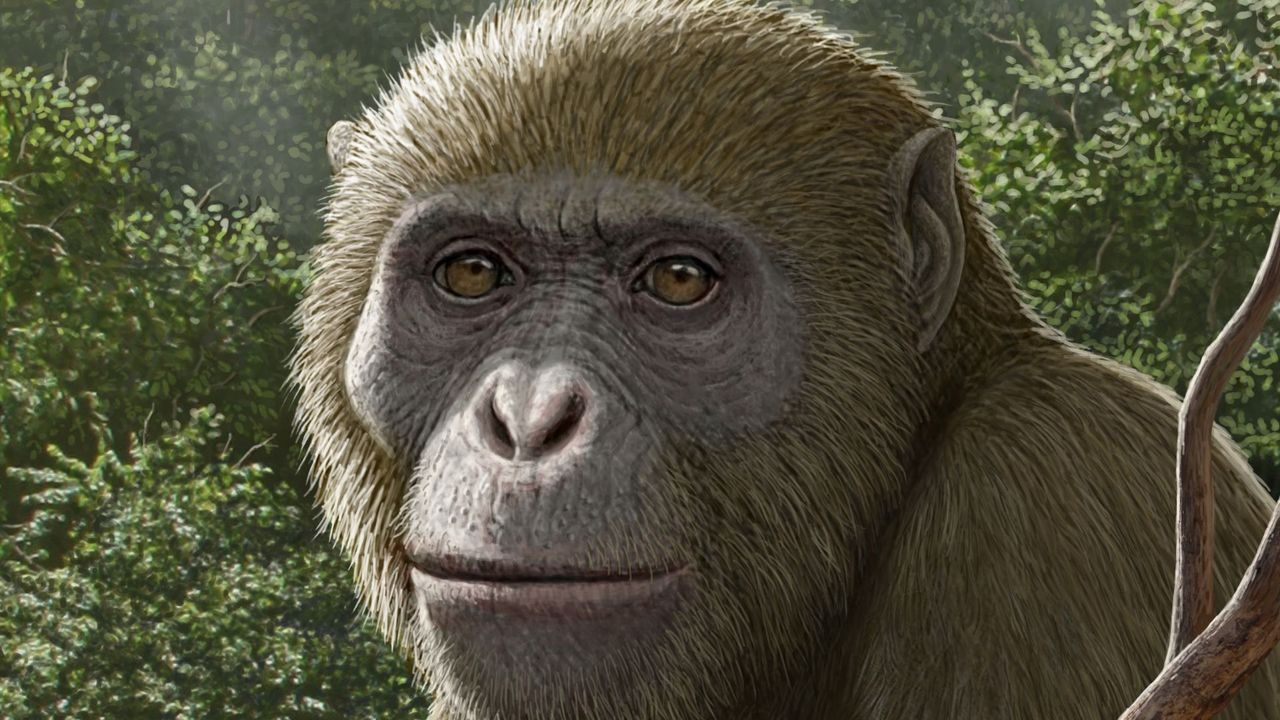
Scientists thought they knew where the ancestors of all living apes — a group that includes humans — first emerged. They were wrong, and an 18 million-year-old discovery in Egypt is rewriting that assumption in a significant way.
Fossils belonging to a newly identified genus and species of ancient ape have been unearthed in Egypt, in a location that has researchers reconsidering one of the most fundamental questions in human evolution: where did modern apes actually come from?
The find is surprising not just because of its age, but because of where it turned up. For decades, the scientific consensus pointed firmly toward East Africa as the birthplace of modern apes. These Egyptian fossils suggest the story is more complicated — and more northern — than anyone expected.
The Fossil That Challenges Everything We Thought We Knew
The newly discovered species has been named Masripithecus moghraensis, and its fossils date back approximately 18 million years to the early Miocene epoch. That period is critical in evolutionary history — it’s the window of time during which the ancestors of today’s apes, including humans, are believed to have been diversifying and spreading.
What makes this find so striking is the location. Egypt sits in northeast Africa, far from the East African sites — places like Kenya and Ethiopia — that have traditionally dominated the narrative of ape origins. The discovery hints that the common ancestors of all living apes may have originated in northeast Africa or even Arabia, not in the eastern part of the continent where researchers have long focused their attention.
Researchers describe the discovery as both significant and unexpected. Finding a fossil ape in this region forces scientists to reconsider the geographic range of early apes during the Miocene and opens up new questions about how, and from where, these animals spread across the ancient world.
What We Know About Masripithecus moghraensis
Because East Africa has been the center of gravity for paleoanthropology for generations — it’s where some of the most famous early hominin fossils have been found, and it’s where researchers have historically concentrated their fieldwork.
But apes and hominins are not the same thing, and the question of where the broader ape lineage first took shape is a separate — and older — puzzle. If Masripithecus moghraensis represents an early branch of the ape family tree close to the common ancestor of all living apes, then the geographic origin point needs to move significantly on the map.
Northeast Africa and Arabia were very different places 18 million years ago. During the early Miocene, these regions were lush, forested environments connected by land bridges that no longer exist. Animals could move between Africa and Eurasia in ways that are impossible today. A fossil ape turning up in Egypt during this period is not geologically implausible — but it does challenge the assumption that East Africa was the exclusive cradle of ape evolution.
Researchers note that finding such a specimen in this region is both significant and, to use their own framing, unexpected. That combination — significance and surprise — is exactly what drives paleontology forward.
What This Means for Understanding Human Origins
Humans are apes. That is not a metaphor or a casual comparison — it is a biological fact. We belong to the same group as chimpanzees, gorillas, orangutans, and gibbons. So any discovery that reshapes our understanding of where apes first evolved is, by extension, a discovery that reshapes our understanding of where we came from.
If the ancestors of all living apes emerged in northeast Africa or Arabia rather than East Africa, it raises new questions about the migration routes, environmental pressures, and evolutionary timelines that eventually led to the emergence of the human lineage millions of years later.
This does not overturn everything scientists know about human evolution — the fossil record for later hominins remains anchored in East Africa. But it does suggest that the deeper roots of the ape family tree may stretch into a broader and more northerly region than previously understood.
What Researchers Will Be Looking For Next
A single new species, however remarkable, is a data point — not a conclusion. Paleoanthropologists will now be looking for additional fossil evidence from northeast Africa and the Arabian Peninsula that might corroborate or complicate the picture that Masripithecus moghraensis suggests.
The early Miocene remains one of the least well-documented periods in ape evolutionary history, partly because fieldwork in northeast Africa and Arabia has historically been less intensive than in East Africa. This discovery may accelerate interest in those regions and lead to new excavations that could fill critical gaps in the fossil record.
For now, the Egyptian fossils stand as a compelling challenge to a long-held assumption — and a reminder that the history of life on Earth is rarely as tidy as our current best theories suggest.
Frequently Asked Questions
What is Masripithecus moghraensis?
It is a newly identified genus and species of ancient ape, approximately 18 million years old, whose fossils were discovered in Egypt during the early Miocene epoch.
Why is finding this fossil in Egypt surprising?
Scientists had long assumed that the ancestors of modern apes originated in East Africa, so discovering a fossil ape in northeast Africa challenges that established consensus.
How old are the fossils?
The fossils are approximately 18 million years old, placing them in the early Miocene period.
Does this discovery change what we know about human evolution?
It suggests that the deeper roots of the ape family tree — which includes humans — may extend into northeast Africa or Arabia, though it does not overturn the broader evidence for later human evolution in East Africa.
Are humans considered apes?
Yes. Biologically, humans belong to the ape group, which also includes chimpanzees, gorillas, orangutans, and gibbons.
Will there be further research in this region?
This has not been formally confirmed in detail, but discoveries like this typically prompt increased scientific interest and fieldwork in the surrounding region to look for additional supporting evidence.



Leave a Reply