
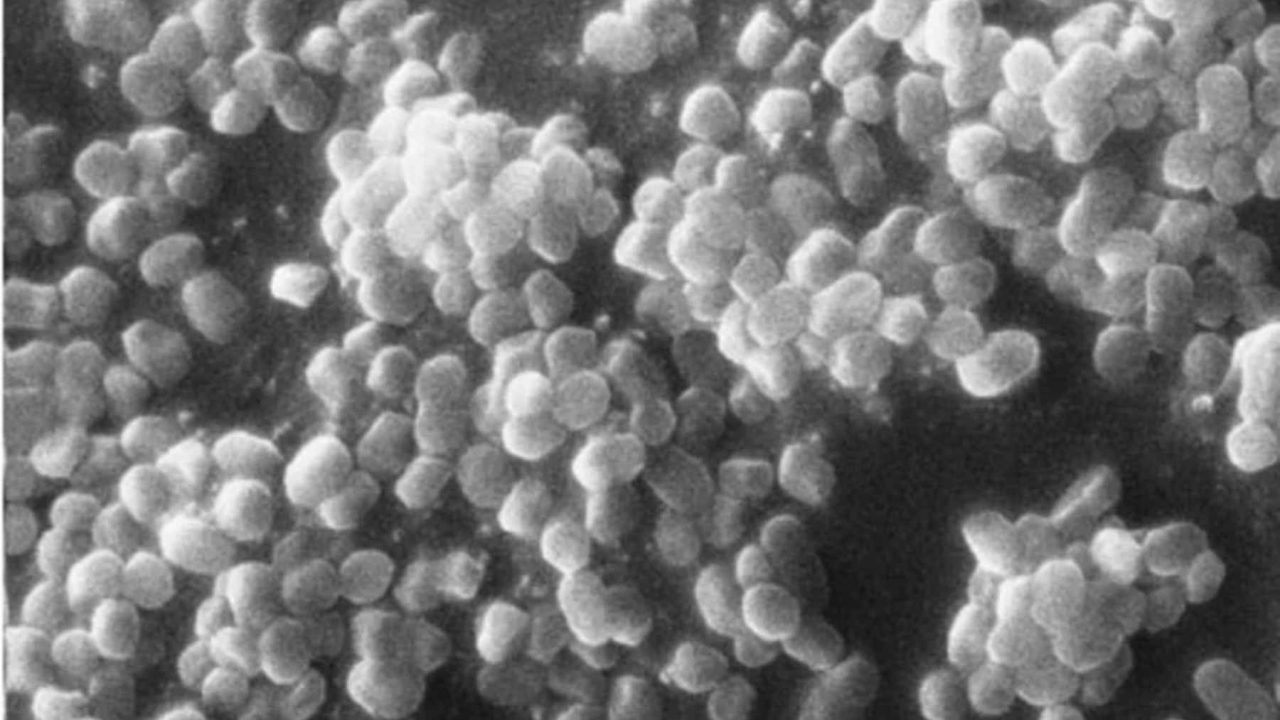
A bacterium frozen in Romanian cave ice for roughly 5,000 years has just been revived by scientists — and it came back resistant to 10 of the antibiotics doctors are still using in hospitals right now. That single finding carries implications that reach far beyond one cave, one microbe, or one country.
The discovery was made by a team from the Romanian Academy working inside Scărișoara Ice Cave, a remarkable underground glacier in Romania. What they found buried in ancient ice has forced researchers to rethink a long-held assumption: that antibiotic resistance is a modern problem, born from decades of human overuse of medicine.
It isn’t. And the evidence is 5,000 years old.
How Scientists Reached a Microbe From the Ancient World
Getting to this bacterium wasn’t simple. Researchers drilled a 25-meter ice core from the cave’s Great Hall — a frozen archive that contains roughly 13,000 years of climate and microbial history, layer by layer, like pages in a book.
From the section of ice corresponding to approximately 5,000 years ago, the team isolated a cold-loving bacterium now designated Psychrobacter SC65A.3. After reviving it in the lab, they sequenced its full genome and began mapping the genes responsible for its survival under extreme conditions — bitter cold, low nutrients, and, as it turned out, modern antibiotics.
The bacterium belongs to a group known as psychrophiles, organisms adapted to thrive in near-freezing environments. Scărișoara Ice Cave’s Great Hall has preserved these microbes in a state of suspended animation, essentially unchanged since they were first frozen in place thousands of years ago.
What Psychrobacter SC65A.3 Can Actually Resist
When the research team tested the revived bacterium against a panel of 28 modern antibiotics — drugs used today in clinical settings to treat serious infections of the lungs, skin, blood, urinary tract, and reproductive system — the results were striking.
SC65A.3 resisted 10 out of 28 antibiotics tested, spanning eight different drug classes. These are not obscure or experimental compounds. They are medicines actively prescribed by doctors right now for some of the most serious infections patients face.
| Detail | Finding |
|---|---|
| Bacterium name | Psychrobacter SC65A.3 |
| Age of ice sample | Approximately 5,000 years |
| Ice core depth drilled | 25 meters |
| Total ice archive span | ~13,000 years of climate and microbial history |
| Antibiotics tested | 28 modern clinical antibiotics |
| Antibiotics resisted | 10 (across 8 drug classes) |
| Infection types targeted by those drugs | Lungs, skin, blood, urinary tract, reproductive system |
| Research institution | Romanian Academy |
| Cave location | Scărișoara Ice Cave, Romania |
The genome sequencing also identified the specific genes responsible for both the bacterium’s cold-weather adaptations and its resistance mechanisms. In other words, the resistance wasn’t random — it was encoded in the organism’s DNA long before the first antibiotic was ever synthesized in a laboratory.
Why This Challenges Everything We Thought About Antibiotic Resistance
For decades, the dominant narrative around antibiotic resistance has been a story of human error. We overused antibiotics in medicine and agriculture, the thinking goes, and bacteria evolved in response. Fix the overuse, and the problem becomes manageable.
That story isn’t wrong, exactly. But it’s incomplete.
What SC65A.3 demonstrates is that resistance genes existed in nature millennia before humans ever developed antibiotics. This bacterium was never exposed to a hospital, a pharmacy, or a farm. It was frozen in a cave. Yet it carries the genetic tools to defeat drugs that modern medicine depends on.
Researchers note that the genes identified in SC65A.3 help it cope with environmental stress in general — extreme cold and nutrient scarcity — and that some of those same genetic mechanisms happen to confer resistance to antibiotics as well. Resistance, in this view, is partly a byproduct of survival biology that predates human civilization entirely.
This doesn’t mean the antibiotic resistance crisis isn’t real or urgent. It means the problem has deeper roots than previously understood, and that the reservoir of resistance genes in the natural world — including in ancient, frozen environments — is far larger than scientists had accounted for.
What This Means for People Facing Serious Infections Today
The practical implications are sobering. The antibiotics that SC65A.3 resists are not last-resort drugs sitting in a vault somewhere. They are front-line treatments for conditions that send people to hospitals every day — pneumonia, sepsis, urinary tract infections, skin infections, and more.
If ancient environments like Scărișoara harbor microbes pre-equipped with resistance genes, then melting permafrost, thawing glaciers, and disturbed ancient ice deposits around the world could potentially release similar organisms into modern ecosystems. Climate change, in this context, isn’t just an environmental issue — it becomes a microbial one too.
Scientists also point to the hopeful side of this discovery. Studying how ancient bacteria like SC65A.3 manage resistance at the genetic level could help researchers understand the fundamental biology of resistance itself — knowledge that might eventually be used to design drugs that these mechanisms cannot defeat.
What Researchers Are Focused on Next
The Romanian Academy team’s work on SC65A.3 opens several lines of future inquiry. The 25-meter ice core from Scărișoara’s Great Hall represents only a fraction of what the cave’s 13,000-year archive may contain. Older layers could hold organisms with even more unexpected properties.
Beyond Romania, researchers studying ancient ice in the Arctic, Antarctic, and high-altitude glaciers around the world are increasingly alert to what might be preserved — and what might be released as those environments change. SC65A.3 is likely not unique. It may be representative of a much broader category of ancient microbes carrying resistance genes that science has barely begun to catalog.
The immediate priority is mapping those resistance genes in detail and understanding whether they could transfer to other bacteria — a process called horizontal gene transfer — that would allow modern pathogens to acquire ancient resistance tools. That question remains open, and answering it is now considerably more urgent.
Frequently Asked Questions
Where was the ancient bacterium discovered?
It was found in Scărișoara Ice Cave in Romania, specifically in ice from the cave’s Great Hall, drilled at a depth corresponding to approximately 5,000 years ago.
What is the bacterium called?
The organism is designated Psychrobacter SC65A.3, a cold-loving microbe belonging to a group of bacteria adapted to survive in near-freezing environments.
How many antibiotics was it resistant to?
In lab testing against 28 modern clinical antibiotics, SC65A.3 showed resistance to 10 of them, spanning eight different drug classes.
Does this mean antibiotic resistance started in ancient times?
The finding strongly suggests that resistance genes existed in nature long before humans developed antibiotics, though scientists note this does not diminish the role of modern overuse in accelerating the current crisis.
Could melting ice release more ancient resistant bacteria?
This is an active concern among researchers. As glaciers and permafrost thaw due to climate change, ancient microbes preserved in ice could potentially be released into modern environments, though the full risk of this has not yet been confirmed by this study alone.
Who conducted the research?
The study was carried out by a team from the Romanian Academy, working with ice core samples from Scărișoara Ice Cave in Romania.



Leave a Reply