
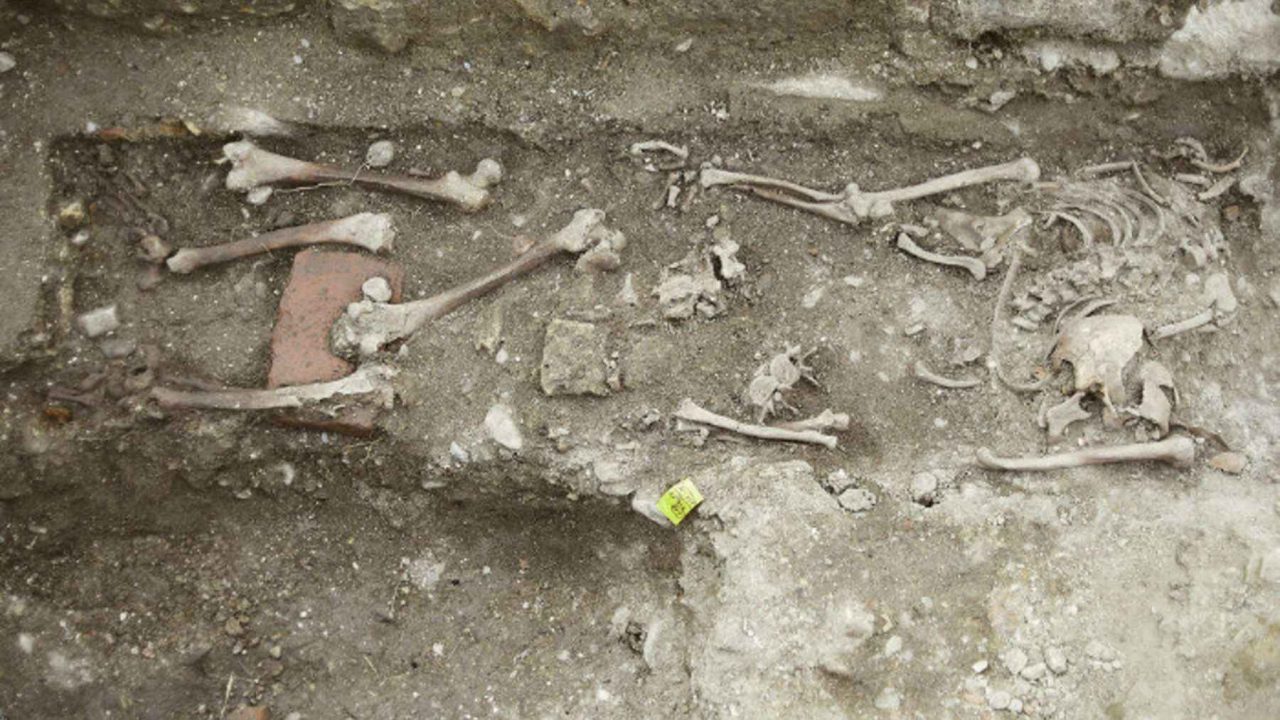
Eighty-four people who lived and died in north-central Poland between roughly 4100 and 1230 BC left behind something more valuable than pottery or tools — they left their bones. And those bones, analyzed through a technique that reads the chemical fingerprints of everything a person ever ate, have allowed scientists to reconstruct nearly 3,000 years of dietary history in remarkable detail.
The research, published as an open-access study, focused on individuals from the Kuyavia region of Poland. What the scientists found was a long, relatively stable period of mixed farming built around cereals and cattle — and then, at a certain point, the chemistry changes fast. The arrival of millet as a dietary staple marks one of the clearest turning points in the entire record.
It’s the kind of story that rarely makes headlines, but it speaks directly to something fundamental: how ordinary people fed themselves, and how that changed over millennia.
How Scientists Read a 3,000-Year-Old Diet
The method behind the study is called stable isotope analysis. It works by measuring natural variations of carbon and nitrogen preserved in human and animal bone collagen, as well as in charred grain samples recovered from archaeological sites.
Think of it as a biological paper trail. Carbon isotopes help distinguish between different types of plants in a person’s diet — crucially, they can separate plants that use different photosynthetic pathways, which is how researchers can identify the presence of millet versus older European staple crops. Nitrogen isotopes, meanwhile, tend to rise as you move up the food chain — from plants to herbivores to humans — so they offer a rough measure of how much animal protein someone consumed.
Together, these two signals give researchers something close to a dietary fingerprint for each individual. Multiply that across 84 people spanning nearly 3,000 years, and patterns begin to emerge that no single burial site could reveal on its own.
What the Bones from Kuyavia Actually Revealed
For most of the period covered by the study — from around 4100 BC onward — the isotope data points to a diet built on a stable foundation of cereals and cattle. This is consistent with what archaeologists already know about early farming communities in central Europe: mixed agriculture, relatively predictable, not dramatically unequal in terms of food access.
Then the signal shifts. Millet, a crop with a distinctly different carbon isotope signature from older European cereals like wheat and barley, begins to appear prominently in the record. The chemistry changes fast enough that researchers can identify it as a genuine dietary turning point rather than a gradual drift.
Beyond the millet signal, the data also suggests:
- Intensive field fertilizing was likely taking place, based on nitrogen signals in the grain samples
- Cattle were grazing in wooded or wetter landscapes rather than open pasture
- Early signs of unequal access to animal protein appear in the human remains — meaning not everyone in these communities was eating the same diet
That last finding is particularly significant. Inequality in food access is something modern societies grapple with constantly, but seeing its earliest traces written into prehistoric bones adds a long and sobering dimension to the story.
Why Millet Changes Everything
Millet isn’t a crop that gets much attention today, at least not in Western Europe or North America. But its arrival in prehistoric Poland was apparently a big deal — and the isotope record makes that visible in a way that grain deposits alone never could.
Unlike wheat or barley, millet uses a different carbon-fixing process during photosynthesis. That means anyone who ate a lot of it would carry a measurably different carbon isotope ratio in their bones. When that ratio starts showing up consistently across multiple individuals in the Kuyavia sample, it tells researchers that millet wasn’t just present — it had become a genuine staple.
The broader implications reach beyond diet. A shift in staple crops often signals changes in farming practices, land use, climate adaptation, and social organization. The additional signals in this dataset — the fertilizing evidence, the changed grazing patterns, the emerging inequality in protein access — suggest the millet transition wasn’t happening in isolation. Something larger was reorganizing how these communities produced and distributed food.
A Snapshot of Key Study Parameters
| Detail | Finding |
|---|---|
| Study region | Kuyavia, north-central Poland |
| Number of individuals analyzed | 84 |
| Time span covered | Approximately 4100 to 1230 cal BC |
| Primary method | Stable isotope analysis of bone collagen and charred grains |
| Key isotopes measured | Carbon and nitrogen |
| Major dietary turning point identified | Arrival of millet as a staple crop |
| Additional signals detected | Intensive fertilizing, altered cattle grazing, early protein inequality |
What This Means Beyond the Archaeology
Studies like this one matter for reasons that extend well past academic interest in prehistoric Poland. They demonstrate that food systems have never been static — that what people eat, how they farm, and who gets access to the best nutrition has been shifting and stratifying for thousands of years.
The early evidence of unequal protein access in this dataset is a reminder that food inequality isn’t a modern invention. Researchers note that nitrogen isotope levels can reflect how much animal protein an individual consumed, and when those levels vary significantly across a community, it suggests that some people consistently ate better than others.
The study was published as open-access, meaning the data and findings are freely available to other researchers — an increasingly important detail as scientists work to build larger, cross-regional pictures of prehistoric diet and social structure across Europe.
Frequently Asked Questions
How did scientists reconstruct a prehistoric diet from bones?
They used stable isotope analysis, which measures natural variations in carbon and nitrogen preserved in bone collagen and charred grain samples to identify what people ate and how much animal protein they consumed.
How many people were included in the study?
The study analyzed 84 individuals from the Kuyavia region of north-central Poland, spanning a period from approximately 4100 to 1230 cal BC.
Why is millet significant in this research?
Millet has a distinctly different carbon isotope signature from older European cereals like wheat and barley, making its appearance in the bone record a clear and measurable dietary turning point.
What other findings came alongside the millet discovery?
The data also suggested intensive field fertilizing, cattle grazing in wooded or wetter landscapes, and early signs of unequal access to animal protein among individuals in the community.
Is this study publicly available?
Yes, the research was published as an open-access study, making the findings freely available to other researchers and the public.
Does this research have any relevance to understanding food inequality today?
The study identified early traces of unequal protein access in prehistoric communities, suggesting that food inequality has deep historical roots that predate modern economic systems by thousands of years.




Leave a Reply