
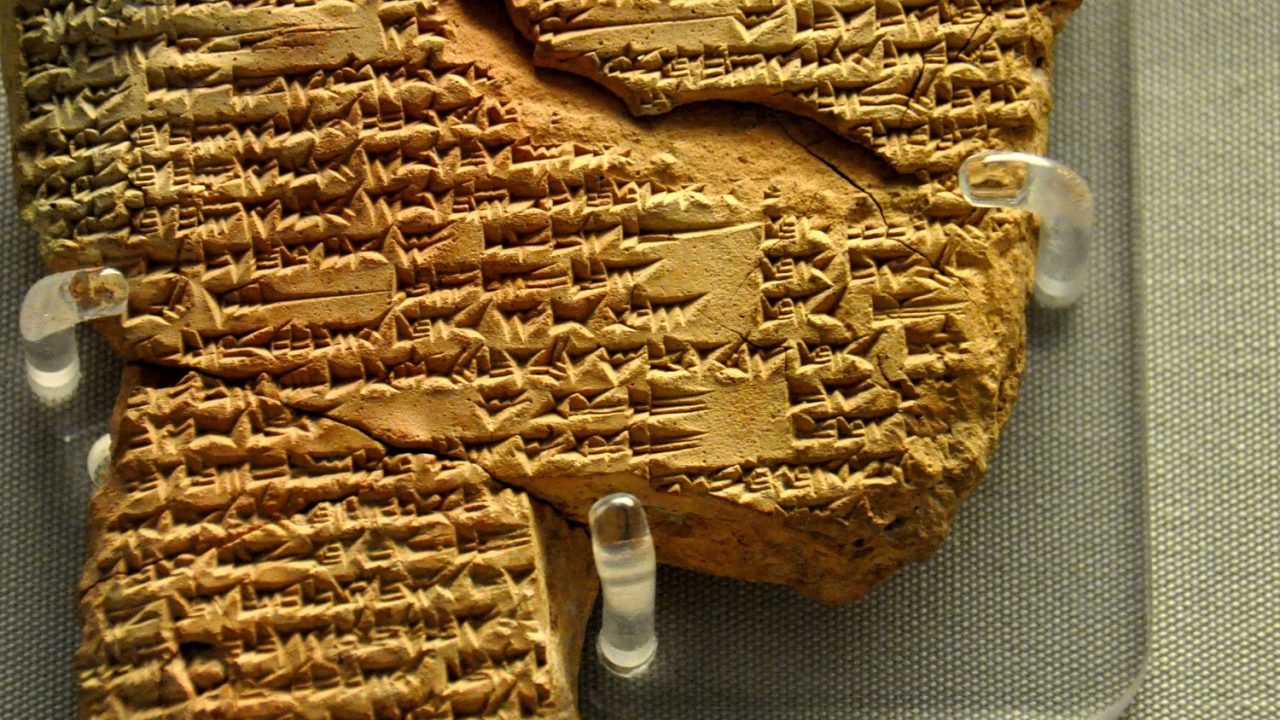
Dr. Helena Kozlowski paused mid-lecture, her archaeology students leaning forward as she held up an ancient clay tablet. “What you’re looking at,” she whispered, “changed how we understand power, prophecy, and political intrigue in ancient Mesopotamia.” The 4,000-year-old cuneiform script told a story so dramatic it could rival any modern thriller.
That tablet contained one of history’s most fascinating tales of dreams, betrayal, and destiny—the legend of Sargon of Akkad and his former master, King Ur-Zababa of Kish.
This isn’t just another dusty historical account. It’s a story that reveals how ancient rulers used dreams, omens, and even attempted murder to maintain power, and how one abandoned baby became the world’s first multi-ethnic emperor.
The Dream That Started Everything
Around 2334 BCE, King Ur-Zababa of Kish experienced a nightmare that would change the course of history. In his dream, the goddess Inanna appeared, drowning the king in a river of blood. But here’s where it gets interesting—the dream didn’t just predict Ur-Zababa’s downfall. It specifically named his cupbearer, Sargon, as the instrument of his destruction.
Ancient Mesopotamians took dreams seriously. They weren’t just random brain activity during sleep—they were direct communications from the gods. When a king dreamed of his own death at the hands of a servant, action was required.
Dreams in ancient Mesopotamia were considered prophetic visions that demanded immediate attention. Kings had entire courts of dream interpreters because ignoring divine warnings could mean losing everything.
— Dr. Marc Van De Mieroop, Ancient Mesopotamian Historian
But Ur-Zababa faced a dilemma. Sargon wasn’t just any servant—he was trusted, capable, and apparently favored by the gods. Killing him outright might anger the deities even more.
When Dreams Collide: Sargon’s Divine Vision
Here’s where the story becomes even more extraordinary. Sargon also began experiencing prophetic dreams. In his visions, he saw himself not as a humble cupbearer, but as a mighty king ruling over vast territories. The gods showed him armies marching under his banner and cities bowing to his authority.
Two men, two dreams, two completely different destinies predicted by the same divine realm.
| Ur-Zababa’s Dream | Sargon’s Dream |
|---|---|
| Drowning in river of blood | Crowned as mighty emperor |
| Goddess Inanna brings destruction | Gods grant divine mandate |
| Sargon as instrument of downfall | Self as chosen ruler |
| Fear and desperation | Confidence and destiny |
What makes this legend so powerful is how it shows two perspectives on the same cosmic event. One man’s nightmare becomes another man’s divine calling.
— Dr. Sarah Johnson, Professor of Ancient Near Eastern Studies
The Failed Assassination and Its Bloody Consequences
Desperate to prevent his prophesied doom, Ur-Zababa devised a plan. He would send Sargon on a diplomatic mission to Lugal-Zage-Si, king of Uruk, carrying a sealed message. The message contained a simple request: kill the bearer.
It was an ancient version of a death warrant, and Sargon had no idea he was carrying his own execution order.
But fate—or divine intervention—had other plans. According to the legend, the gods protected Sargon during his journey. Some versions say Lugal-Zage-Si refused to kill a messenger. Others suggest Sargon’s natural charisma and military genius impressed the Uruk king so much that he decided to spare him.
What happened next fulfilled both dreams in the most literal way possible.
Instead of dying in Uruk, Sargon gathered supporters and launched a military campaign. He conquered city after city, eventually facing both Ur-Zababa and Lugal-Zage-Si in battle. The rivers did indeed run red with blood—but it was the blood of his enemies, not Sargon himself.
The irony is perfect. By trying to prevent his prophetic dream, Ur-Zababa actually caused it. He turned a loyal servant into a vengeful enemy.
— Dr. Benjamin Foster, Yale University Assyriologist
Why These Ancient Dreams Still Matter Today
This 4,000-year-old story resonates because it explores timeless themes that still captivate us:
- Self-fulfilling prophecy: Ur-Zababa’s attempt to avoid his fate directly caused it
- Social mobility: A servant rising to become an emperor challenges rigid class structures
- Divine justice: The gods punishing a ruler who betrays trust
- Leadership transition: How power passes from old to new generations
Modern archaeologists have found evidence supporting parts of Sargon’s historical existence. He really did establish the Akkadian Empire, the world’s first multi-ethnic state. His influence lasted for over 150 years, and his descendants ruled much of Mesopotamia.
The dream narrative, whether literally true or legendary, served important political purposes. It legitimized Sargon’s rule by claiming divine approval while explaining why rebellion against an established king was justified.
These dream stories weren’t just entertainment. They were sophisticated political propaganda that explained regime change in religious terms that everyone could understand.
— Dr. Amanda Podany, Ancient Mesopotamian Civilization Expert
Archaeological evidence shows that Sargon’s empire really did transform the ancient world. He standardized weights and measures, promoted trade across ethnic boundaries, and established administrative practices that influenced civilizations for millennia.
The legend of two dreams and a river of blood reminds us that even in ancient times, people understood the complex relationship between destiny, choice, and consequence. Sometimes trying to escape fate only ensures you’ll meet it head-on.
FAQs
Did Sargon of Akkad really exist?
Yes, archaeological evidence confirms Sargon was a real historical figure who founded the Akkadian Empire around 2334 BCE.
Were the dreams actually prophetic or just legend?
The dream narratives were likely created later to explain and legitimize Sargon’s rise to power, though ancient Mesopotamians genuinely believed in prophetic dreams.
What happened to Ur-Zababa after Sargon’s conquest?
Historical records suggest Ur-Zababa was defeated in battle, though specific details of his fate aren’t clearly documented.
How long did Sargon’s empire last?
The Akkadian Empire established by Sargon lasted approximately 180 years, from around 2334 to 2154 BCE.
Why is this story important to historians?
It shows how ancient rulers used religious narratives to justify political changes and provides insight into Mesopotamian beliefs about destiny and divine intervention.
Are there other similar legends from ancient times?
Yes, many cultures have stories of humble individuals rising to power through divine intervention, including Moses, Cyrus the Great, and Romulus and Remus.

Leave a Reply