
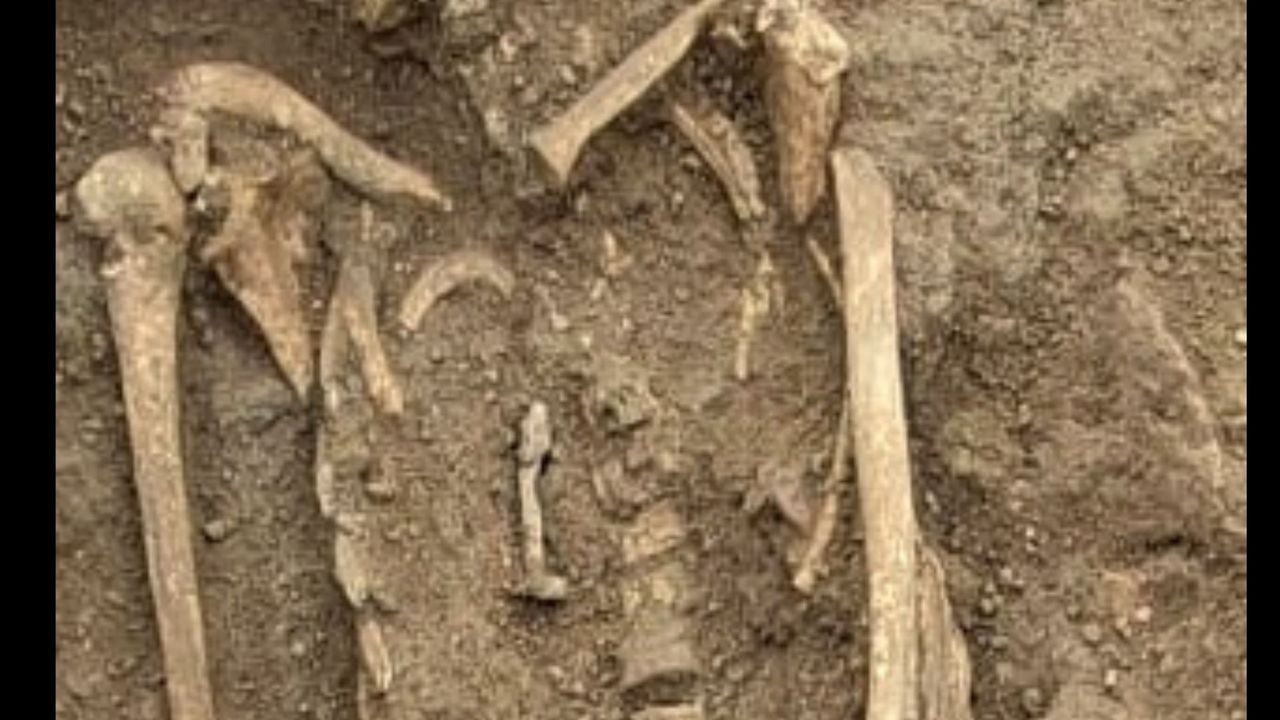
Small iron nails placed across the chests of the dead — that image alone tells you something strange and deliberate was happening in a Roman cemetery nearly two millennia ago. Archaeologists excavating a Roman necropolis have uncovered a striking burial detail: 1,800-year-old iron nails laid directly on the bodies of three individuals, in what researchers believe was a ritual practice meant to protect the living from the dead.
The find sheds rare light on ancient Roman fears about death, the afterlife, and the uneasy boundary between the two worlds. And it turns out this wasn’t some isolated act of superstition — it was a documented practice with roots running deep through Roman culture.
Diletta Menghinello, an archaeologist with the Italian Ministry of Culture’s Special Superintendency of Rome and the leader of the excavation, confirmed that the discovery of nails in burials “is a practice well documented in the Roman period and in later phases.” That context transforms these small pieces of corroded metal into something far more significant: a window into how ancient Romans thought about death, danger, and the power of the dead to affect the living.
What Was Found — and Where
The nails were discovered across three separate burials within a Roman necropolis — an ancient cemetery — during an archaeological excavation overseen by the Special Superintendency of Rome, part of Italy’s Ministry of Culture. In each case, the small iron nails were positioned on top of the skeleton’s chest, a placement that appears intentional rather than incidental.
Necropolises were common features of the Roman world. Roman law actually required that the dead be buried outside city walls, making these large cemetery complexes a standard part of urban planning. The one under investigation here dates to roughly the second century AD, placing these burials squarely in the height of the Roman Empire.
The close-up images of the skeletal remains show the nails resting just beside the spine on the chest — positioned with a care that speaks to deliberate ritual, not accident or coincidence.
The Ancient Roman Belief Behind the Nails
So why nails? The practice, as researchers understand it, carried a dual purpose: protecting both the living and the dead. Romans harbored genuine anxiety about certain categories of the deceased — particularly those who had died violently, prematurely, or under unusual circumstances. These individuals were believed to be more likely to linger, restless and potentially dangerous, in the world of the living.
Nails, in the Roman magical and ritual tradition, were understood to have binding and fixing properties. Driving or placing nails in or near a body was thought to “pin” the spirit in place — preventing it from wandering back to haunt or harm those left behind. At the same time, some interpretations suggest the practice also served a protective function for the dead themselves, shielding them from malevolent forces in the afterlife.
This wasn’t fringe belief. The use of nails in magical and funerary contexts appears across Roman archaeological sites and in ancient written sources. Curse tablets — thin sheets of lead inscribed with binding spells — were often fixed with nails, invoking similar ideas about supernatural restraint and fixation. The nail, in Roman thinking, was a tool of power in both the physical and spiritual worlds.
Key Details From the Discovery
| Detail | What the Evidence Shows |
|---|---|
| Age of the nails | Approximately 1,800 years old |
| Material | Iron |
| Number of burials affected | Three separate burials |
| Placement on body | On top of the chest, near the spine |
| Location of find | A Roman necropolis |
| Excavation authority | Special Superintendency of Rome, Italian Ministry of Culture |
| Lead archaeologist | Diletta Menghinello |
| Historical period of practice | Roman period and later phases |
- The nails were placed deliberately on the chest of each skeleton — not scattered randomly within the grave
- The practice of using nails in Roman burials is well-documented across archaeological sites from the period
- The ritual is believed to have served a dual purpose: restraining the dead and protecting the living
- The excavation was led by an archaeologist from Italy’s Ministry of Culture
Why This Find Still Matters Today
Discoveries like this one matter beyond their novelty. They remind us that ancient peoples weren’t simply primitive versions of ourselves — they had sophisticated, internally consistent belief systems about death, the spirit, and the relationship between the living and the dead.
The Romans built one of history’s most advanced civilizations, and yet they buried their dead with iron nails to keep restless spirits from returning. That tension — between rational achievement and deep supernatural fear — is profoundly human. It’s a tension that never really went away.
For archaeologists, each burial with unusual features like these nails offers a data point in a much larger picture of how Roman funerary practices varied by region, time period, social class, and individual circumstance. Three burials in one necropolis sharing this practice suggests it wasn’t random — it points to a local tradition, a shared belief, or a specific concern about the individuals buried there.
Menghinello’s confirmation that this practice is “well documented in the Roman period and in later phases” also hints at continuity — the idea that this kind of ritual fear about the dead didn’t die with the Roman Empire but persisted into later European history, threading through medieval and early modern burial customs as well.
What Researchers Are Looking At Next
The excavation of this Roman necropolis is ongoing, and additional analysis of the skeletal remains and burial context is expected to shed more light on who these three individuals were, how they died, and why someone felt it necessary to nail them — figuratively speaking — to the afterlife.
Researchers will likely examine whether the individuals showed signs of unusual deaths, illness, or other circumstances that might have made them candidates for this kind of ritual precaution. Further study of the site may also reveal whether additional burials with similar features exist within the same cemetery.
For now, three iron nails placed on three chests nearly two thousand years ago have opened a small but vivid door into the Roman mind — and what it feared most about death.
Frequently Asked Questions
Where were the 1,800-year-old nails discovered?
The nails were found in a Roman necropolis during an excavation led by the Special Superintendency of Rome, part of Italy’s Ministry of Culture.
Why did Romans place nails on the bodies of the dead?
Researchers believe the practice was intended to protect the living from the dead — and possibly to protect the dead as well — by ritually binding the spirit to prevent it from returning to haunt the living.
How many burials contained nails?
Three separate burials within the necropolis were found to contain small iron nails placed on top of the skeletons’ chests.
Who led the excavation?
The excavation was led by Diletta Menghinello, an archaeologist with the Italian Ministry of Culture’s Special Superintendency of Rome.
Was this practice unique to these three burials?
No — according to Menghinello, the use of nails in burials “is a practice well documented in the Roman period and in later phases,” suggesting it was a broader cultural tradition rather than an isolated event.
What will researchers study next?
Further analysis of the skeletal remains and burial context is expected, which may reveal more about who the individuals were and why this ritual was applied to them specifically. This has not yet been fully confirmed.




Leave a Reply