
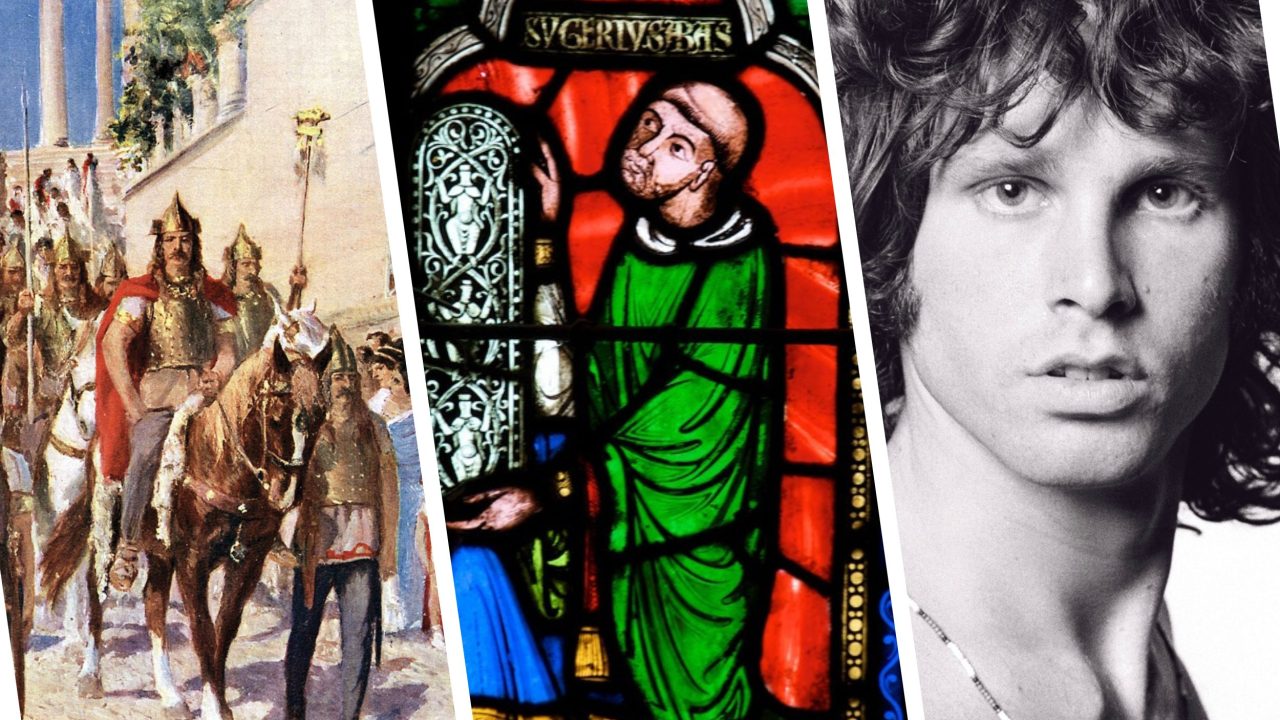
What do a migration-era Germanic tribe and the brooding, bass-heavy world of modern goth music actually have in common? The answer stretches across more than a thousand years of history — and it’s a more direct line than most people would ever guess.
Writer and historian Ken Mondschein recently traced that connection, starting from an unlikely place: a personal rediscovery of old-school goth bands like Joy Division and Sisters of Mercy. That curiosity led to a deeper question — how did a word rooted in ancient tribal identity come to describe dark eyeliner, mournful synthesizers, and a subculture that has endured for decades?
The story begins not in a nightclub, but on the banks of the Danube River, sometime in the third century CE.
Who the Goths Actually Were
The Goths were a real Germanic people, first mentioned by Roman and Greek authors in the third century CE. At that time, they were living north of the Danube — on the fringes of the Roman world, but not yet inside it.
That changed dramatically in the late fourth century. Pushed eastward by stronger neighboring peoples, the Goths crossed the Roman border and became what were known as foederates — dependent peoples living within Roman territory under agreements with the empire.
As Rome’s grip on its own provinces weakened, Gothic factions stepped into the vacuum. The history that followed was fast-moving and consequential:
- The Visigoths (Western Goths) famously sacked Rome in 410 CE — a moment that shocked the ancient world.
- They then moved westward into what is now Spain, eventually being recognized as an independent kingdom in 475 CE by Julius Nepos, the next-to-last Western Roman Emperor.
- The Ostrogoths (Eastern Goths) founded a separate kingdom centered in Ravenna, Italy, in 493 CE.
- That Ostrogothic kingdom lasted until 554 CE, when it was reconquered by the Byzantine Emperor Justinian.
The Goths left their mark on the map of Europe in ways still visible today. The island of Gotland, off the coast of Sweden, is among the place names that preserve their memory across the continent.
A Timeline: The Goths From History to Subculture
| Date / Period | Event |
|---|---|
| 3rd century CE | Goths first mentioned by Roman and Greek authors, living north of the Danube |
| Late 4th century CE | Pushed east by stronger peoples; Goths cross into Roman territory as foederates |
| 410 CE | Visigoths sack Rome under leader Alaric |
| 475 CE | Visigothic kingdom in Spain recognized as independent by Julius Nepos |
| 493 CE | Ostrogoths establish kingdom in Ravenna, Italy |
| 554 CE | Ostrogothic kingdom falls to Emperor Justinian’s reconquest |
| Late 20th century | Goth music emerges as a genre; bands like Joy Division and Sisters of Mercy help define its sound |
The Long Road From Germanic Tribe to Goth Music
The word “Gothic” didn’t travel in a straight line from the Danube to the dance floor. Its meaning shifted and evolved through centuries of cultural reinvention.
During the Renaissance, Italian artists and thinkers used “Gothic” as a dismissive label for the medieval architecture and art they considered barbaric — crude work from the era of the Germanic tribes who had toppled Rome. The term was essentially an insult, equating anything deemed rough or uncivilized with the people who had brought down the ancient world.
That negative association eventually flipped. By the 18th century, Gothic architecture — those soaring cathedral spires, pointed arches, and shadowy interiors — was being celebrated rather than mocked. Writers and artists began romanticizing the medieval period, and the word “Gothic” became attached to a mood: dark, mysterious, dramatic, and sublime.
Gothic literature followed, with tales of haunted castles, supernatural dread, and brooding protagonists. That aesthetic sensibility kept evolving through the 19th and 20th centuries, feeding into horror fiction, dark romanticism, and eventually the music and fashion subculture that emerged in the late 1970s and early 1980s.
Bands like Joy Division and Sisters of Mercy — each with only a handful of albums to their names — distilled that centuries-long mood into something new: heavy beats, darkly melodic bass lines, and vocals delivered like a morbid ritual. The name “goth” for this music was a natural fit. It carried all that accumulated weight of darkness, history, and romantic gloom.
Why This Connection Still Resonates
It might seem like a stretch — connecting a fifth-century Germanic king to someone in a black trench coat at a post-punk show. But the throughline is real. The word “Gothic” has always carried a sense of something on the edge: outside the mainstream, associated with the fall of established order, and tinged with something that polite society finds unsettling.
The actual Goths were outsiders who crossed a border and eventually changed the world. The Gothic architectural style was once considered the work of barbarians. Gothic literature was transgressive. And goth music, from its earliest days, positioned itself against the bright, cheerful surface of mainstream pop culture.
Each reinvention of the word kept something essential from the last. The darkness accumulated. By the time Joy Division recorded their first album, they were — perhaps without knowing it — inheriting a label with roots going back to the banks of the Danube.
That’s a remarkable journey for a single word.
Frequently Asked Questions
Who were the Goths in history?
The Goths were a Germanic people first documented by Roman and Greek writers in the third century CE, living north of the Danube River before entering Roman territory as foederates in the late fourth century.
When did the Visigoths sack Rome?
The Visigoths sacked Rome in 410 CE, one of the most significant events in the decline of the Western Roman Empire.
What happened to the Ostrogoths?
The Ostrogoths founded a kingdom in Ravenna, Italy in 493 CE, which lasted until it was reconquered by the Byzantine Emperor Justinian in 554 CE.
Which bands helped define goth music?
According to historian Ken Mondschein, Joy Division and Sisters of Mercy were among the key bands that helped define the goth music genre, each releasing only a handful of albums.
Is the island of Gotland connected to the Goths?
Yes — Gotland, off the coast of Sweden, is among the European place names that preserve the memory of the Gothic people.
How did the word “Gothic” come to mean dark or gloomy?
The term shifted over centuries: initially used as an insult by Renaissance Italians to describe medieval art and architecture, it was later romanticized and became associated with mystery, darkness, and the sublime — eventually influencing Gothic literature and, much later, goth music.


Leave a Reply