
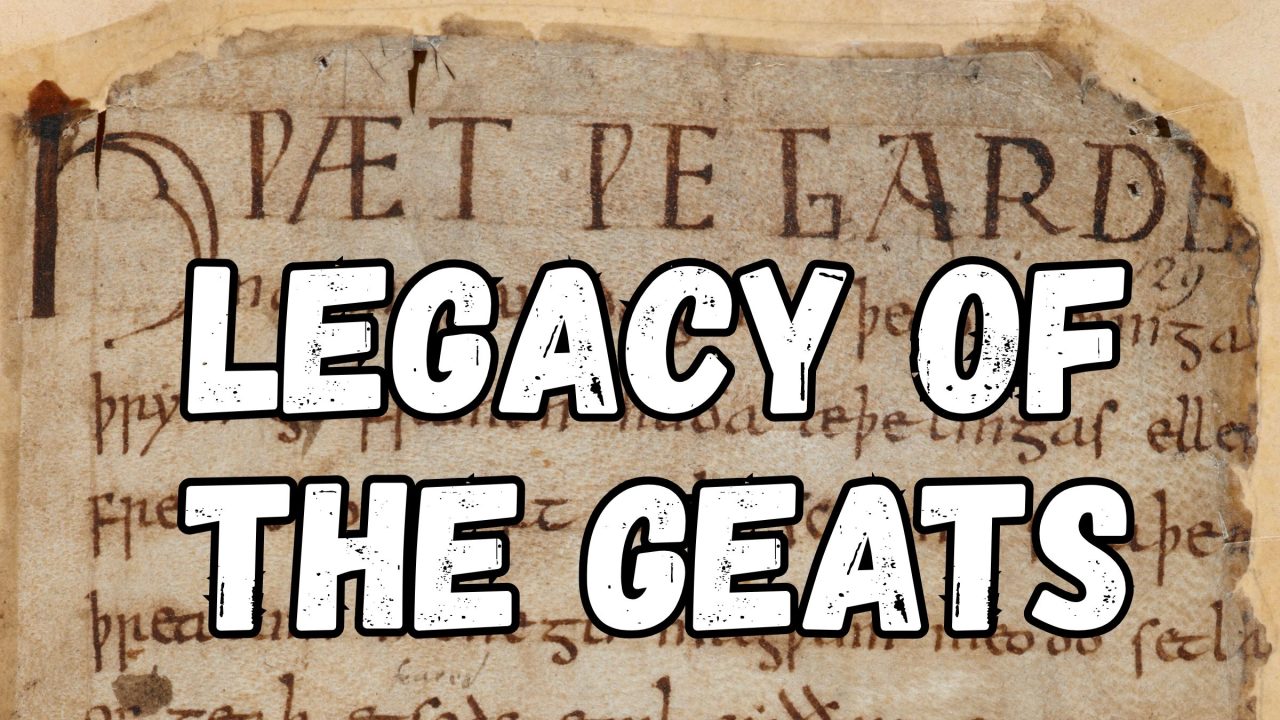
Astrid Lindström carefully traced her finger across the weathered pages of her grandmother’s journal, written in fading Swedish script. The elderly woman from Göteborg had spent decades researching her family’s roots, and now at 78, she finally understood why her ancestors called themselves “Götar” with such fierce pride. “We are the children of the Geats,” her grandmother had written in 1962. “The same people who gave the world Beowulf.”
What Astrid discovered that quiet afternoon would connect her to one of literature’s most enduring legends. Her family lineage stretched back to the Geats, the very tribe that produced the legendary warrior Beowulf. But here’s what makes this story remarkable: the Geats weren’t just fictional characters from an ancient poem.
They were real people, and their descendants still walk the streets of modern Sweden today.
The Geats: From Epic Poetry to Swedish Reality
The Beowulf epic, composed over a thousand years ago, tells the story of a Geatish warrior who defeats monsters and dragons. For centuries, scholars debated whether the Geats were purely mythological or based on actual historical people. Archaeological evidence and linguistic research have now confirmed what many Swedes like Astrid always suspected: the Geats were a genuine Germanic tribe that inhabited what is now southern Sweden.
The region of Götaland, which encompasses much of southern Sweden, literally means “Land of the Geats.” This isn’t just a coincidence or romantic naming convention. Historical records, archaeological findings, and cultural traditions all point to an unbroken connection between the ancient Geats and modern Swedish identity.
“The continuity between the ancient Geats and contemporary Swedish culture is remarkable. We can trace linguistic patterns, place names, and cultural practices that have survived for over a millennium.”
— Dr. Magnus Källström, Swedish National Heritage Board
Modern Swedes don’t just live in the former territory of the Geats; they actively preserve and celebrate this connection. The Swedish national anthem, “Du Gamla, Du Fria,” includes references to the “North” and ancient Nordic heritage that many interpret as honoring their Geatish ancestry.
How Ancient Traditions Live On Today
Walk through any Swedish city, and you’ll find tangible connections to the Geatish legacy everywhere. Street names, cultural festivals, and even business names frequently reference this ancient heritage. But the survival of Geatish memory goes much deeper than surface-level symbolism.
Here are the key ways the Geatish legacy persists in modern Sweden:
- Geographic Names: Götaland, Västergötland, and Östergötland all derive directly from Geatish territorial divisions
- Language Preservation: Old Norse words and phrases from Geatish dialects survive in modern Swedish
- Archaeological Sites: Active excavation and preservation of Geatish settlements and burial grounds
- Cultural Festivals: Annual celebrations that recreate Geatish traditions and honor Beowulf’s legacy
- Educational Curriculum: Swedish schools teach the connection between Beowulf and national heritage
| Modern Swedish Region | Ancient Geatish Territory | Key Archaeological Sites |
|---|---|---|
| Västergötland | Western Geatland | Falköping, Skara |
| Östergötland | Eastern Geatland | Linköping, Vadstena |
| Småland | Southern Geat Territory | Växjö, Kalmar |
| Halland | Coastal Geat Settlements | Halmstad, Varberg |
“When Swedish children learn about Beowulf in school, they’re not studying foreign literature. They’re discovering their own ancestral stories.”
— Professor Elisabet Göransson, University of Gothenburg
The city of Gothenburg itself carries the Geatish name in its Swedish form, “Göteborg,” meaning “Geat fortress.” This isn’t historical accident but deliberate cultural preservation that spans centuries.
Real Impact on Swedish Identity and Tourism
The Geatish connection isn’t just academic curiosity—it actively shapes how Swedes see themselves and how the world sees Sweden. This ancient heritage has become a cornerstone of Swedish cultural tourism and national pride.
Tourism boards throughout Götaland promote “Beowulf tours” that attract thousands of international visitors annually. These tours combine historical education with cultural immersion, allowing visitors to walk through landscapes that may have inspired the epic poem’s settings.
Swedish museums have invested heavily in Geatish exhibits. The Museum of National Antiquities in Stockholm features an entire wing dedicated to Geat artifacts, including weapons, jewelry, and household items that provide tangible connections to Beowulf’s world.
“We see families discovering that their Swedish ancestors might have been contemporaries of the real Beowulf. It’s incredibly moving to witness those moments of connection.”
— Anna Hedberg, Gothenburg Cultural Heritage Center
Modern Swedish literature continues to draw inspiration from Geatish themes. Contemporary authors like Björn Larsson and Kerstin Ekman have written novels that reimagine Beowulf’s story through modern Swedish perspectives, creating a literary bridge between ancient and contemporary culture.
The influence extends to popular culture as well. Swedish metal bands frequently reference Geatish mythology, and video game developers have created internationally successful games based on Nordic legends rooted in Geatish traditions.
For many Swedes, understanding their Geatish heritage provides a sense of continuity in an increasingly globalized world. It connects them to something authentic and uniquely theirs—a cultural anchor that predates modern national boundaries.
“The Geats give us a story that’s both local and universal. We can claim Beowulf as our ancestor while sharing his tale with the entire world.”
— Lars Andersson, Swedish Cultural Ministry
This cultural pride has practical implications too. Swedish businesses increasingly use Geatish imagery and references in international marketing, leveraging the global recognition of Beowulf to promote everything from outdoor gear to technology products.
The legacy of the Geats demonstrates how ancient cultures can survive and thrive in modern contexts. Through deliberate preservation efforts, educational initiatives, and cultural celebration, Sweden has maintained an unbroken connection to one of literature’s most famous civilizations. For people like Astrid, discovering this heritage isn’t just about family history—it’s about understanding their place in a story that began over a thousand years ago and continues today.
FAQs
Were the Geats from Beowulf real people?
Yes, archaeological and historical evidence confirms the Geats were an actual Germanic tribe that lived in what is now southern Sweden.
Can modern Swedes trace their ancestry to the Geats?
Many Swedes, particularly those from Götaland regions, likely have Geatish ancestry, though specific genealogical connections are difficult to prove due to limited medieval records.
Where can I visit Geatish historical sites in Sweden?
Götaland regions offer numerous archaeological sites, museums, and cultural centers dedicated to Geatish heritage, including locations in Gothenburg, Falköping, and Linköping.
How do Swedish schools teach about the Geats?
Swedish curriculum includes both the literary study of Beowulf and the historical study of Geatish culture as part of national heritage education.
Do any Geatish words survive in modern Swedish?
Yes, linguists have identified numerous Old Norse terms with Geatish origins that continue to appear in contemporary Swedish vocabulary.
Is the connection between Beowulf and Sweden widely accepted by scholars?
Most historians and archaeologists agree that Beowulf’s Geats were based on the historical tribe from southern Sweden, though debates continue about specific details.

Leave a Reply