
More than a thousand fish nests, hidden beneath Antarctic ice for who knows how long, were filmed for the first time in 2019 — and scientists are still working through what that discovery means for our understanding of life at the bottom of the world.
The western Weddell Sea has always been one of the most inaccessible stretches of ocean on Earth. Ice-covered for most of the year, brutally cold, and logistically nightmarish to study, it has long been the kind of place where scientists suspected remarkable things were happening without any way to confirm it. A single geological event in 2017 cracked that door open — and what researchers found on the other side was genuinely unexpected.
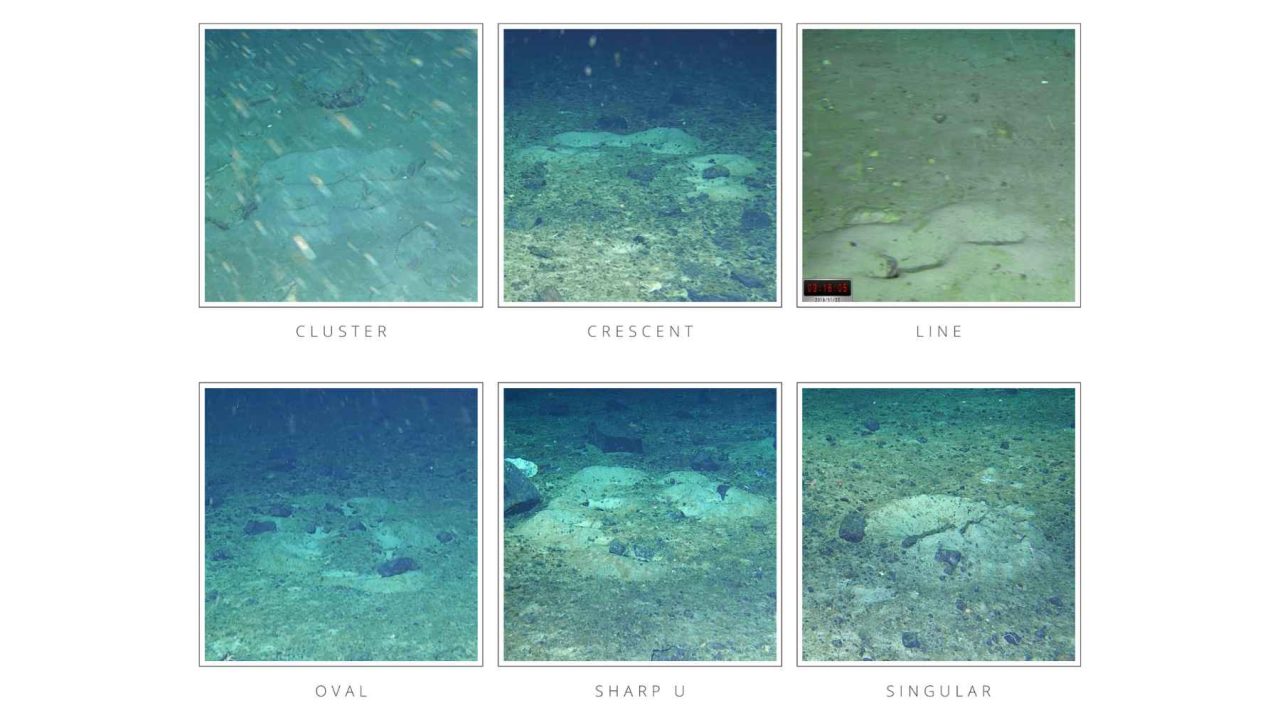
Video surveys conducted during a 2019 expedition documented 1,036 maintained fish nests spread across 277 distinct groups on the seafloor. Many of those nests weren’t scattered randomly. They were arranged in organized, almost geometric patterns — less like natural formations and more like something deliberately planned.
How a Massive Iceberg Made This Discovery Possible
In 2017, an iceberg known as A68 broke away from Antarctica’s Larsen C Ice Shelf. It was one of the largest calving events ever recorded, and it did something scientifically valuable almost by accident: it exposed a large patch of ocean that had previously been sealed under the ice shelf, completely cut off from conventional research methods.
That rare opening gave researchers a window — not a permanent one, but a real one. For the first time, it became practical to send deep-sea robots into parts of the Weddell Sea that had been, for all practical purposes, off limits to science.
Scientists moved quickly. During the Weddell Sea Expedition in early 2019, researchers aboard the research ship SA Agulhas II deployed a remotely operated vehicle called Lassie to film the seabed. Over roughly 27 hours of footage captured across five sites, the scale of what was living down there came into focus.
What the Nests Under the Antarctic Ice Actually Look Like
The word “nest” might conjure something small and improvised. These were neither. The structures documented on the seafloor were maintained — meaning they showed signs of active care, not abandonment. The fish tending them were guarding living eggs, not empty holes.
What made the arrangement especially striking was the geometry. Rather than being scattered randomly across the seafloor the way you might expect from opportunistic nesting behavior, many of the nests were organized into tidy groupings. Researchers described the formations as looking more like a planned neighborhood than a natural accident.
The 1,036 nests were found within 277 distinct clusters across the five surveyed sites — a density that suggested this wasn’t a marginal habitat. This was, by any reasonable measure, a significant and active breeding ground that had simply never been seen before.
Key Facts From the Weddell Sea Expedition
| Detail | Confirmed Information |
|---|---|
| Expedition name | Weddell Sea Expedition |
| Year of expedition | Early 2019 |
| Research vessel | SA Agulhas II |
| ROV used | Lassie |
| Total filming time | Approximately 27 hours |
| Number of sites surveyed | 5 |
| Total nests documented | 1,036 |
| Nest groupings identified | 277 |
| Triggering event | Calving of iceberg A68 from Larsen C Ice Shelf in 2017 |
- The nests were described as maintained, indicating active use rather than abandoned structures
- Many nests were arranged in organized, geometric patterns rather than scattered randomly
- The location — the western Weddell Sea — had previously been inaccessible for this kind of survey
- The discovery was made possible only because the Larsen C calving event opened access to the area
Why This Find Changes What We Thought We Knew
The significance here isn’t just the number of nests. It’s what the discovery implies about how much we’re still missing. The western Weddell Sea is not some obscure geological footnote — it’s a major Antarctic body of water. And yet, until a giant iceberg happened to break off at the right moment, it was effectively invisible to science.
Finding more than a thousand active nests organized into structured communities suggests that the seafloor beneath Antarctic ice may support far more complex ecological activity than previous models assumed. Researchers had long suspected the area was biologically active, but suspicion and documentation are very different things.
The fact that this was captured on video — not inferred from water samples or sonar readings, but actually filmed — makes the evidence unusually direct. The 27 hours of ROV footage from five sites gives scientists a visual record they can analyze, measure, and build on.
What Comes Next for Antarctic Seafloor Research
The calving of A68 was a one-time event, and access to the previously sealed areas of the Weddell Sea is not guaranteed to remain open. Antarctic ice conditions change constantly, and the window that made the 2019 expedition possible may not stay open indefinitely.
Researchers will likely be pushing to return while access remains feasible. The five sites surveyed during the Weddell Sea Expedition represent a fraction of the seafloor that could theoretically be studied, and the density of nests found suggests there may be far more to document across a wider area.
Whether future expeditions can build on this foundation — and whether the political and logistical support exists to make them happen — remains to be seen. What’s already clear is that the 2019 survey fundamentally shifted the baseline for what scientists know is down there.
Frequently Asked Questions
What kind of fish made the nests found under the Antarctic ice?
How were the nests discovered?
Scientists used a remotely operated vehicle called Lassie, deployed from the research ship SA Agulhas II during the Weddell Sea Expedition in early 2019, to film the seafloor across five sites for approximately 27 hours.
Why had no one seen these nests before?
The western Weddell Sea is covered by ice for much of the year and is extremely difficult to access. The area became reachable only after iceberg A68 broke away from the Larsen C Ice Shelf in 2017, exposing ocean that had previously been sealed off.
How many nests were found in total?
Researchers documented 1,036 maintained fish nests organized into 277 distinct groupings across the surveyed sites.
What made the nest formations unusual?
Many of the nests were arranged in organized, geometric patterns rather than scattered randomly — researchers described them as resembling a planned neighborhood rather than a natural, random distribution.
Will scientists be able to return to study the area further?
This has not yet been confirmed in the available source material, though access to the area depends on ongoing ice conditions following the 2017 Larsen C calving event.


Leave a Reply