
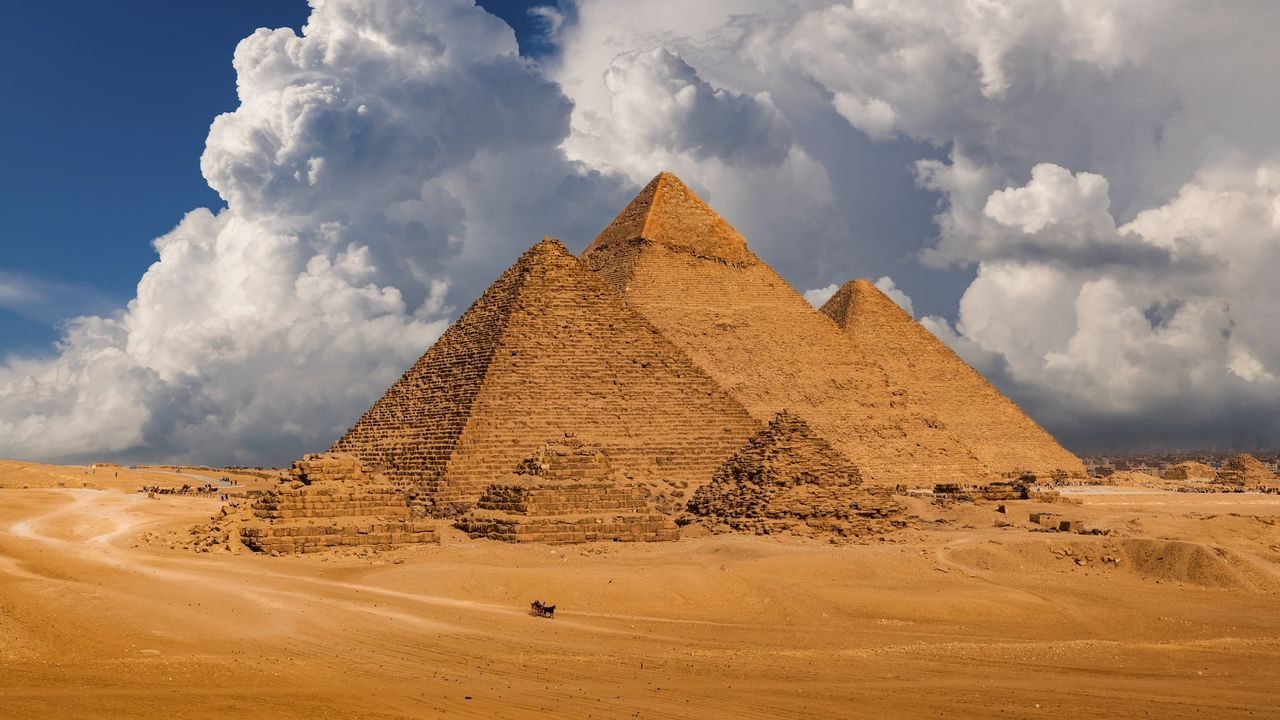
Could ancient humans really have built the pyramids without extraterrestrial help? It’s a question that has captivated millions of people for decades — and one that reveals far more about how we think than about how the pyramids were actually constructed.
The idea that aliens played a role in shaping ancient civilizations isn’t new. It has roots in popular culture, fringe archaeology, and a persistent human tendency to underestimate what people thousands of years ago were capable of achieving. And while mainstream archaeology has consistently rejected the theory, it refuses to go away.
The death of Swiss author Erich von Däniken in January 2026 brought renewed attention to just how deep these ideas run — and why so many people still find them compelling despite overwhelming evidence to the contrary.
The Man Who Convinced Millions That Aliens Built the Ancient World
Erich von Däniken is the figure most responsible for popularizing the ancient aliens theory in the modern era. His bestselling book Chariots of the Gods, published in 1968, argued that monumental structures such as the pyramids could not have been built without help from extraterrestrial beings.
The book became a global phenomenon. It tapped into a cultural moment — the Space Age, Cold War anxiety, and a growing fascination with the cosmos — and it offered a seductive alternative history of humanity. Von Däniken’s central premise was simple: ancient humans lacked the intelligence, tools, and organizational capacity to build such enormous and precise structures on their own.
That premise has been thoroughly challenged by archaeologists, engineers, and historians ever since. But the emotional appeal of the idea has proven remarkably durable.
Why the Ancient Aliens Theory Still Has Such a Hold on People
It’s tempting to dismiss believers in ancient alien theories as simply uninformed. But researchers who study this phenomenon argue the reality is more complicated — and more interesting.
One key factor is what critics describe as a subtle but real form of bias embedded in the theory itself. When people ask “how could ancient humans have built the pyramids without alien help,” they are often unconsciously applying modern assumptions about what primitive societies were capable of. The question itself contains the assumption that ancient people were less intelligent, less organized, or less technically sophisticated than we are today.
Archaeologists strongly contest this view. The evidence suggests ancient Egyptians were highly skilled engineers, capable administrators, and sophisticated planners who developed their construction techniques over generations. The pyramids were not built overnight or by a single mysterious force — they were the result of centuries of accumulated knowledge and labor.
Still, for many people, the sheer scale of ancient monuments feels like it demands a more dramatic explanation. And that psychological pull is hard to overcome with facts alone.
What the Theory Actually Claims — and What Evidence Says
Von Däniken’s arguments centered on several key claims about ancient monuments and artifacts. Here’s how those claims hold up against the archaeological record:
| Von Däniken’s Claim | Archaeological Consensus |
|---|---|
| The pyramids were too complex for ancient humans to build unaided | Evidence of ramps, tools, worker villages, and administrative records confirms human construction |
| Ancient monuments show signs of advanced, non-human technology | Archaeologists have identified the specific tools and methods used in construction |
| Ancient artwork depicts alien visitors or spacecraft | These images are consistently reinterpreted as religious, symbolic, or cultural in context |
| Ancient civilizations could not have developed independently in similar ways | Independent development of similar technologies is well-documented across cultures |
The pattern is consistent: where von Däniken saw mystery, archaeologists see evidence. The gap between those two positions is not primarily about facts — it’s about interpretation, trust in institutions, and what kind of story feels satisfying.
The Real-World Impact of Ancient Alien Theories
This might seem like a harmless debate about ancient history, but scholars argue the ancient aliens theory carries real consequences.
One concern is that the theory implicitly diminishes the achievements of ancient non-Western civilizations. When the pyramids of Egypt, the temples of Mesoamerica, or the monuments of Southeast Asia are attributed to alien intervention, it strips the people who actually built them of credit for extraordinary human accomplishment. Critics point out that this framing has historically been applied far more often to the achievements of non-European peoples than to, say, ancient Greek or Roman architecture.
There’s also the broader issue of what happens when large numbers of people distrust the conclusions of mainstream science and archaeology. The ancient aliens theory is, at its core, a rejection of expert consensus — and that rejection doesn’t stay neatly contained to questions about pyramids.
- It can deepen general distrust of scientific institutions
- It reinforces the idea that official histories are hiding the truth
- It creates space for other fringe theories to gain credibility by association
- It can subtly reinforce racial or cultural hierarchies by implying certain civilizations needed outside help
What Happens to These Ideas Now That Von Däniken Is Gone
Von Däniken’s death in January 2026 closes a chapter in the history of pseudoarchaeology — but it almost certainly doesn’t end the conversation he started. The ideas he popularized have long since taken on a life of their own, spread through television documentaries, social media, and an entire genre of alternative history content.
If anything, the digital age has made fringe theories easier to find and harder to dislodge. Algorithms reward engagement, and few things generate more engagement than a dramatic claim that everything we’ve been taught is wrong.
Archaeologists and science communicators continue to push back, arguing that the real story of human achievement — how ancient people actually solved enormous engineering problems using intelligence, cooperation, and ingenuity — is far more remarkable than any alien intervention story could be.
The pyramids are awe-inspiring precisely because humans built them. That’s the part the ancient aliens theory asks us to forget.
Frequently Asked Questions
Who first popularized the idea that aliens helped build ancient monuments?
Swiss author Erich von Däniken popularized the theory in his 1968 bestselling book Chariots of the Gods, which argued that structures like the pyramids required extraterrestrial assistance.
When did Erich von Däniken die?
Erich von Däniken died in January 2026, according to reporting from Live Science.
Do archaeologists take the ancient aliens theory seriously?
No. Mainstream archaeology consistently rejects the theory, pointing to extensive physical evidence — including tools, worker records, and construction sites — that confirms ancient humans built these monuments themselves.
Why do so many people still believe in ancient alien theories despite the evidence?
Researchers suggest the theory persists partly because it offers a dramatic alternative narrative and partly because it taps into a tendency to underestimate ancient peoples — a psychological pull that facts alone struggle to counter.
Is the ancient aliens theory considered harmful?
Some scholars argue it is, because it can implicitly diminish the achievements of non-Western civilizations and deepen broader distrust of scientific and historical institutions.
Will the ancient aliens theory disappear now that von Däniken has died?
Unlikely. The ideas von Däniken popularized have spread widely through media and online content, and are expected to persist well beyond his death.




Leave a Reply