
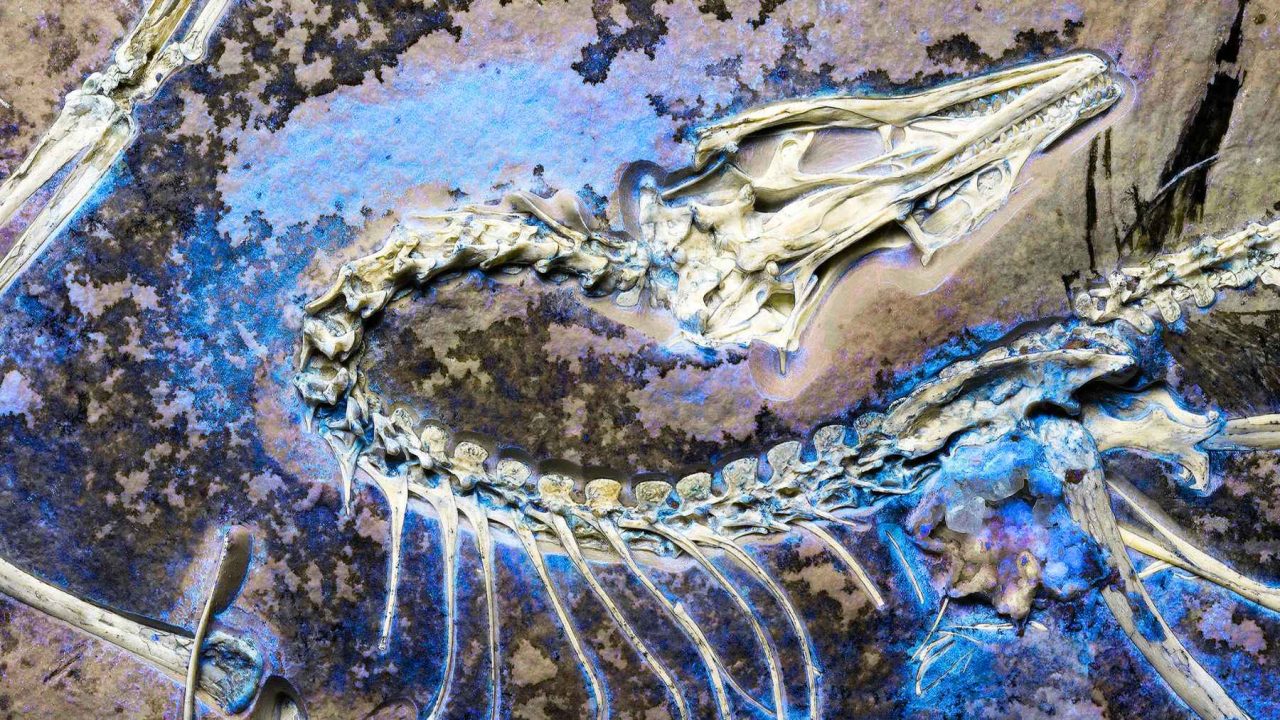
For more than 160 years, scientists have argued about one of the most fundamental questions in evolutionary biology: how did birds first learn to fly? A fossil hidden away for decades may finally have the answer — and it comes from a creature that lived 150 million years ago.
A newly analyzed specimen of Archaeopteryx, the iconic feathered creature that sits at the boundary between dinosaurs and modern birds, has been re-examined using CT scanning and ultraviolet light. The results, published on May 14, 2025, are giving researchers a clearer picture of what those earliest wings could actually do — and the findings suggest the animal was far closer to true flight than many had previously believed.
The study was led by fossil-bird researcher Jingmai O’Connor at the Field Museum of Natural History, and the specimen at the center of it is already being referred to as the Chicago Archaeopteryx.
Why This Fossil Is Different From the Others
Every known Archaeopteryx specimen comes from the Solnhofen limestone deposits in Germany — a formation famous for preserving fine detail in ancient rock. This particular specimen is described as the 14th known example of the species, which already makes it significant. But what sets it apart is its physical condition.
Unlike many fossils that arrive at researchers’ desks crushed flat over millions of years, this specimen is nearly complete and retains a three-dimensional quality that helps preserve fine anatomical details. That matters enormously when you’re trying to reconstruct how an animal moved, how its feathers were arranged, and whether its body was built for powered flight or something more limited.
Using CT scanning, O’Connor and the research team were able to look inside the fossil without damaging it — essentially creating a digital map of bone structures that would otherwise be invisible. Ultraviolet light, meanwhile, revealed soft tissues and wing feathers that standard examination techniques tend to miss entirely.
Those soft tissue impressions are rare and scientifically valuable. Feathers, skin, and muscle don’t fossilize the way bone does, so when they do leave a trace, researchers treat the evidence carefully. In this case, the combination of imaging techniques revealed details that pushed the analysis well beyond what older specimens could offer.
The Debate This Fossil Could Finally Settle
The argument over how bird flight evolved has been running since the first Archaeopteryx fossil was formally described in the 1860s, shortly after Charles Darwin published his theory of evolution. Two competing ideas have dominated the debate ever since.
One school of thought holds that flight developed from the ground up — that bird ancestors ran and leaped, gradually developing wings powerful enough to generate lift. The other argues flight came from the trees down, with gliding ancestors slowly evolving the ability to sustain themselves in the air.
Archaeopteryx has always been central to this argument because it sits so precisely at the transition point between feathered dinosaurs and modern birds. The new Chicago specimen, with its preserved wing feathers and soft tissue detail, suggests its wings were closer to flight-ready than many researchers had been able to demonstrate using older, more damaged fossils.
That doesn’t close the debate permanently — paleontology rarely works that cleanly — but it does add a significant weight of physical evidence to the side arguing that Archaeopteryx was capable of something meaningfully close to the flight we see in birds today.
What the New Technology Revealed
The use of CT scanning and ultraviolet light on fossil material is not new, but applying both techniques to a specimen this well-preserved produced unusually detailed results. Here is what made the Chicago Archaeopteryx analysis notable:
- CT scanning allowed researchers to examine internal bone structures without cutting or damaging the fossil
- Ultraviolet light revealed soft tissue impressions and wing feather details invisible under standard lighting
- The specimen’s three-dimensional preservation — rather than being crushed flat — meant structural relationships between bones remained intact
- Wing feathers that are typically lost or obscured in flatter specimens were identifiable in this one
- The near-completeness of the fossil reduced the guesswork that often accompanies reconstructions based on fragmentary remains
| Feature | Detail |
|---|---|
| Specimen number | 14th known Archaeopteryx |
| Origin | Solnhofen limestone deposits, Germany |
| Age | Approximately 150 million years old |
| Lead researcher | Jingmai O’Connor, Field Museum of Natural History |
| Study published | May 14, 2025 |
| Key techniques used | CT scanning and ultraviolet light imaging |
| Debate addressed | Origins of bird flight — ongoing for over 160 years |
Why This Matters Beyond Paleontology
Archaeopteryx has always carried a weight that goes beyond its literal bones. When the first specimen was found in the 1860s, it arrived at a moment when the scientific world was still processing Darwin’s ideas. Here was a creature with feathers like a bird and teeth like a reptile — physical proof that evolution produced transitional forms.
That symbolic role hasn’t faded. Every new Archaeopteryx discovery or reanalysis touches something bigger than one species: it speaks to how life changes over time, how one body plan gradually becomes another, and how the animals we see today are connected to creatures that look almost nothing like them.
For the broader public, findings like this one are a reminder that some of the most important scientific discoveries don’t come from brand-new excavations. Sometimes they come from a specimen that sat quietly in a collection for decades, waiting for the right technology to reveal what it was always hiding.
What Researchers Are Watching Next
The publication of the Chicago Archaeopteryx study in May 2025 is likely to prompt closer examination of other known specimens using similar imaging techniques. The Solnhofen deposits have yielded 14 specimens over more than a century and a half of study, and researchers note that improved technology consistently extracts new information from material previously thought to be fully analyzed.
Whether the findings from this specimen will shift the consensus on the ground-up versus trees-down flight debate remains to be seen. But the evidence that these wings were closer to functional flight than older analyses suggested gives researchers a firmer foundation to build on — and keeps one of science’s longest-running arguments very much alive.
Frequently Asked Questions
What is the Chicago Archaeopteryx?
It is the 14th known specimen of Archaeopteryx, a nearly complete fossil from the Solnhofen limestone deposits in Germany, now analyzed by researchers at the Field Museum of Natural History.
How old is the fossil?
The specimen dates back approximately 150 million years, placing it in the Late Jurassic period.
What techniques were used to study it?
Researchers used CT scanning to examine internal bone structures and ultraviolet light to reveal soft tissues and wing feathers not visible under standard conditions.
Who led the study?
The research was led by Jingmai O’Connor, a fossil-bird researcher at the Field Museum of Natural History. The study was published on May 14, 2025.
Does this fossil prove how bird flight began?
The findings suggest Archaeopteryx‘s wings were closer to flight-ready than older specimens could demonstrate, but the broader debate over the origins of bird flight has not been fully resolved.
Why has this debate lasted more than 160 years?
Archaeopteryx was first formally described in the 1860s, and its position as a transitional form between feathered dinosaurs and modern birds has made it central to competing theories about how flight evolved — a question that each new specimen helps refine but has not yet definitively answered.




Leave a Reply