
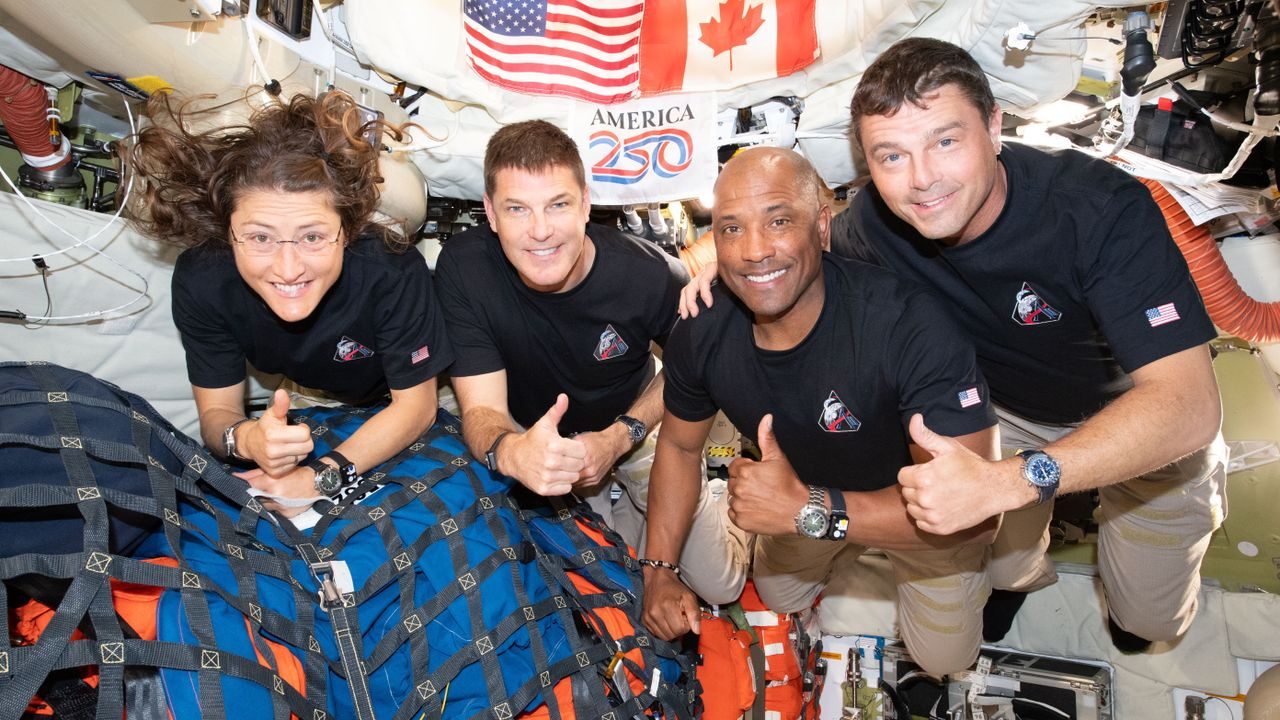
Four astronauts are preparing to become the fastest human beings in recorded history — hurtling toward Earth at roughly 25,000 miles per hour as NASA’s Artemis II mission enters its most dangerous and closely watched phase.
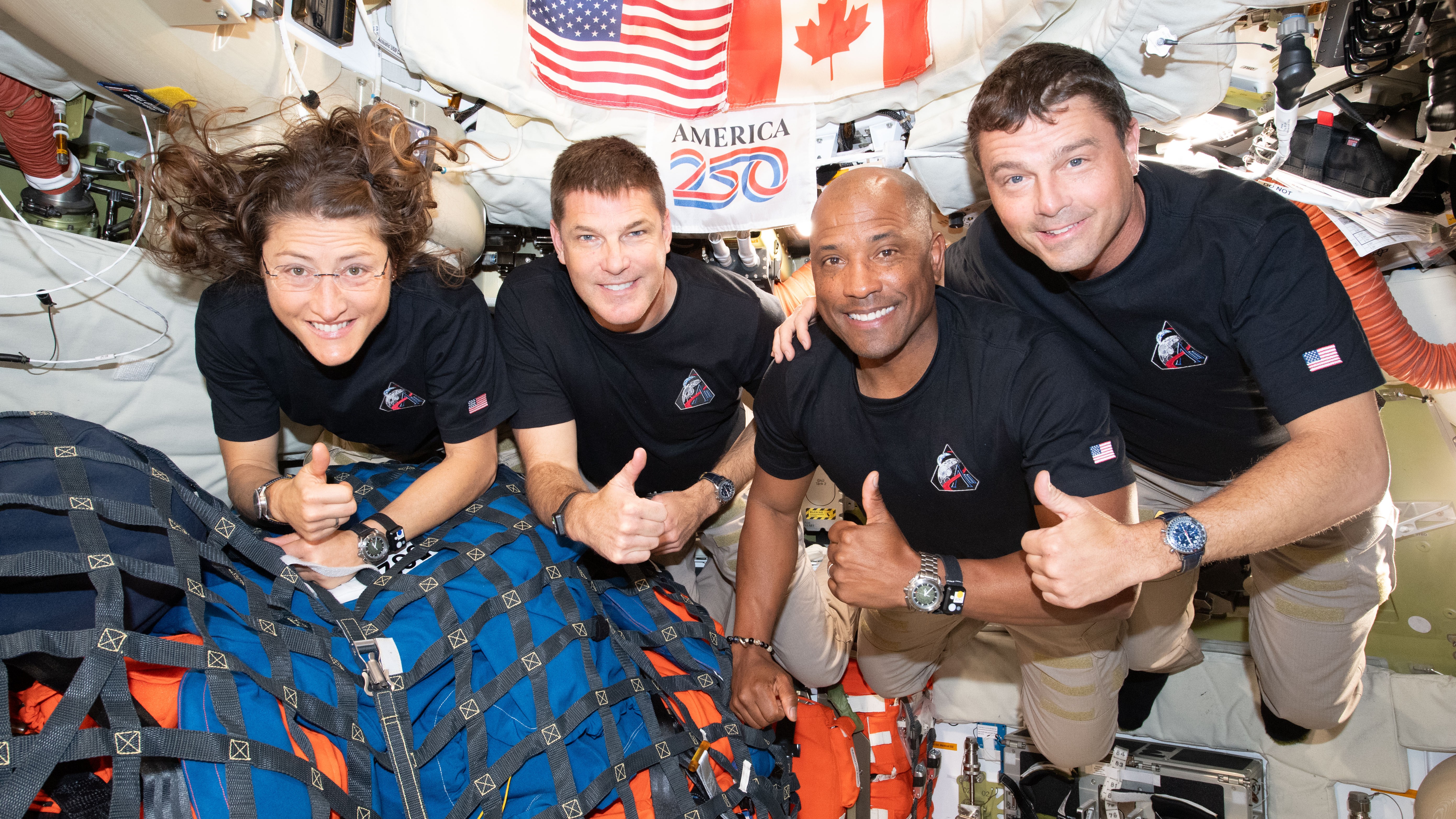
The crew — Commander Reid Wiseman, Pilot Victor Glover, Mission Specialist Christina Koch, and Canadian Space Agency astronaut Jeremy Hansen — are set to reenter Earth’s atmosphere and splash down in the Pacific Ocean near San Diego. Every detail of their return is being monitored, but one component above all others is drawing intense scrutiny: the Orion capsule’s heat shield.
Here’s what’s happening, what’s at stake, and why this splashdown matters far beyond a single mission.
The Artemis II Crew and Their Historic Return
The four-person crew has been traveling aboard the Orion capsule, named Integrity, as part of NASA’s Artemis program — the agency’s effort to return humans to the Moon for the first time since Apollo. Artemis II is a crewed test flight, designed to push the spacecraft and its systems to their limits before any lunar landing attempt is made.
Their reentry places them in genuinely unprecedented territory. At approximately 25,000 miles per hour (40,000 kilometers per hour), no human beings have ever returned to Earth moving quite this fast. That speed is not just a record — it’s also the source of the mission’s greatest engineering challenge.
The faster you travel through the atmosphere, the more heat is generated. And that heat has to go somewhere.
Why the Heat Shield Is the Most Watched Component in Space Right Now
The Orion capsule’s heat shield is designed to absorb and dissipate the enormous thermal energy produced during reentry. According to NASA’s mission data, the shield is engineered to withstand temperatures of approximately 2,800 degrees Celsius (5,000 degrees Fahrenheit) — hot enough to melt steel several times over.
That sounds reassuring. But there’s a serious concern baked into this mission from the start.
Artemis II’s heat shield is almost exactly the same design as the one used on Artemis I — the unmanned test flight that preceded this mission. During Artemis I’s reentry, that heat shield partially cracked. Engineers have studied the failure extensively, but the Artemis II shield has not been fundamentally redesigned. This reentry is, in part, a live test of whether those cracks were an anomaly or a deeper structural problem.
With four people inside the capsule this time, the stakes couldn’t be higher.
Key Mission Timeline and Data
| Event | Scheduled Time (EDT) | Scheduled Time (GMT) |
|---|---|---|
| NASA live stream begins | 6:30 p.m. | 10:30 p.m. |
| Atmospheric reentry | ~7:53 p.m. | ~11:53 p.m. |
| Pacific Ocean splashdown | ~8:07 p.m. | ~12:07 a.m. (next day) |
The splashdown zone is targeted near San Diego, California, in the Pacific Ocean. Recovery teams will be positioned and ready to retrieve the crew and the capsule as soon as it hits the water.
- Reentry speed: ~25,000 mph (40,000 km/h)
- Heat shield peak temperature tolerance: ~2,800°C (5,000°F)
- Known risk factor: The Artemis I heat shield of the same design partially cracked during reentry
- Crew: Reid Wiseman, Victor Glover, Christina Koch, Jeremy Hansen
What Reentry Actually Means for the People Inside
Reentry is consistently described by aerospace engineers as one of the most physically and mechanically demanding phases of any space mission. The capsule doesn’t just get hot — it decelerates violently, transitioning from orbital velocity to a speed manageable for parachute deployment in a matter of minutes.
Parachutes play a critical role in slowing the Orion capsule during the final descent phase before splashdown. While the heat shield handles the thermal and initial deceleration challenge, the parachute system takes over as the capsule drops into the lower atmosphere, reducing speed to a level safe enough for water landing.
For the crew, this sequence means enduring significant g-forces, extreme noise, and a complete dependence on systems that cannot be manually overridden mid-reentry. There is no abort option once the capsule enters the atmosphere at that speed.
That’s precisely why this test matters so much. Every system that functions correctly on Artemis II becomes a verified building block for the missions that follow — including the one that will actually land astronauts on the Moon.
What This Mission Means for the Future of Human Spaceflight
Artemis II is not just a milestone for the four people aboard. It is a foundational test for NASA’s entire lunar return strategy. The Orion capsule and its heat shield must be proven reliable before any crew can be sent into a lunar orbit — let alone to the lunar surface.
The partial cracking observed on the Artemis I heat shield made this reentry one of the most closely monitored events in recent NASA history. Engineers and mission controllers will be analyzing thermal data, structural integrity readings, and parachute performance in real time.
If the heat shield performs as designed, NASA gains critical confidence to move forward with Artemis III and beyond. If new anomalies emerge, the program will face difficult decisions about timelines, redesigns, and the pace of its return-to-Moon ambitions.
The world will know the answer within hours of the capsule hitting the water near San Diego.
Frequently Asked Questions
Who are the Artemis II crew members?
The crew consists of Commander Reid Wiseman, Pilot Victor Glover, Mission Specialist Christina Koch, and Canadian Space Agency astronaut Jeremy Hansen.
How fast will the Artemis II crew be traveling during reentry?
They will enter Earth’s atmosphere at approximately 25,000 miles per hour (40,000 kilometers per hour), making them the fastest human beings in history at that moment.
Where will the Artemis II capsule splash down?
The Orion capsule is targeted to splash down in the Pacific Ocean near San Diego, California, at approximately 8:07 p.m. EDT.
What is the concern with the Artemis II heat shield?
The heat shield is nearly identical to the one used on the unmanned Artemis I mission, which partially cracked during reentry. This flight serves as a key test of whether that design is reliable with a crew aboard.
Where can I watch the Artemis II splashdown live?
NASA’s live stream of the event is scheduled to begin at 6:30 p.m. EDT (10:30 p.m. GMT).

What temperature does the Orion heat shield need to withstand?
The heat shield is designed to handle temperatures of around 2,800 degrees Celsius (5,000 degrees Fahrenheit) during reentry.




Leave a Reply