
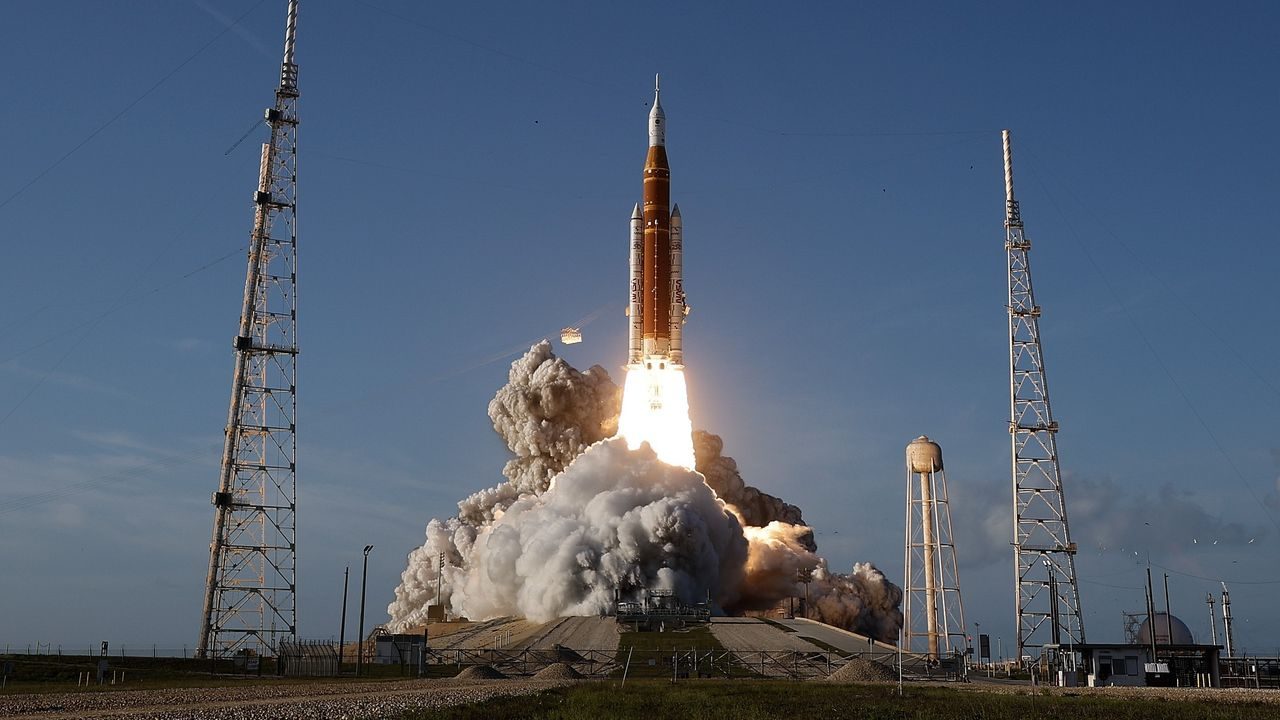
For the first time in more than five decades, humans are heading back toward the moon. On April 1, four astronauts launched on a 10-day voyage around the moon and back — the first crewed mission to travel that far from Earth since Apollo 17 in 1972.
The mission, known as Artemis II, is not a lunar landing. But it is arguably the most consequential human spaceflight in a generation. What happens on this voyage will determine whether NASA can pull off two full lunar landings in 2028 — and whether a permanent base on the moon’s surface is truly within reach.
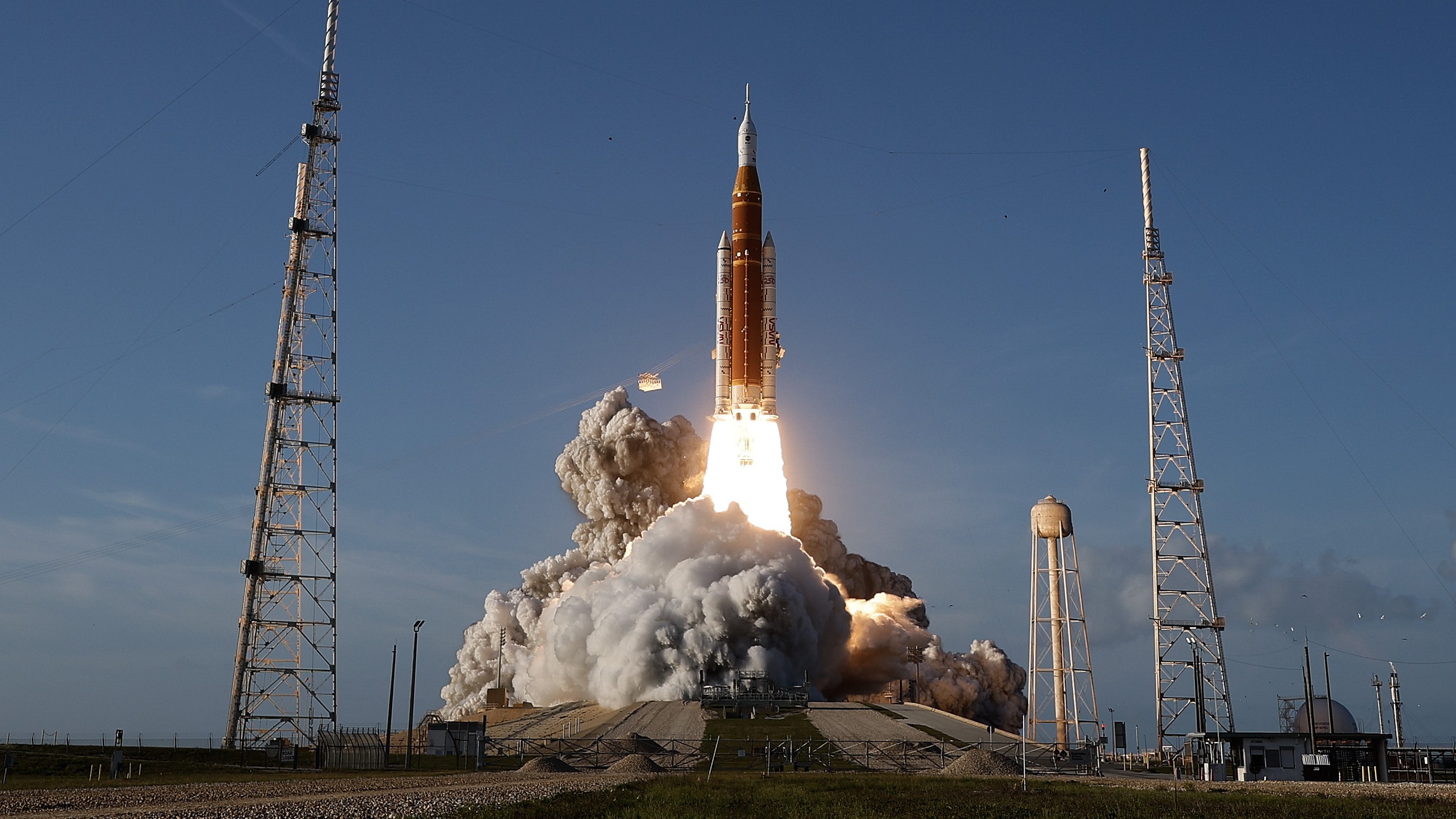
That is not a small ambition. And the four people strapped into that rocket are at the center of it all.
What Artemis II Actually Is — and Why It Matters
Artemis II is a crewed test flight. The crew will not land on the moon, but they will fly around it — a journey that pushes every critical system aboard NASA’s Orion spacecraft to its limits in the real, unforgiving environment of deep space.
The mission is designed to validate the systems that future crews will depend on for landing on the lunar surface. Think of it as the final dress rehearsal before the main event. If something fails on Artemis II, NASA finds out now — not during a landing attempt with astronauts descending toward the moon’s surface.
The stakes are high. The 2028 lunar landings that follow are themselves meant to lay the groundwork for something even larger: a permanent human presence on the moon. That has never been achieved before. Artemis II is step one of a very long staircase.
Meet the Artemis II Crew
The four astronauts making this historic trip represent a milestone in themselves. The crew was selected to reflect a broader vision for who gets to explore space going forward.
- Reid Wiseman — Commander
- Victor Glover — Pilot
- Christina Koch — Mission Specialist
- A fourth mission specialist also joins the crew
Together, they form the first crewed deep-space mission since the final Apollo flight. Every one of them knows that their job is not just to survive the journey — it is to prove that the journey can be done safely, repeatedly, and with the precision needed to eventually put boots on lunar soil.
The Numbers Behind This Mission
The scope of what Artemis II represents becomes clearer when you look at the timeline and targets side by side.
| Mission Detail | Confirmed Information |
|---|---|
| Launch date | April 1 |
| Mission duration | 10 days |
| Destination | Around the moon and back |
| Last crewed lunar mission | 1972 (Apollo program) |
| Next planned lunar landings | 2028 (two missions) |
| Long-term goal | Permanent base on the moon’s surface |
| Commander | Reid Wiseman |
| Pilot | Victor Glover |
| Mission Specialist | Christina Koch |
Ten days may not sound like a long time. But in terms of what NASA needs to learn from this mission, it is packed with purpose from the moment of liftoff to splashdown.
What This Means for the Future of Human Space Exploration
The gap between 1972 and today is not just a number. It represents more than 50 years during which no human traveled beyond low Earth orbit. The International Space Station, for all its achievements, sits roughly 250 miles above Earth. The moon is nearly a thousand times farther away.
Returning to that distance — and doing it with modern systems, modern safety standards, and a crew that includes people who would never have been part of the Apollo program — is a genuinely significant moment in the history of spaceflight.
The two lunar landings planned for 2028 are not the endpoint either. They are explicitly described as the foundation for a permanent base on the moon. That base, if it is ever built, would be humanity’s first long-duration outpost beyond Earth. The science, logistics, and engineering challenges involved are enormous — and Artemis II is where the real-world testing begins.
For the general public, the practical significance is harder to feel in daily life. But consider this: the technologies developed through the Artemis program — life support, navigation, communications, materials — have historically fed back into civilian technology over time. The moon program is rarely just about the moon.
What Comes Next After Artemis II
If Artemis II completes its 10-day mission successfully and the key systems perform as expected, NASA’s path forward becomes considerably clearer. The two lunar landings targeted for 2028 would move from ambitious plan to achievable mission.
Those landings, in turn, are not standalone events. They are explicitly framed as the foundation for a permanent human base on the lunar surface — something no space agency has ever accomplished. The sequence matters: Artemis II tests the hardware, the 2028 landings test the surface operations, and a permanent base follows if all goes well.
There is a lot that could go wrong between now and then. Budgets shift. Timelines slip. Technical problems emerge. But for now, four astronauts are circling the moon for the first time since 1972, and the clock on the next chapter of human space exploration has officially started.
Frequently Asked Questions
What is the Artemis II mission?
Artemis II is a 10-day crewed NASA mission that launched on April 1, sending four astronauts on a voyage around the moon and back — the first such crewed deep-space mission since 1972.
Will the Artemis II crew land on the moon?
No. Artemis II is a test flight that travels around the moon but does not include a lunar landing. It is designed to test key systems ahead of planned lunar landings in 2028.
Who are the Artemis II crew members?
The crew includes commander Reid Wiseman, pilot Victor Glover, and mission specialist Christina Koch, along with a fourth crew member.
When is NASA planning to land on the moon again?
According to
Why does Artemis II matter if it is not a landing?
The mission tests the critical systems that future lunar landing crews will depend on, making it an essential step before any astronaut attempts to descend to the moon’s surface.
What is the long-term goal of the Artemis program?
Beyond the 2028 landings, the program’s stated long-term goal is to establish a permanent base on the surface of the moon — something that has never been achieved in the history of human spaceflight.



Leave a Reply