
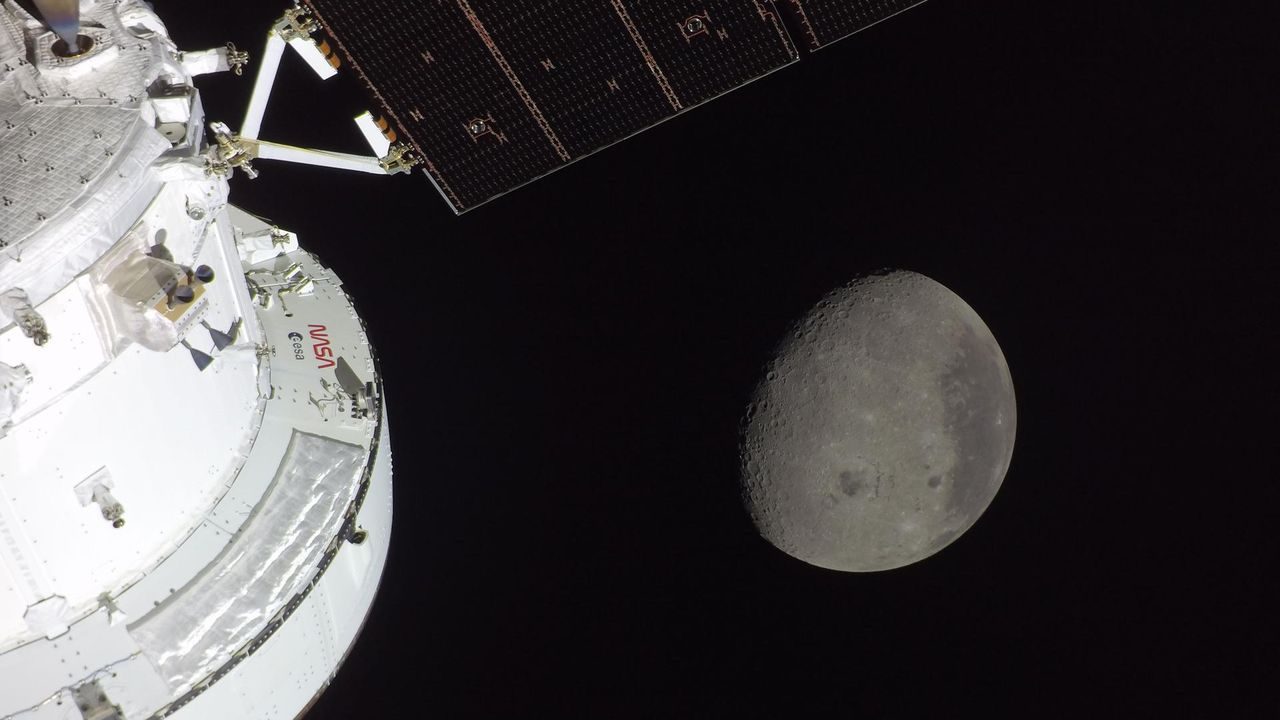
The moon looks different up close — and not quite the way you might expect. As NASA’s Artemis II mission makes its way back to Earth, the images being returned from the lunar flyby are already turning heads in the scientific community, revealing a world painted in surprising shades of green and brown rather than the stark grey most people picture when they think of the moon.
The four Artemis II astronauts are scheduled to return to Earth on Friday, April 10, bringing with them not only the distinction of being the first humans to travel to the lunar vicinity in over 50 years, but also a remarkable collection of close-up photographs taken during their historic journey. For the geologists and planetary scientists supporting the mission, the wait for those images is almost unbearable.
This is more than a sightseeing trip. The data and imagery coming back from Artemis II represent the first close human observations of the moon in a generation — and scientists are already calling what they’re seeing spectacular.
Why Scientists Are So Excited About Artemis II’s Lunar Images
Planetary geologists have spent decades studying the moon through telescopes, robotic probes, and the samples brought back by Apollo astronauts. But there’s a meaningful difference between data collected from orbit and what a crewed spacecraft can observe at close range, with human eyes and judgment guiding the camera.
The Orion spacecraft carried the crew on a close lunar flyby, enabling detailed visual observation of the lunar surface in a way that hasn’t been possible since the Apollo era. The images being returned are described by those involved as nothing short of spectacular.
Gordon Osinski, a crater specialist and planetary geologist at Canada’s Western University, is one of the scientists supporting the mission. His reaction to the imagery was immediate and enthusiastic — describing the images as “spectacular, absolutely.” Osinski’s specialty in impact craters makes the close-up lunar views particularly valuable, as the moon’s surface is a record of billions of years of cosmic collisions preserved in extraordinary detail.
The unexpected color variations — those greens and browns — are part of what’s generating excitement. The moon’s surface is far more chemically and mineralogically varied than its grey appearance from Earth suggests, and high-quality close-up imagery helps scientists begin to map and understand that complexity in new ways.
What Artemis II Actually Is — and Why It Matters
Artemis II is NASA’s first crewed mission under the Artemis program, which aims to return humans to the lunar surface. This particular mission is a lunar flyby — the crew did not land — but it marks a critical step in proving out the systems, spacecraft, and human endurance required for the missions that follow.
The four astronauts aboard Orion traveled closer to the moon than any humans have since the Apollo program, giving them a front-row seat to lunar geology that no amount of robotic observation can fully replicate. The images they captured during that approach and flyby are now being eagerly analyzed by the science teams on the ground.
For the planetary science community, this is a landmark moment. Human-guided observation introduces a layer of real-time decision-making and visual interpretation that automated systems simply can’t match — astronauts can notice something unexpected and choose to photograph it, a capability that robotic missions lack.
The Moon Up Close: Key Facts About What Was Observed
Based on what has been confirmed from the source reporting, here is a summary of the key elements of the Artemis II lunar observation phase:
| Detail | What We Know |
|---|---|
| Return to Earth date | Friday, April 10 |
| Crew size | Four astronauts |
| Spacecraft | Orion |
| Mission type | Crewed lunar flyby (no landing) |
| Science focus | Close-up lunar imagery and geological observation |
| Notable scientist | Gordon Osinski, crater specialist, Western University (Canada) |
| Imagery description | “Spectacular, absolutely” — per mission geologist |
- The moon’s surface displayed unexpected green and brown color variations in close-up imagery, challenging the common perception of a uniformly grey world.
- The Orion spacecraft conducted a close approach to the moon, enabling detailed photographic observation.
- Mission geologists were actively monitoring and analyzing the data being returned in real time.
- The imagery is considered historically significant — the most detailed human-observed lunar close-up photography in decades.
Why These Images Could Change How We Study the Moon
The color variations visible in the Artemis II imagery aren’t just visually striking — they carry real scientific weight. Different colors on the lunar surface correspond to different mineral compositions. Greens and browns can indicate the presence of specific rock types, volcanic glasses, or mineral deposits that tell scientists about the moon’s geological history and its potential resources.
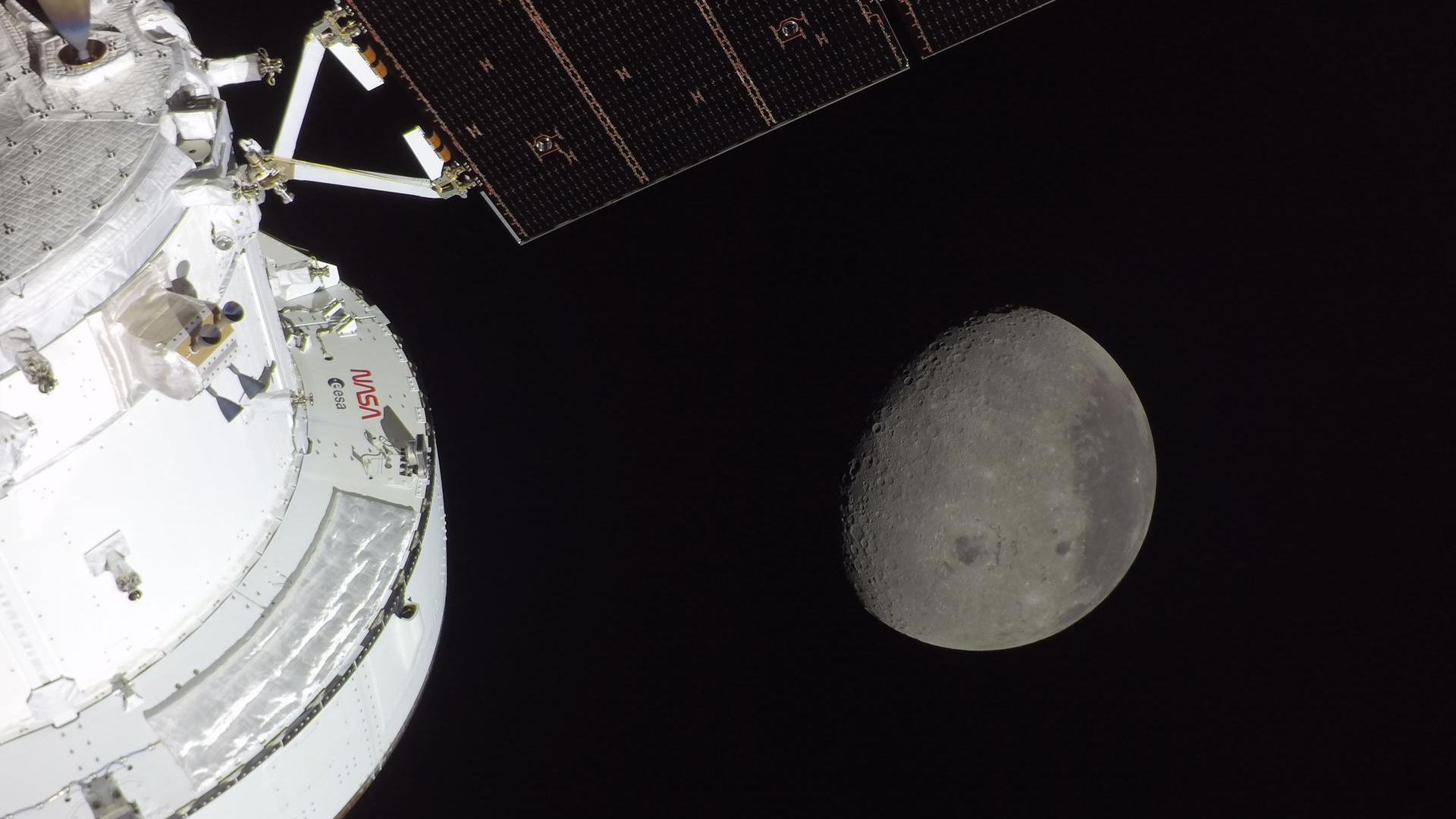
For researchers like Osinski, whose work focuses on impact craters, the close-up views offer a chance to examine crater structures, ejecta patterns, and surface textures at a resolution and angle that orbital imaging can’t always provide. Every crater on the moon is a window into a collision event, and collectively they tell the story of the early solar system.
The data from this mission will also directly inform planning for Artemis III, which is expected to be the first crewed lunar landing under the program. Knowing more about the surface conditions, mineral distribution, and geological features helps mission planners choose landing sites and design surface operations more effectively.
What Comes Next for the Artemis Program
With the crew returning on April 10, the immediate next phase is data analysis. The images and observations gathered during the lunar flyby will be studied by planetary scientists, geologists, and mission planners in the weeks and months ahead.
Artemis II is a proving ground — its success clears the path for future missions that will actually put boots on the lunar surface. The scientific excitement surrounding the imagery is a strong early signal that the mission has already delivered meaningful value, even before the full dataset has been processed.
The broader Artemis program represents NASA’s most ambitious push toward sustained human presence in deep space, with the moon serving as both a scientific destination and a stepping stone toward eventual crewed missions to Mars. Every image, every observation, and every lesson learned from Artemis II feeds into that longer arc.
Frequently Asked Questions
When are the Artemis II astronauts returning to Earth?
The four Artemis II astronauts are scheduled to return to Earth on Friday, April 10.
Why does the moon appear green and brown in Artemis II images?
Close-up imagery from the Orion spacecraft revealed unexpected color variations on the lunar surface, which scientists believe reflect differences in mineral composition across different regions of the moon.
Who is Gordon Osinski and why is he involved in Artemis II?
Gordon Osinski is a crater specialist and planetary geologist at Canada’s Western University who is part of the science team supporting the Artemis II mission. He described the returned images as “spectacular, absolutely.”
Did the Artemis II crew land on the moon?
No. Artemis II was a crewed lunar flyby, meaning the astronauts traveled close to the moon aboard the Orion spacecraft but did not land on the surface.
What spacecraft did the Artemis II crew travel in?
The crew traveled aboard NASA’s Orion spacecraft, which conducted a close approach to the moon during the mission.
Will the images from Artemis II be used for future missions?
Yes. The imagery and scientific data gathered during Artemis II are expected to inform planning for future Artemis missions, including crewed lunar landings.




Leave a Reply