
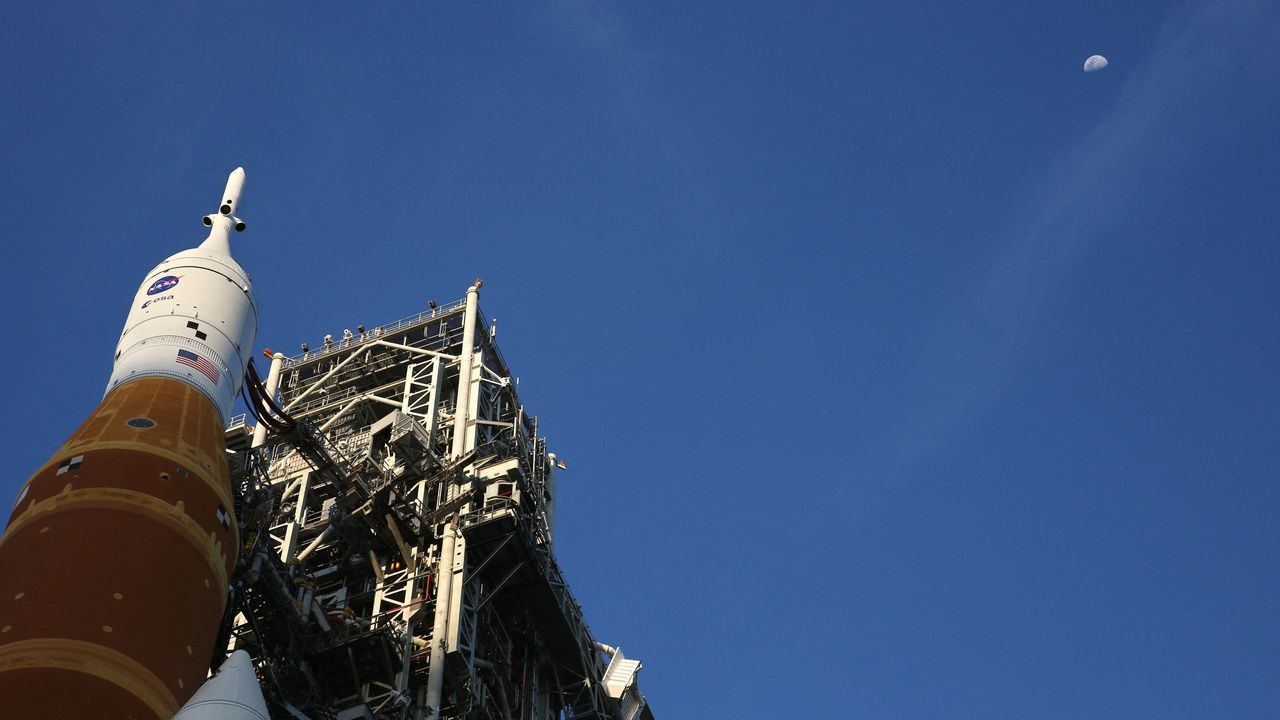
For the first time in more than half a century, human beings are preparing to travel to the vicinity of the Moon — and the launch window opens Wednesday, April 1, 2026, at 6:24 p.m. ET. NASA’s Artemis II mission is not just another rocket launch. It is the first crewed lunar mission since the Apollo era, and the world is watching.
The Orion spacecraft, perched atop the towering Space Launch System (SLS) rocket at Florida’s Kennedy Space Center, has already been rolled back to the Vehicle Assembly Building for final preparations. Now, with astronauts in quarantine and launch teams running through preflight checks, the countdown to one of the most significant moments in modern space exploration is very much underway.
Weather is cooperating — at least for now. NASA has placed the odds of favorable launch conditions on Wednesday at 80%, a figure that will bring considerable relief to mission planners who have spent years working toward this moment.
What the Artemis II Mission Actually Is
Artemis II is NASA’s first crewed mission under the broader Artemis program, which aims to return humans to the Moon for the first time since Apollo 17 in 1972. While this particular mission will not land on the lunar surface, it will send a crew aboard the Orion spacecraft on a journey around the Moon and back — a critical proving ground for the hardware and systems that future Moon-landing missions will depend on.
The mission is designed to last approximately 10 days. During that time, the crew will test Orion’s life support systems, navigation, and deep-space communication capabilities in a real-world environment that no amount of Earth-based simulation can fully replicate.
Think of it as the dress rehearsal before the main event — except the stakes are as high as space exploration gets.
The Artemis II Launch Window: What You Need to Know
NASA does not get an unlimited amount of time to attempt this launch. The agency has a defined window, and missing it means a significant wait. Here is what is confirmed from m. ET and lasts two hours.
| Launch Date | Window Opens | Window Duration | Weather Odds (Wed) |
|---|---|---|---|
| Wednesday, April 1 | 6:24 p.m. ET | 2 hours | 80% favorable |
| Thursday, April 4 – Monday, April 9 | TBD per day | TBD per day | Not yet confirmed |
| Wednesday, April 30 | TBD | TBD | Not yet confirmed |
The April 30 date carries particular weight. It is not just another backup window — it is the final opportunity. If the rocket does not fly by then, the mission timeline would need to be substantially reconsidered.
The Astronauts Are Already in Final Preparations
The crew of Artemis II entered quarantine ahead of the launch, a standard protocol designed to protect astronauts from illness in the days before a mission. According to
Launch teams at Kennedy Space Center are simultaneously working through a long list of preflight checks — a meticulous process that must be completed before any crewed rocket leaves the ground. NASA confirmed that operators have already given the green light for the mission to proceed, officially marking the start of the Artemis II mission timeline.
It is a coordinated, painstaking effort involving hundreds of engineers, technicians, and support staff — all working in concert to put four people safely into deep space.
Why This Mission Matters Beyond the Headlines
The significance of Artemis II goes well beyond national pride or space agency milestones. This mission will be the first time humans have traveled to the vicinity of the Moon since December 1972 — a gap of more than five decades. The data and experience gathered during this 10-day flight will directly shape whether NASA can safely land astronauts on the lunar surface in the missions that follow.
The Orion spacecraft and the Space Launch System rocket represent years of development, billions of dollars in investment, and the combined work of NASA and its international and commercial partners. A successful Artemis II launch and return would validate all of that — and set the stage for a crewed lunar landing that could redefine humanity’s relationship with space exploration.
For the astronauts aboard, it will be the most extraordinary journey any human being has taken in living memory. For the rest of us, it is a reminder that exploration on the grandest scale is still possible.
What Happens in the 10 Days After Launch
According to While the full breakdown of those steps was not included in the available
Each phase of the mission will be closely monitored by mission controllers, with the crew testing critical systems throughout. The safe return of the Orion capsule — and the astronauts inside it — will be the defining measure of success.
Frequently Asked Questions
When does the Artemis II launch window open?
The launch window opens at 6:24 p.m. ET on Wednesday, April 1, 2026, and lasts for two hours.
What are the weather odds for the Wednesday launch?
NASA has said there is an 80% chance of favorable weather conditions for the Wednesday launch attempt.
What happens if NASA misses the Wednesday window?
Additional launch opportunities are available from April 4 through April 9. After that, the next window opens on April 30, which is also the mission’s final deadline.
How long is the Artemis II mission?
The mission is approximately 10 days long and has been broken down into 12 key steps by NASA.
Will the Artemis II crew land on the Moon?
No. Artemis II is a crewed lunar flyby mission, not a landing. It will send astronauts around the Moon and back to Earth to test systems for future missions.
Where is the Artemis II rocket launching from?
The SLS rocket and Orion spacecraft are launching from Kennedy Space Center in Florida.



Leave a Reply