
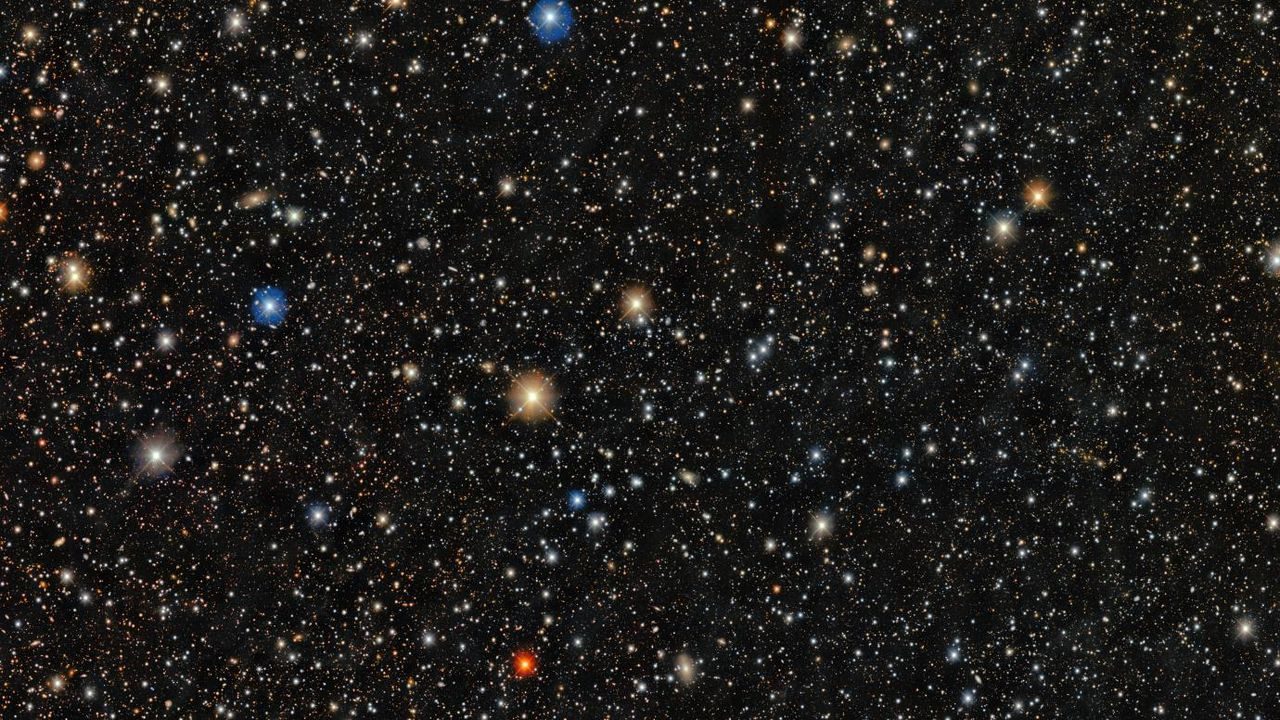
More than 150,000 light-years away, tucked inside one of the oldest known dwarf galaxies in the universe, astronomers have captured a remarkable image — a glittering field of ancient stars that formed when the cosmos was still in its infancy.
The photograph, taken by one of the most powerful ground-based cameras in the world, shows the dwarf galaxy Pictor II, a stellar system estimated to be more than 10 billion years old. Among the thousands of stars visible in the image is one that has drawn particular scientific attention: a star known as PicII-503, located inside its original host galaxy — a rare and scientifically significant find.
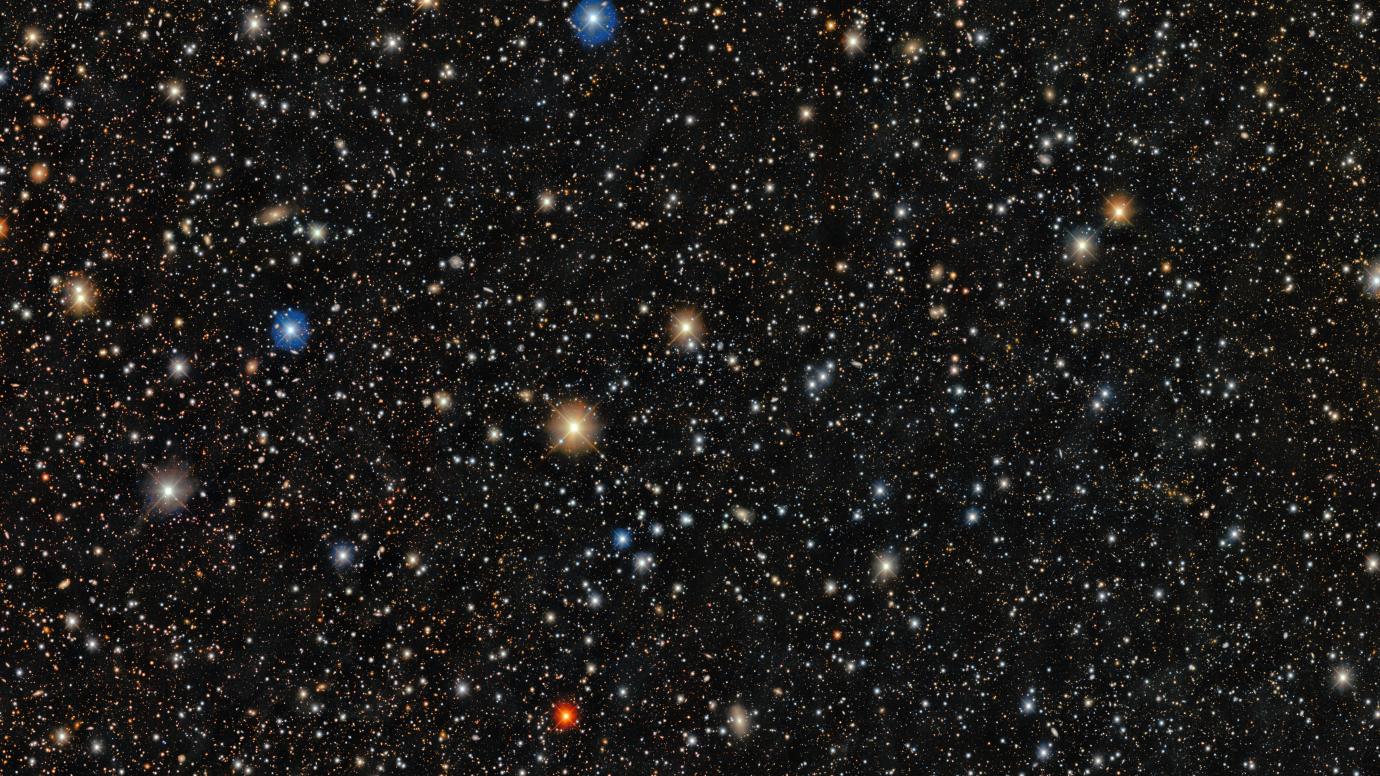
The image was shared publicly on March 16, 2026, and it’s already generating serious interest from astronomers studying the early universe and the chemical origins of life itself.
The Ancient Galaxy That Could Hold Clues to Life’s Building Blocks
Pictor II sits in the Pictor constellation, roughly 150,000 light-years from Earth. That’s far — but not so far that modern instruments can’t pick it apart, star by star. And when astronomers do look closely, what they find is extraordinary: a population of stars so old they formed during one of the earliest chapters of cosmic history.
What makes this particular image more than just a stunning space photo is what it might reveal about the chemical ingredients of life. Ancient stars like the ones inside Pictor II were born in a universe that had not yet been enriched by generations of stellar explosions. They carry chemical fingerprints from the very beginning — low in heavy elements, forged in conditions that no longer exist anywhere nearby.
Studying stars like PicII-503 inside their original galaxies — rather than scattered across the Milky Way after billions of years of cosmic mixing — gives scientists a cleaner, more accurate picture of those primordial conditions. The context matters as much as the star itself.
What Makes This Image So Rare
The photograph was captured using the Dark Energy Camera (DECam), mounted on the Víctor M. Blanco 4-meter Telescope at the Cerro Tololo Inter-American Observatory (CTIO) in Chile. DECam is one of the most sensitive wide-field cameras ever built for ground-based astronomy, and it was originally designed to map the large-scale structure of the universe.
That it can also resolve individual stars inside a dwarf galaxy more than 150,000 light-years away speaks to just how powerful this instrument is. The image was produced through a collaboration involving NOIRLab, the Department of Energy (DOE), the National Science Foundation (NSF), and AURA — the Association of Universities for Research in Astronomy.
What makes the detection of PicII-503 especially notable is that finding an ancient star still residing inside its original host galaxy is genuinely uncommon. Many old stars of this type have been found wandering through the Milky Way’s halo, displaced over billions of years. Catching one still in place — in the galaxy where it formed — allows researchers to study it in its proper cosmic context.
Key Facts at a Glance
| Detail | Information |
|---|---|
| Star name | PicII-503 |
| Host galaxy | Pictor II (dwarf galaxy) |
| Galaxy age | More than 10 billion years old |
| Distance from Earth | 150,000 light-years |
| Location in sky | Pictor constellation |
| Telescope used | Víctor M. Blanco 4-meter Telescope, Chile |
| Camera used | Dark Energy Camera (DECam) |
| Image shared | March 16, 2026 |
| Collaborating institutions | CTIO, NOIRLab, DOE, NSF, AURA |
Why This Discovery Matters Beyond the Beautiful Image
There’s a reason astronomers are so focused on stars like PicII-503, and it goes deeper than their age. These ancient stars — sometimes called metal-poor stars in scientific literature — formed before the universe had cycled through many generations of stellar birth and death. Each time a massive star explodes as a supernova, it seeds surrounding space with heavier elements: carbon, oxygen, iron, and eventually the complex chemistry that makes life possible.
The oldest stars carry almost none of those heavy elements. Studying them tells scientists what the universe looked like before those ingredients existed in abundance — and helps trace the pathway from the raw, simple cosmos of the Big Bang to the chemically rich environment that eventually gave rise to planets, oceans, and living organisms.
Finding PicII-503 still inside Pictor II means researchers can study its chemistry alongside the broader environment in which it formed. That’s a rare opportunity, and one that could meaningfully advance understanding of how the building blocks of life were first assembled across cosmic time.
What Researchers Will Be Watching Next
The image itself is a starting point, not an endpoint. Detailed spectroscopic follow-up observations — where astronomers break starlight into its component wavelengths to read a star’s chemical composition — are typically the next step after a discovery like this.
Such observations could reveal exactly how metal-poor PicII-503 is, how it compares to other ancient stars found outside their host galaxies, and what its chemical signature tells us about the conditions present in Pictor II more than 10 billion years ago.
For now, the image stands as a reminder of how much the universe still has to show us — and how a single telescope, pointed at the right patch of sky, can open a window onto the very beginning of everything.
Frequently Asked Questions
What is PicII-503?
PicII-503 is an ancient star located inside the dwarf galaxy Pictor II, approximately 150,000 light-years from Earth. It is considered one of the oldest known stars observed within its original host galaxy.
How old is the Pictor II galaxy?
Pictor II is estimated to be more than 10 billion years old, placing its formation in the very early universe.
What telescope captured this image?
The image was taken by the Dark Energy Camera (DECam), mounted on the Víctor M. Blanco 4-meter Telescope located in Chile.
Why is it significant that PicII-503 is still inside its original galaxy?
Most ancient stars of this type are found scattered across the Milky Way’s halo, far from where they formed. Finding one still inside its original host galaxy allows scientists to study it in full cosmic context, which is scientifically rare and valuable.
What question could this star help answer?
According to
When was this image made public?
The image was shared on March 16, 2026, as part of ongoing astronomical research supported by NOIRLab, the NSF, the DOE, and AURA.


Leave a Reply