
A massive brown ribbon of floating seaweed is spreading across the Atlantic Ocean — and it has grown large enough to be visible from space. Scientists say this is not a passing curiosity. It is a signal that something significant is shifting in the ocean’s chemistry and ecology, and the consequences are already being felt on coastlines across the region.
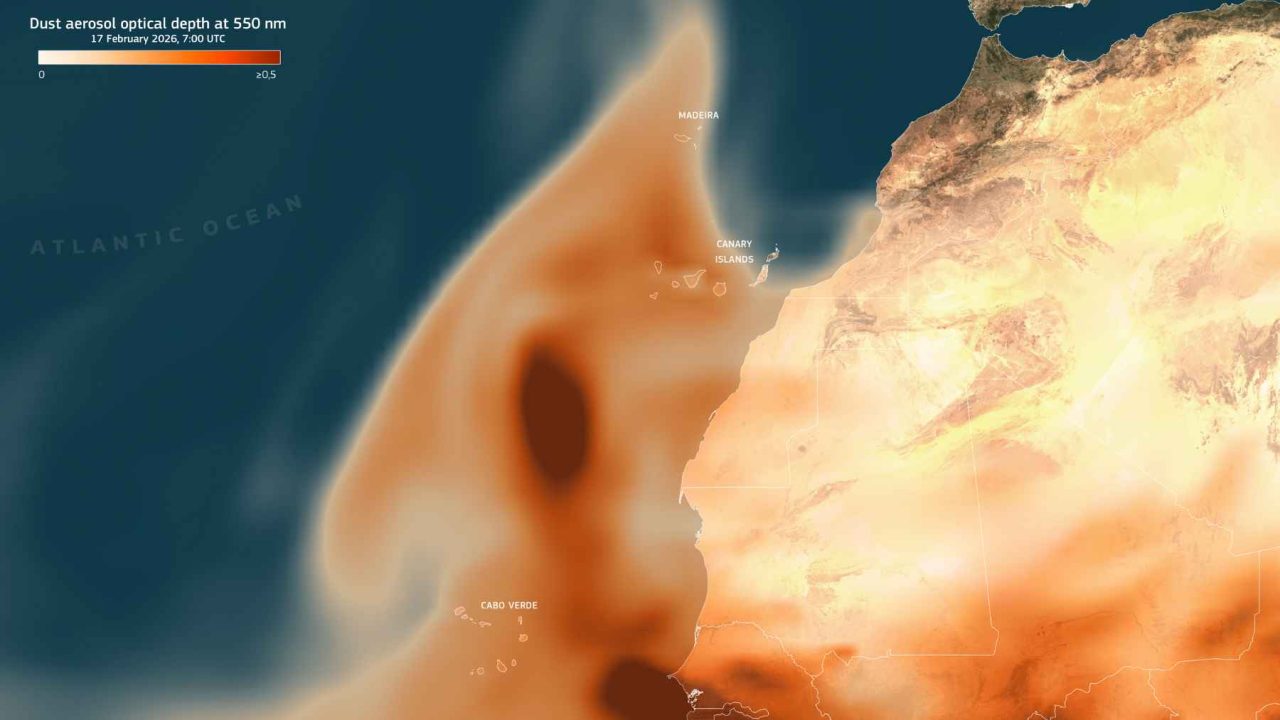
At the same time, since mid-February 2026, a widespread calima event has been pushing Saharan dust across the eastern Atlantic. The haze prompted outdoor-time warnings in the Canary Islands and Cabo Verde, worsened air quality in Madeira, and forecasts indicated the dust plume was drifting toward northwestern Europe in the days that followed. Two very different phenomena — one in the sky, one on the water — are unfolding simultaneously, and neither shows signs of stopping soon.
Together, they paint a picture of an Atlantic under pressure. But it is the seaweed story that scientists are watching most closely.
What Is Sargassum and Why Is It Taking Over?
The brown ribbon visible from orbit is made up of sargassum — a type of floating brown seaweed that grows in open water rather than anchoring to the seafloor. Unlike most seaweed, sargassum forms vast free-floating mats on the ocean surface, drifting with currents across hundreds and sometimes thousands of miles.
Satellite images from 2025 showed sargassum reaching record levels in parts of the Atlantic. The seaweed stretched across significant sections of the Caribbean Sea, in some places washing ashore in dense, foul-smelling mats that have disrupted beaches and coastal communities.
Scientists are clear that this is not just a natural fluctuation. The scale and pace of growth are drawing serious concern from researchers who study ocean health, and they warn that the brown ribbon spreading across the Atlantic surface is a symptom of deeper environmental changes rather than a temporary blip.
What the Calima Has to Do With It
The calima — the Saharan dust haze that gives the Canary Islands its name for the phenomenon — might seem unrelated to ocean seaweed. But the two are more connected than they appear.
Calima forms when winds lift fine desert dust from the Sahara into the upper atmosphere. Once airborne, those same weather-steering winds can carry the dust enormous distances across open water. The haze dims the sun, compresses the visible horizon, and — crucially — deposits iron-rich dust particles into the ocean when it eventually settles.
That dust acts as a fertilizer. Iron and other minerals carried from the Sahara feed phytoplankton and, in turn, can contribute to the nutrient conditions that allow organisms like sargassum to thrive. Researchers have been studying this connection for years, and the scale of the February 2026 calima event makes it relevant context for understanding what is happening on the ocean’s surface below.
Where the Sargassum Is Spreading — and Who Is Already Affected
The regions feeling the most direct impact are those closest to the Atlantic’s main sargassum belt and the Caribbean coastlines where it washes ashore. Based on what is confirmed in current reporting, the areas already dealing with the effects include:
- The Caribbean Sea — where sargassum has washed ashore in significant quantities, affecting beaches and coastal ecosystems
- The Canary Islands — dealing simultaneously with the calima air quality event and proximity to Atlantic sargassum drift zones
- Cabo Verde — subject to outdoor-time warnings due to the dust haze
- Madeira — experiencing worsened air quality from the February 2026 calima plume
- Northwestern Europe — identified in forecasts as the next destination for the drifting dust plume
| Phenomenon | Where Confirmed | Primary Impact | Timeline |
|---|---|---|---|
| Calima (Saharan dust haze) | Canary Islands, Cabo Verde, Madeira | Air quality warnings, outdoor restrictions | Active from mid-February 2026 |
| Sargassum bloom | Atlantic Ocean, Caribbean Sea | Beach fouling, ecological disruption | Record levels observed in 2025 |
| Dust plume drift | Northwestern Europe (forecast) | Reduced air quality, haze | Days following mid-February 2026 |
Why Scientists Say This Is Not Just a Stain on the Water
The phrase researchers keep returning to is that this is not simply a discoloration on the ocean’s surface. The scale of the sargassum bloom, as captured in satellite imagery, represents a measurable change in Atlantic conditions — one that carries real consequences for marine ecosystems, fishing communities, tourism economies, and coastal infrastructure.
When sargassum washes ashore in thick mats, it decomposes rapidly in warm conditions, releasing hydrogen sulfide gas. The smell drives away tourists, the physical mass smothers shallow marine habitats, and the cleanup costs for affected communities can run into millions of dollars. Out at sea, the floating mats can block sunlight from reaching water below and entangle marine wildlife.
Observers note that the consistent year-on-year growth of these blooms — culminating in the record satellite readings of 2025 — points toward changing ocean conditions rather than a one-off event. Warmer water temperatures and elevated nutrient levels in the Atlantic are widely cited as contributing factors by those studying the phenomenon.
What Comes Next for the Atlantic
The immediate concern in early 2026 is the continued drift of the calima dust plume toward northwestern Europe, which forecasters identified as the likely next affected region. For the sargassum bloom, no clear endpoint has been identified — the 2025 record levels suggest the trend is moving in the wrong direction.
Researchers continue to monitor satellite data for changes in the size and distribution of the brown ribbon. Coastal communities in the Caribbean and along Atlantic shorelines are already developing response plans for sargassum arrivals, though the scale of recent blooms has tested those systems significantly.
What is clear is that both phenomena — the dust in the sky and the seaweed on the water — are now large enough to observe from orbit. That alone says something about how much has changed in this part of the world.
Frequently Asked Questions
What is the brown ribbon visible from space in the Atlantic?
It is a massive bloom of sargassum, a type of floating brown seaweed that has reached record levels in the Atlantic and parts of the Caribbean Sea, as observed in 2025 satellite images.
What is a calima and where has it been affecting people?
Calima is a dry haze caused by Saharan desert dust carried by winds across the Atlantic. Since mid-February 2026, it has prompted outdoor-time warnings in the Canary Islands and Cabo Verde and worsened air quality in Madeira.
Is sargassum dangerous to people?
When sargassum washes ashore and decomposes, it releases gases that affect air quality locally and can smother coastal habitats, though
Are the calima dust event and the sargassum bloom connected?
Saharan dust deposits iron-rich minerals into the ocean when it settles, which can act as a nutrient source that influences ocean conditions — researchers have studied this relationship, though
Which regions are expected to be affected next?
Forecasts from mid-February 2026 indicated the calima dust plume was drifting toward northwestern Europe in the days following the initial event.
Has the sargassum bloom reached record size?
Yes — satellite images from 2025 showed sargassum reaching record levels in parts of the Atlantic and stretching across significant sections of the Caribbean Sea.



Leave a Reply