
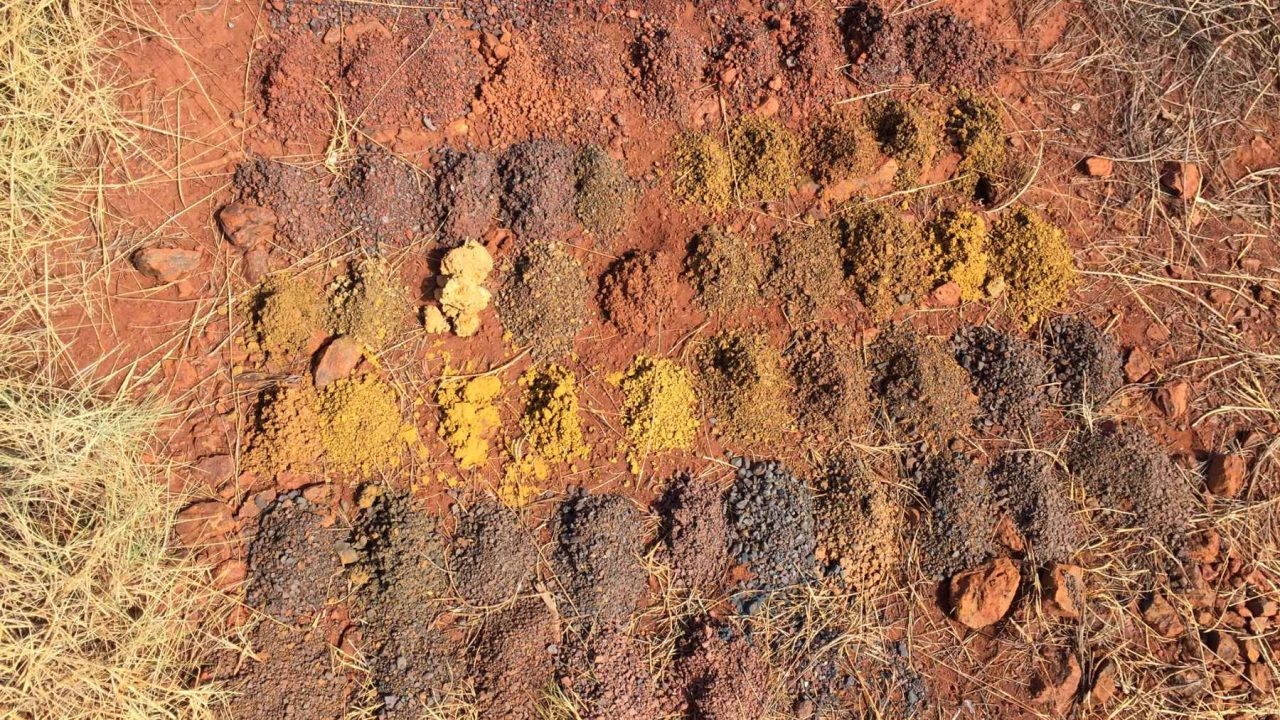
Scientists have known for decades that Western Australia sits on top of some of the richest iron ore deposits on Earth. What they got wrong — by about a billion years — was when those deposits actually formed.
A peer-reviewed study focusing on the Hamersley Province of Western Australia has produced a finding that is rattling geologists worldwide. The giant hematite deposits there, long assumed to have formed between 2.2 and 2.0 billion years ago, actually formed between 1.4 and 1.1 billion years ago. That is not a minor correction. That is one of the largest timeline revisions in the history of economic geology.
And the scale of what we are talking about makes the stakes even clearer. The deposits in question represent approximately 5.7 billion tons of iron ore — the largest iron deposit ever recorded. The size was always known. The age was not.
Why Getting the Age Wrong Mattered So Much
For a long time, the accepted explanation for how these massive iron ore bodies came to exist was tied to the Great Oxidation Event — a period roughly 2.2 to 2.0 billion years ago when Earth’s atmosphere first accumulated significant oxygen. The logic was straightforward: more oxygen meant more chemical reactions that could concentrate iron into the rich ore bodies we mine today.
That explanation shaped how geologists searched for iron deposits, how they modeled Earth’s ancient atmosphere, and how mining companies thought about what lay underground elsewhere in the world.
The new study challenges that entire framework. By directly dating hematite — the iron mineral itself — rather than relying on indirect clues, researchers found the Hamersley deposits are nearly a billion years younger than previously believed. That pushes their formation well past the Great Oxidation Event and into a period defined far more by tectonic upheaval than by atmospheric chemistry.
In short: the iron may have been concentrated not primarily by changes in the air, but by the violent movement of the Earth’s crust.
The Method That Changed Everything
The key to the new findings was the technique used. Previous dating efforts relied on indirect evidence — older ore fragments trapped inside conglomerate rocks, and phosphate minerals found near the iron ore. These were proxies, educated guesses at best.
The new study used in situ uranium-lead analysis applied directly to hematite samples across multiple major deposits in the Pilbara Craton. Instead of dating the rocks around the iron, researchers dated the iron itself. The difference in precision is significant, and the results were consistent across the region.
- The old estimated formation window: 2.2 to 2.0 billion years ago
- The new directly dated formation window: 1.4 to 1.1 billion years ago
- The revision: approximately 1 billion years later than previously accepted
- The method: in situ uranium-lead analysis of hematite itself
- The location: multiple major deposits across the Pilbara Craton, Hamersley Province, Western Australia
| Detail | Previous Understanding | New Finding |
|---|---|---|
| Formation age | 2.2 – 2.0 billion years ago | 1.4 – 1.1 billion years ago |
| Primary driver | Great Oxidation Event (atmospheric) | Tectonic activity |
| Dating method | Indirect (conglomerates, phosphates) | Direct (uranium-lead on hematite) |
| Deposit size | 5.7 billion tons (known) | 5.7 billion tons (unchanged) |
| Region | Hamersley Province, Western Australia | Hamersley Province, Western Australia |
What This Means Beyond the Textbooks
It would be easy to read this as a story that only matters to academics. It is not.
The old timeline influenced how the entire global mining industry thought about where large iron deposits could exist and why. If the world’s largest iron ore region formed through tectonic processes rather than atmospheric ones, that opens up new questions about where similar deposits might be hiding — and what geological conditions to look for.
Researchers note that tying the formation of these deposits to tectonic upheaval rather than the Great Oxidation Event also has implications for how scientists model Earth’s ancient past. Atmospheric and geological history are deeply linked. Change one part of the story, and other pieces shift too.
For the steel industry, which depends on iron ore as its foundational raw material, the deposit itself is not suddenly larger or smaller. But understanding its true origin could sharpen exploration strategies globally, potentially leading to the discovery of similar deposits that formed under comparable tectonic conditions elsewhere.
The Part of This Story Most Reports Are Missing
Coverage of this finding tends to lead with the sheer scale — 5.7 billion tons is an almost incomprehensible number, and it is genuinely the largest iron deposit ever recorded. But the researchers themselves appear to be more focused on what the age revision means for our understanding of Earth’s geological and atmospheric evolution.
The Pilbara Craton is one of the oldest and most geologically stable pieces of crust on Earth. The fact that even here, in one of the most studied mining regions on the planet, scientists were off by a billion years on a key measurement is a reminder of how much remains uncertain beneath our feet.
Direct mineral dating — the kind used in this study — is becoming more precise and more accessible. Expect more findings like this one as researchers go back and retest long-accepted geological timelines with newer methods.
What Comes Next for This Research
The study has been published in a peer-reviewed journal, which means the findings are now subject to scrutiny and potential replication by other research teams. The core question going forward is whether the tectonic explanation for deposit formation holds up under further testing — and whether similar dating revisions apply to iron ore regions in other parts of the world.
Geologists will also be examining what the new timeline means for models of Earth’s middle age — a period sometimes called the “boring billion” for its apparent geological stability, which this finding suggests may have been more dynamic than assumed.
Frequently Asked Questions
Where is the world’s largest iron deposit located?
It is located in the Hamersley Province of Western Australia, within the Pilbara Craton.
How large is the deposit?
The deposit is estimated at approximately 5.7 billion tons, making it the largest iron ore deposit ever recorded.
How old are the deposits, according to the new research?
The new study found they formed between 1.4 and 1.1 billion years ago — roughly 1 billion years later than the previously accepted estimate of 2.2 to 2.0 billion years ago.
Why was the previous age estimate so far off?
Earlier estimates relied on indirect evidence such as older ore fragments in conglomerates and nearby phosphate minerals, rather than dating the hematite ore directly.
What method did researchers use to get the new date?
They used in situ uranium-lead analysis applied directly to hematite samples across multiple deposits in the Pilbara Craton.
Does this change how much iron ore is available?
No — the size of the deposit remains the same. The revision affects our understanding of how and when the ore formed, not how much exists.

Leave a Reply