
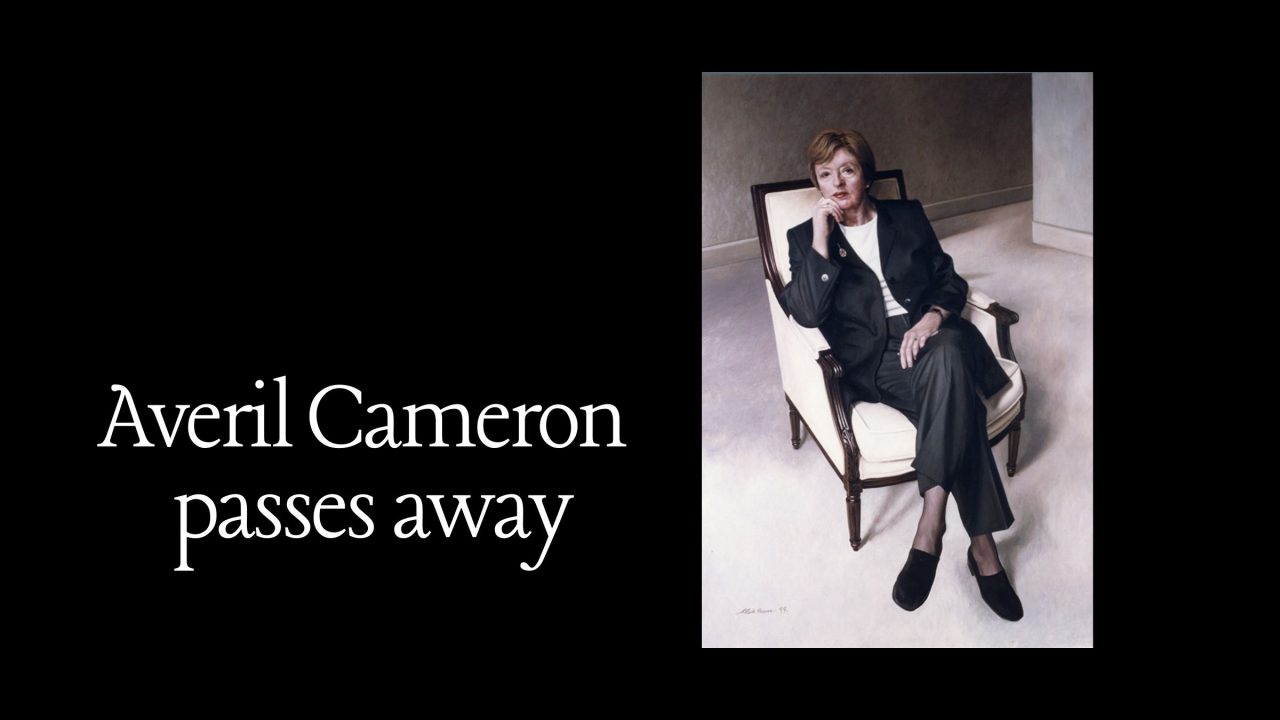
For more than half a century, one scholar did more than almost anyone else to convince the historical world that Byzantium was not a footnote to Rome — it was a civilization in its own right. Averil Cameron, one of the most influential Byzantine historians of her generation, has died at the age of 86.
Cameron was born in 1940 and spent decades reshaping how scholars and general readers alike understood the eastern Roman Empire, late antiquity, and the long, complicated transition between the classical world and the medieval one. Her death marks the end of a career that genuinely changed the field.
News of her passing was reported by Medievalists.net, which noted her central role in bringing Byzantine studies into broader historical conversations about the medieval and Mediterranean worlds.
The Scholar Who Refused to Let Byzantium Be Sidelined
For much of modern historiography, Byzantium occupied an awkward position — too late to be “classical,” too eastern to fit neatly into standard narratives of European history. Cameron spent her career pushing back against that framing directly.
She argued that Byzantium was not a faded echo of Rome but a dynamic, evolving society that played a central role in shaping medieval Europe and the broader Mediterranean world. That argument, which may seem obvious now, required real intellectual effort to establish when Cameron began making it.
Her work encouraged historians to reconsider the boundary lines they had drawn between classical antiquity and the Middle Ages — and to take seriously the cultural, religious, and political transformations happening in the eastern Roman Empire across centuries that had often been treated as a long, slow decline.
A Career Built Across Decades and Institutions
Cameron held positions at some of Britain’s most prestigious academic institutions. She taught at King’s College London before eventually moving to Oxford, where she served as Warden of Keble College and held the title of Professor of Late Antique and Byzantine History.
That combination — administrative leadership and active scholarly production — is rarer than it sounds. Many academics who rise to institutional leadership slow their research output. Cameron did not.
Her books reached audiences well beyond the academic specialists who might have been expected to read them. She had a particular talent, noted consistently by those familiar with her work, for making genuinely complex historical periods accessible without flattening them or sacrificing scholarly rigor.
The Books That Defined Her Legacy
Cameron’s written output covered a wide range of subjects within her field, but several titles stood out as particularly significant contributions to Byzantine and late antique scholarship.
| Title | Subject Focus |
|---|---|
| Procopius and the Sixth Century | The Byzantine historian Procopius and the era of Justinian |
| Byzantine Matters | The broader significance and study of Byzantine civilization |
| Byzantine Christianity: A Very Brief History | The religious culture and development of the eastern church |
These works were widely read both within academia and by general readers interested in the history of the ancient and medieval worlds. The range — from a focused study of a single sixth-century writer to broader arguments about why Byzantium matters at all — reflects the scope of her intellectual interests.
Why Her Work Still Matters to How We Understand History
Cameron’s contribution was not just about adding new facts to the historical record. It was about changing the questions historians asked and the frameworks they used to answer them.
By insisting on Byzantium’s centrality — rather than its marginality — she helped open up space for a richer understanding of how the ancient world became the medieval one. The eastern Roman Empire did not simply collapse and disappear. It persisted, transformed, and influenced. Cameron made that case with enough force and evidence that it became difficult to ignore.
Her emphasis on the cultural and religious transformations of the eastern Roman Empire also helped connect Byzantine studies to broader conversations happening in history departments about religion, identity, and how societies change over long periods of time.
For students entering the field today, much of what Cameron argued feels like established common sense. That is, in many ways, the clearest measure of how thoroughly her ideas succeeded.
What Comes Next for Byzantine Studies
Cameron’s death leaves a significant absence in a field that, while growing, remains relatively small compared to other areas of historical study. Her career demonstrated that Byzantine history could attract serious scholarly attention, institutional support, and a genuine general readership.
The scholars she trained, the arguments she advanced, and the books she wrote will continue to shape how the Byzantine world is studied and taught. Her work challenged a generation of historians to take the eastern Roman Empire seriously — and that challenge did not expire with her.
To prove I have books too pic.twitter.com/yolPQU4iBf
— Dame Averil Cameron (@19Averil) March 28, 2021
Very sad to learn from @AnthonyBarnett that Professor Dame Averil Cameron died today. Averil was one of the great historians of late antiquity and Byzantium and reshaped how we understand the transition from Rome to the medieval world. Averil was a formidable scholar and became a…
— Peter Frankopan (@peterfrankopan) April 7, 2026
Devastated to hear that the wonderful Dame Averil Cameron has passed away. She was a groundbreaking scholar of Late Antique and Byzantine Studies, a trailblazer for women in academia, a devout Christian and someone who managed to be both formidable and loveable. A true great.
— Peter Sarris (@peter_sarris) April 7, 2026
At 86, she had lived long enough to see many of the arguments she spent her career making become foundational to the discipline. That is not a common outcome for any scholar, in any field.
Frequently Asked Questions
Who was Averil Cameron?
Averil Cameron was a British historian born in 1940, widely regarded as one of the most influential scholars of Byzantine history and late antiquity of her generation.
Where did Averil Cameron work?
She held positions at King’s College London and at Oxford, where she served as Warden of Keble College and as Professor of Late Antique and Byzantine History.
What were Averil Cameron’s most notable books?
Her most widely read works include Procopius and the Sixth Century, Byzantine Matters, and Byzantine Christianity: A Very Brief History.
What was her main contribution to history as a field?
Cameron challenged narratives that marginalized Byzantium, arguing instead for its central role in shaping medieval Europe and the Mediterranean world, and helped historians reconsider the boundary between classical antiquity and the Middle Ages.
How old was Averil Cameron when she died?
She was 86 years old at the time of her death, having been born in 1940.
Was Averil Cameron known outside academic circles?
Yes — her books were noted for making complex historical periods accessible to general readers without sacrificing scholarly depth, giving her a wider audience than most historians of her specialty.

Leave a Reply