
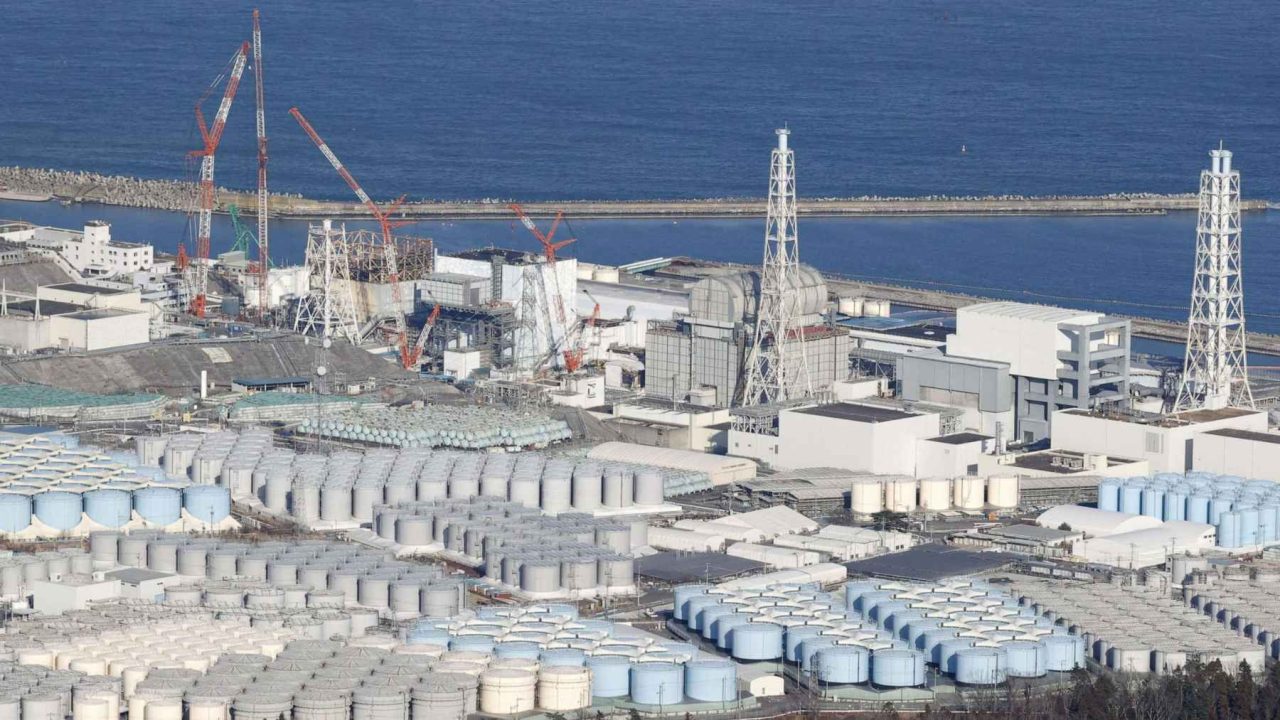
Beneath one of the most damaged nuclear reactor buildings on Earth, in water containing roughly 1 billion becquerels of cesium-137 per liter, something unexpected is alive. Not just surviving — apparently thriving. Researchers studying stagnant water inside the torus room below Fukushima Daiichi’s Unit 2 reactor discovered a living bacterial community in conditions that most people would assume were simply incompatible with life.
That finding alone would be remarkable. But the details that follow make it significantly more complicated — and potentially more troubling for the decades-long effort to clean up one of the worst nuclear disasters in history.
The study, led by researchers at Keio University, offers the first comprehensive look at microbial life from inside this specific part of the Fukushima Daiichi plant — not from surrounding soil or nearby seawater, but from within the damaged structure itself.
What Researchers Actually Found Inside Fukushima’s Unit 2
The torus room is a space beneath the reactor building that retained seawater after the March 2011 earthquake and tsunami triggered the catastrophic meltdowns at Fukushima Daiichi. It has sat largely undisturbed since then, accumulating radioactive contamination at levels that are genuinely difficult to comprehend.
The Keio University team examined two water samples collected in 2020 from different depths within the torus room. Using full-length 16S rRNA gene sequencing — a technique that identifies microbial communities by their genetic signatures — they mapped what was living in that water.
What they found was not some exotic, radiation-adapted extremophile unique to nuclear environments. The bacteria they identified were, by most measures, fairly ordinary. One sample was dominated by Limnobacter. The other was dominated by Brevirhabdus. Both are genera that researchers have encountered in other environments. That ordinariness is exactly what makes the discovery so striking.
The Radioactivity Numbers Are Difficult to Put Into Context
To understand why this matters, consider the environment these microbes are living in. The water in the torus room contains approximately 1 billion becquerels of cesium-137 per liter. Cesium-137 is a radioactive isotope produced by nuclear fission, and it is one of the primary contaminants of concern at Fukushima. It has a half-life of about 30 years and is readily absorbed by biological tissue.
For reference, regulatory limits for cesium-137 in drinking water in most countries are measured in tens of becquerels per liter — sometimes lower. The water in the torus room exceeds those thresholds by a factor of tens of millions.
| Detail | Data Point |
|---|---|
| Location of samples | Torus room, beneath Unit 2 reactor, Fukushima Daiichi |
| Year samples collected | 2020 |
| Cesium-137 concentration in water | ~1 billion becquerels per liter |
| Dominant bacteria — Sample 1 | Limnobacter |
| Dominant bacteria — Sample 2 | Brevirhabdus |
| Research institution | Keio University |
| Sequencing method used | Full-length 16S rRNA sequencing |
The fact that recognizable, relatively common bacterial genera are present in water at those contamination levels raises immediate scientific questions about how radiation resistance works at the microbial level — and whether the conditions inside the torus room have selectively favored certain organisms over others.
The Part of This Discovery That Could Complicate the Cleanup
Here is where the science moves from fascinating to potentially problematic. Many of the bacteria identified in the torus room samples are associated with metal corrosion. That connection matters enormously in the context of Fukushima’s decommissioning effort.
The cleanup of Fukushima Daiichi is already one of the most technically complex and expensive decommissioning projects ever attempted. Workers and engineers are operating around highly radioactive debris, damaged structural components, and containment systems that were never designed to be disassembled under these conditions. The process is expected to take decades.
If corrosion-linked bacteria are actively colonizing the water and surfaces within the reactor building, that introduces a biological variable into an already extraordinarily difficult engineering challenge. Microbially influenced corrosion — where bacterial activity accelerates the breakdown of metal infrastructure — is a well-documented phenomenon in industrial and marine environments. Its presence inside a damaged nuclear facility raises questions that plant operators and cleanup teams will need to take seriously.
Researchers note this was the first comprehensive microbial survey from inside this section of the plant. Previous studies had examined contamination in surrounding soil or the broader marine environment near Fukushima. The torus room itself had not been characterized in this way before.
Why Life Surviving Here Changes How Scientists Think About Radiation Limits
The broader scientific implication goes beyond Fukushima. For years, researchers have studied so-called radioresistant microorganisms — bacteria capable of withstanding radiation levels that would be lethal to most life forms. The classic example is Deinococcus radiodurans, sometimes called the world’s most radiation-resistant organism.
But the Fukushima discovery is notable precisely because the bacteria identified are not exotic specialists. They are genera found in more mundane environments. If relatively common microbes are persisting in water with a billion becquerels of cesium-137 per liter, it suggests that the threshold for microbial survival under intense radioactive contamination may be broader than previously assumed.
That has implications not just for nuclear disaster sites, but for how scientists model microbial life in other extreme environments — including, potentially, in the context of astrobiology and the search for life in harsh conditions beyond Earth.
What Comes Next for Fukushima Research and Decommissioning
The Keio University study represents an early look at a question that will likely require sustained investigation. Two samples from 2020 provide a starting point, but researchers and decommissioning teams will need to understand how widespread these microbial communities are, whether they are actively growing, and what effect — if any — they are having on the structural integrity of the torus room and surrounding infrastructure.
Japan’s decommissioning timeline for Fukushima Daiichi already stretches well into the 2050s and beyond by most estimates. The presence of corrosion-associated bacteria in the most contaminated water beneath the reactors adds a layer of biological complexity to a project already operating at the edge of what engineering and science can manage.
Whether these microbes represent a minor footnote or a significant complication remains an open question — one that researchers are only beginning to examine.
Frequently Asked Questions
Where exactly were the bacterial samples collected at Fukushima?
The samples were taken from the torus room, a space beneath the Unit 2 reactor building at Fukushima Daiichi, which retained seawater after the March 2011 disaster.
How radioactive was the water where bacteria were found?
The water contained approximately 1 billion becquerels of cesium-137 per liter, an extraordinarily high level of radioactive contamination.
What types of bacteria were identified in the samples?
One sample was dominated by Limnobacter and the other by Brevirhabdus, both of which are relatively common bacterial genera also found in other environments.
Why does the presence of these bacteria concern cleanup teams?
Many of the bacteria identified are linked to metal corrosion, which could accelerate the breakdown of infrastructure inside the reactor building and complicate the already complex decommissioning effort.
Who conducted this research?
The study was led by researchers at Keio University, using full-length 16S rRNA sequencing to analyze microbial communities in the water samples collected in 2020.
Has microbial life inside the Fukushima torus room been studied before?
According to the research team, this was the first comprehensive look at microbial life from inside this specific part of Fukushima — previous studies had focused on surrounding soil or nearby seawater rather than the reactor building interior.



Leave a Reply