
Your brain does not finish developing when you turn 18. It does not even finish when you hit 25 — despite what you may have heard. A major new study tracking more than 4,200 people from newborns to 90-year-olds has found that the brain’s internal wiring keeps actively reshaping itself well into your early thirties, with a key turning point falling around age 32.
That means the restlessness, the identity shifts, the sudden clarity or confusion that so many people experience in their twenties is not just emotional turbulence. There is real, measurable biology behind it — and science is only now beginning to map it clearly.
The research, led by Alexa Mousley at the University of Cambridge, offers one of the most detailed pictures yet of how the brain changes across an entire human lifetime. And the findings challenge some long-held assumptions about when adulthood actually begins — neurologically speaking.
What the Study Actually Found
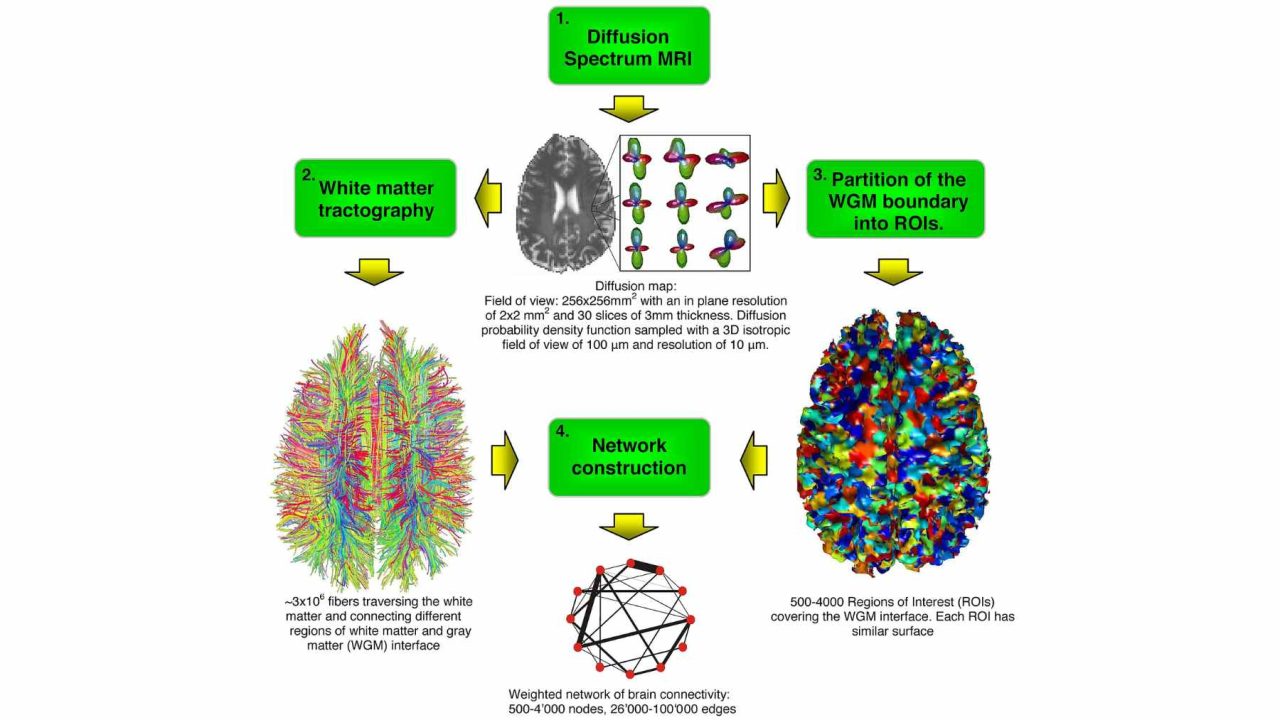
The Cambridge team analyzed diffusion MRI scans from 4,216 volunteers ranging from newborns to people in their nineties. Diffusion MRI is a particularly powerful tool for this kind of research because it tracks how water moves along white matter fibers — the long nerve cables that connect different brain regions. Think of white matter as the brain’s internal highway system, and diffusion MRI as a way to measure how well traffic is flowing.
Rather than studying one brain region at a time, the researchers treated the brain as a network. They used graph theory metrics — the same kind of mathematical framework used to analyze internet infrastructure or airline routes — to measure how efficiently information travels, how specialized different brain “neighborhoods” are, and which connection hubs are most central to the whole system.
Then they applied a technique called manifold learning to see how all of these measures shift together across a lifetime. What emerged was a clear picture: the brain does not change gradually and continuously. It moves through five distinct phases, separated by four identifiable turning points.
The Five Stages of a Lifetime Brain
The four turning points the researchers identified fell at remarkably specific ages: around 9, 32, 66, and 83. These are the moments when the brain’s network structure shifts most significantly — when one phase gives way to the next.
That places the transition out of young adulthood’s most active wiring phase at around age 32, not 25. The period from birth to roughly 32 years old includes what the research identifies as a particularly active phase of white matter development — the brain is literally building and refining its internal highways during this entire stretch.
| Turning Point Age | What It Marks |
|---|---|
| Around age 9 | End of early childhood brain phase; shift in network organization |
| Around age 32 | Close of the extended young adult wiring phase; white matter development stabilizes |
| Around age 66 | Transition into later-life network changes |
| Around age 83 | Further shift in brain network structure in advanced age |
The fact that two of the four major turning points occur after age 60 is also significant. It suggests the aging brain is not simply in a long, slow decline — it is moving through recognizable structural phases of its own.
Why Your Twenties Feel Like So Much Change
If you spent your twenties feeling like a different person every couple of years — changing careers, relationships, values, or your entire sense of who you are — this research offers a neurological explanation for at least part of that experience.
The white matter fibers being refined during this period are the connections that allow different brain regions to communicate efficiently. As those connections strengthen and organize, the brain becomes better at integrating information, regulating emotion, and making complex decisions. You are not imagining the shift — your brain’s internal architecture is genuinely different at 30 than it was at 20.
The researchers used graph theory to measure three key qualities of this network:
- Efficiency — how quickly information can travel between any two regions
- Specialization — how distinct different brain “neighborhoods” are from one another
- Centrality — which hubs are most critical to the overall network
All three of these measures shift meaningfully during the phase that runs up to around age 32. That is a long runway of active development — and it helps explain why the twenties can feel so unsettled even for people who appear, from the outside, to have their lives together.
What This Means Beyond the Twenties
One of the more underreported aspects of this research is what it reveals about brain change in older age. The turning points at 66 and 83 suggest the brain is not simply deteriorating after a peak in early adulthood. Instead, it continues to reorganize — moving through phases that are structurally distinct from one another.
This matters for how researchers, clinicians, and eventually the public think about cognitive aging. If the brain has identifiable phases in later life, that could eventually help scientists understand when and why certain changes become problematic versus when they are simply part of normal structural transition.
The use of a network-wide approach — rather than focusing on individual regions — is also a meaningful methodological step. Previous brain development research often examined specific areas in isolation. Treating the brain as an interconnected system, the way this study did, gives a more complete picture of how structure and function evolve together across a lifetime.
Frequently Asked Questions
When does the brain actually finish developing, according to this research?
The study identifies a key turning point around age 32, suggesting active white matter development continues well into the early thirties — later than the commonly cited age of 25.
Who conducted this study and how large was it?
The research was led by Alexa Mousley at the University of Cambridge and analyzed diffusion MRI scans from 4,216 volunteers ranging from newborns to people in their nineties.
What is white matter and why does it matter?
White matter refers to the long nerve fibers that connect different brain regions. It functions like an internal highway system, and its organization directly affects how efficiently information travels across the brain.
What are the four turning points the study identified?
The researchers found significant shifts in brain network structure at approximately ages 9, 32, 66, and 83 — dividing the human lifespan into five distinct neurological phases.
Does this mean the brain keeps changing into old age?
Yes. The study found two of the four major turning points occur after age 60, suggesting the aging brain continues to move through distinct structural phases rather than simply declining steadily.
What scanning method did the researchers use?
The team used diffusion MRI, which tracks water movement along white matter fibers and is considered a powerful tool for studying the brain’s connectivity and wiring structure.




Leave a Reply