
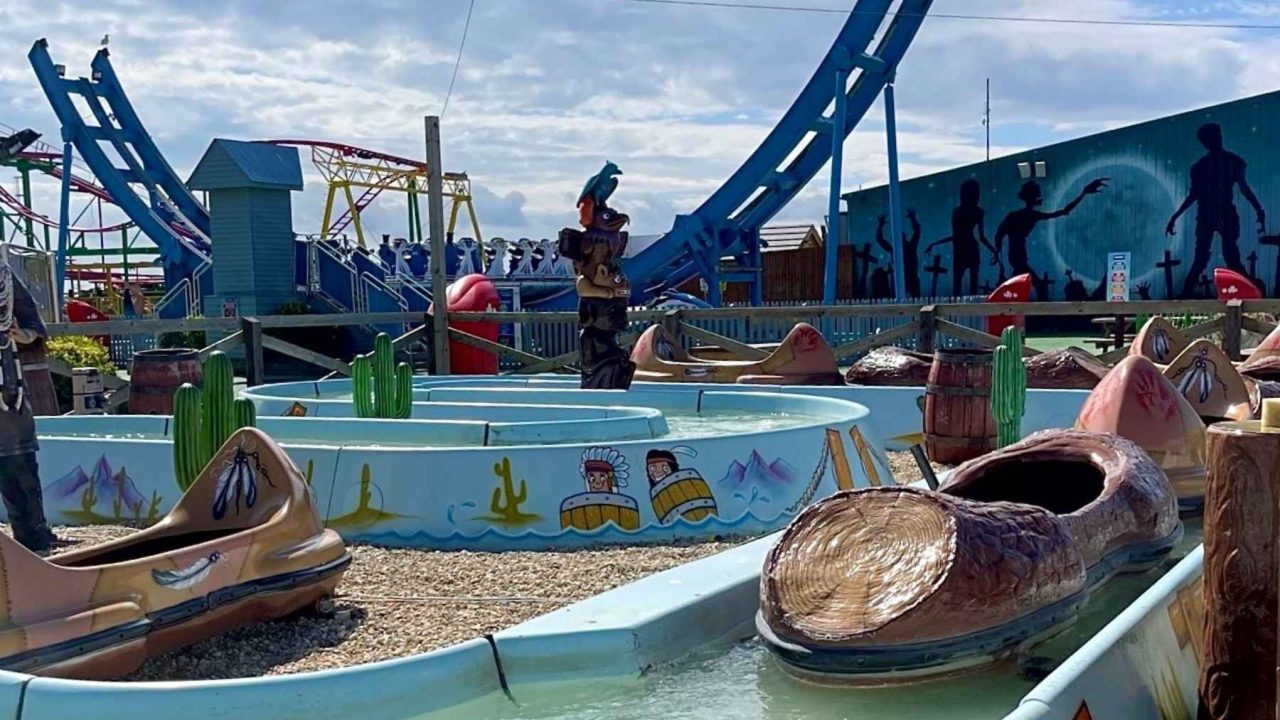
A theme park entering liquidation usually means one thing: the rides stop, the gates lock, and the attraction fades into memory. But the story of Brean Theme Park in Somerset is a little more complicated than that — and it raises real questions about what “closed forever” actually means in the theme park industry today.
Brean Theme Park Limited entered creditors’ voluntary liquidation on January 28, 2026, with Nicholas Stafford of Hazlewoods LLP appointed as liquidator, according to The Gazette. That is a formal legal process designed to wind up a company that can no longer trade in the usual way. By any standard definition, the business was in serious trouble.
And yet, as of March 6, the park’s official website was advertising a reopening date of March 21, 2026 — and already selling wristbands for the new season. So what is actually going on here, and why does it matter beyond one Somerset attraction?
What Liquidation Actually Means — and Why This Case Is Different
Liquidation is not always the same as permanent closure, even though the two are often treated as identical in headlines. When a company enters creditors’ voluntary liquidation, it means the directors have acknowledged the business cannot continue in its current form and have brought in a licensed insolvency practitioner to manage what happens next.
In Brean’s case, Nicholas Stafford of Hazlewoods LLP was appointed to that role. The liquidator’s job is to assess the company’s assets, deal with outstanding debts owed to creditors, and determine the most appropriate path forward. Sometimes that means a complete shutdown. Sometimes it creates the conditions for a restructured or rebranded operation to emerge.
The fact that the park’s website was selling wristbands just weeks after the liquidation filing suggests that some form of continuation — whether under new ownership, a restructured entity, or another arrangement — was being pursued even as the legal process played out. That distinction matters enormously for staff, suppliers, season ticket holders, and local visitors who depend on the attraction.
Why Brean Theme Park Reached This Point
The liquidator cited “significant financial challenges” dating back to the COVID-19 pandemic as a core factor in the company’s collapse. That is a familiar story across the leisure and hospitality sector — years of disrupted trading left many businesses carrying debt loads they could never quite shake.
But the pandemic was not the only pressure. According to ITV News reporting, the revenue generated during the 2025 summer season was simply not enough to sustain the park through its normal winter shutdown period. For a seasonal attraction, that creates a particularly dangerous cash flow problem: the park closes its gates in autumn, but the bills — maintenance, insurance, staffing costs, loan repayments — keep arriving regardless.
There was also a local factor at play. ITV reported that trading conditions were being affected by the ongoing Hinkley Point C construction project in the area, which had an impact on regional tourism patterns. That kind of external disruption is difficult for any small or mid-sized attraction to absorb, especially one already carrying post-pandemic financial strain.
The Key Facts at a Glance
| Detail | Information |
|---|---|
| Park name | Brean Theme Park, Somerset |
| Liquidation date | January 28, 2026 |
| Type of liquidation | Creditors’ voluntary liquidation |
| Liquidator appointed | Nicholas Stafford of Hazlewoods LLP |
| Source of liquidation notice | The Gazette |
| Advertised reopening date | March 21, 2026 |
| Financial challenges cited | Post-COVID pressures; insufficient 2025 summer revenue; Hinkley Point C tourism impact |
- The park is a seasonal attraction, meaning it generates most of its revenue during summer months and operates with minimal income through winter
- The liquidation filing came during the park’s normal winter closure period, compounding the cash flow problem
- The park’s website was already selling wristbands for the 2026 season as of early March, suggesting a continuation of some kind was being planned
- The Hinkley Point C construction project was identified as a local tourism disruption that affected trading conditions
Why This Is Bigger Than One Park
Brean Theme Park’s situation reflects a broader pattern that has been playing out across the leisure industry since the pandemic. Many smaller and mid-sized attractions absorbed significant losses during COVID-19 lockdowns, took on debt to survive, and then found themselves in a race against time — needing strong post-pandemic trading seasons to recover before those debts became unmanageable.
For seasonal parks specifically, the financial model is inherently fragile. A single underperforming summer — whether due to poor weather, reduced footfall, or external disruptions like a major construction project nearby — can push an already-stretched operation over the edge. There is very little margin for error when your entire annual income is compressed into a few months.
The situation also highlights how misleading closure headlines can be. When a park enters liquidation and news reports declare it “closed forever,” the reality on the ground is often more fluid. Assets may be sold, new operators may step in, or the existing operation may restructure and continue in some form. For visitors, staff, and local communities, the difference between those outcomes is enormous.
What Happens Next for Brean
Based on That suggests some form of trading continuation was being planned or had already been arranged, even while the formal liquidation process was ongoing.
What remains unclear — and has not been confirmed in available reporting — is the precise legal structure under which any reopening would operate, who would be running the attraction going forward, and what the outcome would be for the company’s creditors. Those questions are typically resolved through the liquidation process itself, which can take months to fully conclude.
For anyone planning a visit, checking the park’s official website directly for the most current information is the safest approach. Liquidation proceedings can move quickly, and the situation may have evolved further since early March.
Frequently Asked Questions
Has Brean Theme Park permanently closed?
Not necessarily. While Brean Theme Park Limited entered creditors’ voluntary liquidation on January 28, 2026, the park’s official website was advertising a reopening on March 21, 2026, and selling wristbands as of early March.
Why did Brean Theme Park go into liquidation?
The liquidator cited significant financial challenges linked to the COVID-19 pandemic, insufficient revenue from the 2025 summer season to cover winter costs, and disruption to local tourism caused by the Hinkley Point C construction project.
Who is handling the liquidation?
Nicholas Stafford of Hazlewoods LLP was appointed as liquidator, as reported by The Gazette.
What is creditors’ voluntary liquidation?
It is a formal legal process in which a company’s directors acknowledge the business cannot continue trading in its current form and appoint a licensed insolvency practitioner to manage the winding-up of the company’s affairs.
Will staff and creditors be paid?
This has not been confirmed in the available source material. The liquidation process typically involves assessing assets and outstanding debts, but outcomes for creditors vary depending on the specifics of each case.
Is the park selling tickets for 2026?
As of early March 2026, the park’s official website was selling wristbands for the new season, though the precise legal arrangement underpinning any reopening had not been publicly confirmed at that time.


Leave a Reply