
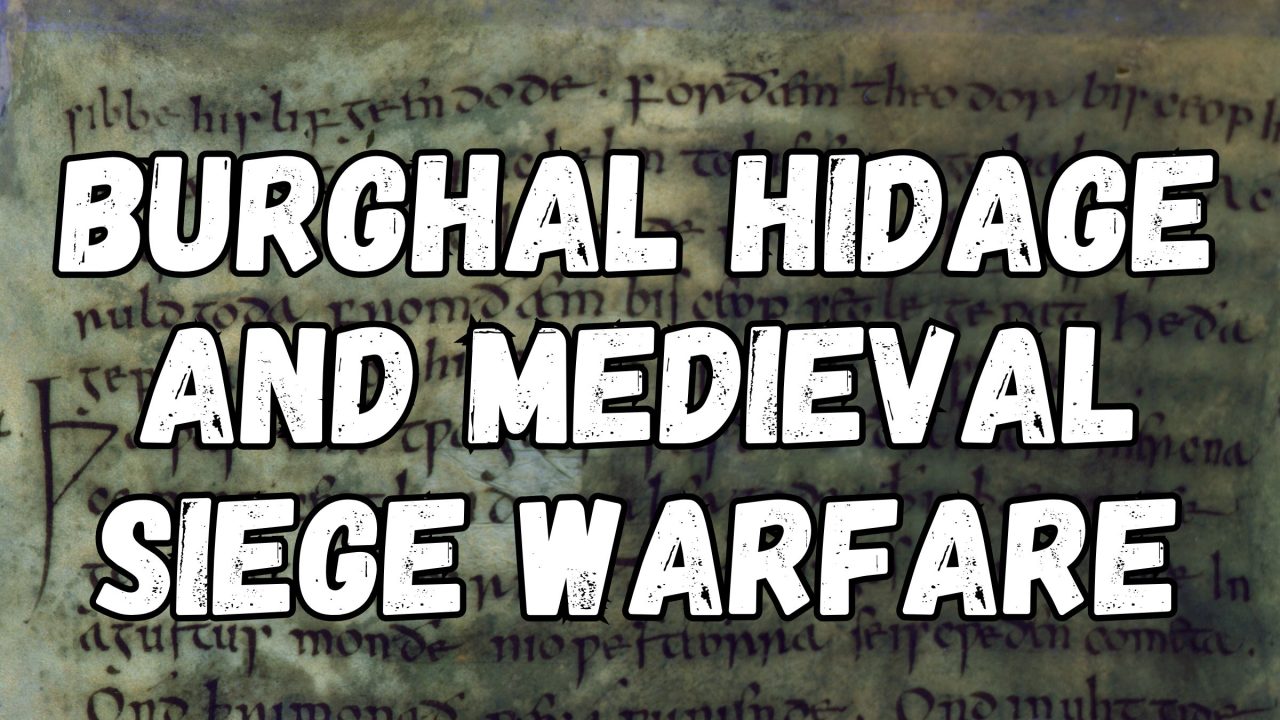
How many soldiers does it actually take to storm a fortified town? It sounds like a modern military planning question — but historians have been wrestling with it for centuries. Now, a remarkable document from early medieval England is helping provide a surprisingly precise answer.
The document is called the Burghal Hidage, and according to research by historian David Bachrach published on Medievalists.net, it offers one of the most extraordinary windows into the numerical realities of early medieval warfare that scholars have ever found. In a field where hard data is almost nonexistent, this text stands out as a genuine exception.
For anyone fascinated by medieval history, military strategy, or the surprisingly sophisticated administrative machinery of early England, what this document reveals is genuinely striking.
What the Burghal Hidage Actually Is
The Burghal Hidage was composed during the reign of King Edward the Elder of Wessex, who ruled from 899 to 924. Historians believe it was written sometime before 914. Its subject matter is the network of fortifications — known as burghs — that had been established across Wessex during the reign of Edward’s father, the legendary King Alfred the Great, who ruled from 871 to 899.
The document covers 33 fortifications in total. For each one, it records the number of hides assigned to support that fortification’s garrison. A hide was not a measurement of physical land area — it was a measure of land value, essentially a unit used to calculate tax obligations and military service.
The document’s military logic is spelled out with unusual clarity. As the text itself states: “if every hide is represented by one man, then every pole of wall can be manned by four men. Then for twenty poles of wall, eighty hides are required.”
An Anglo-Saxon pole measured approximately five meters. That means the military planners behind the Burghal Hidage calculated that four men were needed for every five meters of wall to adequately defend a fortification. That is a remarkably specific figure — and it has significant implications for understanding how attackers would have thought about siege warfare in return.
What This Tells Us About Medieval Siege Warfare
Bachrach’s research uses these garrison figures as a lens to examine the other side of the equation: not how many men it took to defend a burgh, but how many an attacking force would have needed to successfully storm one.
This matters because siege warfare in the early Middle Ages is often discussed in vague, impressionistic terms. Chronicles of the period tend to be short on numbers and long on dramatic narrative. The Burghal Hidage cuts through that fog by giving historians a concrete baseline — a known defensive strength — against which assault force requirements can be estimated.
If defenders needed four men per five meters of wall, attackers would have needed to bring enough force to overwhelm that coverage simultaneously across multiple points, neutralize defenders on the walls, and push through breaches or gates. The math, when worked through carefully, suggests that successful medieval assault forces were considerably larger than romanticized accounts of small, heroic raiding parties might imply.
This also illuminates the genuine sophistication of Alfredian military planning. The burghs were not improvised responses to Viking raids — they were part of a coordinated, administratively supported defensive network, each fortification calculated with documented precision.
The Key Numbers Behind the Burghal Hidage
| Detail | Specification |
|---|---|
| Document composed during | Reign of King Edward the Elder (899–924), before 914 |
| Fortifications covered | 33 burghs established under Alfred the Great |
| Unit of measurement used | Hides (measure of land value, not surface area) |
| Garrison ratio specified | 4 men per pole of wall |
| Length of one Anglo-Saxon pole | Approximately 5 meters |
| Example given in document | 20 poles of wall requires 80 hides (80 men) |
- The Burghal Hidage is considered one of the most important exceptions to the general scarcity of numerical data in early medieval European history
- Each hide assigned to a burgh was expected to provide one fighting man for garrison duty
- The document reflects the administrative reach of the Alfredian state — capable of planning, recording, and enforcing military obligations across dozens of sites
- Bachrach’s analysis uses these defensive ratios to work backward toward estimates of what assault forces would have required
Why This Research Matters Beyond Medieval Studies
It would be easy to treat this as purely academic — interesting to specialists, irrelevant to everyone else. But the Burghal Hidage research touches on something much broader: how states organize violence, and how much human infrastructure warfare actually requires.
The document reveals that early medieval rulers were not simply reacting to threats with whatever forces they could scrape together. Alfred’s planners sat down, measured walls, calculated manpower ratios, assigned tax obligations to specific parcels of land, and built a documented system. That is bureaucratic military planning — centuries before most people assume it existed in Western Europe.
For those who assume the early Middle Ages were a period of pure chaos and improvisation, the Burghal Hidage is a corrective. Kingdoms like Wessex were running something that looked, in important ways, like a functioning military state.
What Historians Are Still Working to Understand
Bachrach’s work on the Burghal Hidage is part of a broader scholarly effort to reconstruct the actual operational realities of early medieval warfare — not just the politics or the heroic narratives, but the logistics, the numbers, and the planning.
net represents a summary of Bachrach’s analysis rather than the full published study, so the complete range of his conclusions — including specific assault force estimates for individual burghs — goes beyond what can be confirmed here. What is clear is that the Burghal Hidage remains one of the most valuable primary sources available to historians of early medieval military organization, and that scholars are still finding new ways to extract meaning from its precise, practical language.
The question of how large an army needed to be to take a fortified early medieval town may never have a single clean answer. But thanks to documents like this one, historians are getting much closer.
Frequently Asked Questions
What is the Burghal Hidage?
It is a document composed during the reign of King Edward the Elder of Wessex, before 914, that records the garrison strengths of 33 fortifications established under King Alfred the Great.
What does a “hide” mean in this context?
A hide was a measure of land value rather than physical land area, used to calculate obligations including military service — with each hide expected to provide one garrison soldier.
How many men did the Burghal Hidage require per meter of wall?
The document specifies four men per Anglo-Saxon pole, which measured approximately five meters, meaning roughly four men were required for every five meters of defensive wall.
Who wrote the research analyzed here?
The analysis is by historian David Bachrach, whose work on the Burghal Hidage and medieval siege warfare was published on Medievalists.net.
Does the Burghal Hidage cover all of England?
No — it specifically covers 33 burghs in the kingdom of Wessex, the realm ruled by Alfred the Great and later his son Edward the Elder.
What does this document tell us about attacking forces specifically?
By establishing the documented defensive ratios of these fortifications, the Burghal Hidage allows historians to estimate what size assault force would have been needed to successfully storm them — though the full details of Bachrach’s conclusions extend beyond the source summary available here.


Leave a Reply