
Imagine walking into the most powerful court in the medieval world and getting everything wrong — the wrong bow, the wrong robe, the wrong moment to speak — and watching your entire diplomatic mission collapse before a single word of negotiation had been exchanged. That was the very real risk facing anyone who entered the Byzantine imperial court without an encyclopedic knowledge of its rituals.
The Byzantine Empire’s court etiquette was not simply a matter of good manners. It was, as historians have come to understand, a sophisticated and deliberate system of political control — one where every gesture, garment, and golden screen carried meaning, and where the performance of power was just as important as power itself.
For centuries, this elaborate ceremonial culture shaped how the empire was governed, how foreign dignitaries were received, and how the emperor’s divine authority was communicated without a single word being spoken.
How Byzantine Court Etiquette Became Political Theatre
At the heart of Byzantine court culture was a simple but profound idea: the emperor was not merely a ruler. He was a semi-divine figure whose authority had to be constantly displayed, reinforced, and performed for everyone who entered his presence.
Every aspect of court life was governed by an elaborate set of protocols. The way subjects approached the emperor, the organization of banquets, the structure of ceremonial events — none of it was left to chance or personal preference. It was all choreographed with the precision of a theatrical production, because that is essentially what it was.
The emperor’s public appearances were rare by design. When they did occur, they were carefully orchestrated spectacles set in grand environments. The emperor would be seated on a throne that could be mechanically elevated — literally rising above those who came to meet him — or surrounded by lavish golden screens adorned with intricate mosaics and opulent decorations. The message was unmistakable: this was not an ordinary man.
Visitors and ambassadors were greeted with elaborate receptions designed specifically to emphasize the emperor’s divine majesty. The experience was meant to overwhelm — and it usually did. Even the most seasoned diplomats reportedly found the system bewildering.
The Visual Language of Status and Hierarchy
One of the most striking features of Byzantine court etiquette was how thoroughly it communicated rank through appearance and movement. There was no guessing where someone stood in the imperial hierarchy. You could see it.
Ceremonial robes were not decorative choices — they were official markers of status, as readable to Byzantine courtiers as military insignia are to soldiers today. Prescribed movements and positions within the court space further delineated the social order. Where you stood, how you moved, how deeply you bowed, and even the direction you faced all carried specific meaning.
Honorific titles, too, were far more than polite forms of address. They were integral to the public display of power — a way of making the hierarchy visible and legible to everyone present.
| Element of Court Etiquette | Purpose |
|---|---|
| Ceremonial robes | Visually denoted rank and status within the court hierarchy |
| Prescribed movements | Reinforced social order through physical delineation |
| Honorific titles | Integral to the public display and performance of imperial power |
| Elevated throne mechanisms | Physically elevated the emperor above all others as a symbol of divine authority |
| Golden screens and mosaics | Created an awe-inspiring ceremonial environment for imperial appearances |
| Elaborate ambassador receptions | Emphasized the emperor’s divine majesty to foreign visitors |
Why This System Was So Effective at Maintaining Power
What made Byzantine court ritual genuinely remarkable — and genuinely effective — was that it worked on multiple levels simultaneously.
For those inside the empire, the rituals constantly reinforced who held power and on what terms. The strict hierarchy made rebellion or challenge harder to organize because the very structure of court life reminded everyone, every day, of their place within it.
For foreign visitors, the effect was different but equally calculated. Ambassadors arriving from other kingdoms or empires would be processed through a series of increasingly impressive ceremonial stages before reaching the emperor. By the time they arrived in his presence — if they were permitted to at all — they had already been made to feel the weight of Byzantine civilization pressing down on them. Negotiating from that position was psychologically very different from meeting a ruler as an equal.
The court was, in the most literal sense, a stage. Politics was performed as theatre, and the performance was the politics. Scholars studying this period note that the rituals transcended mere formality — they were central to the exercise of imperial power itself.
The Emperor at the Centre of It All
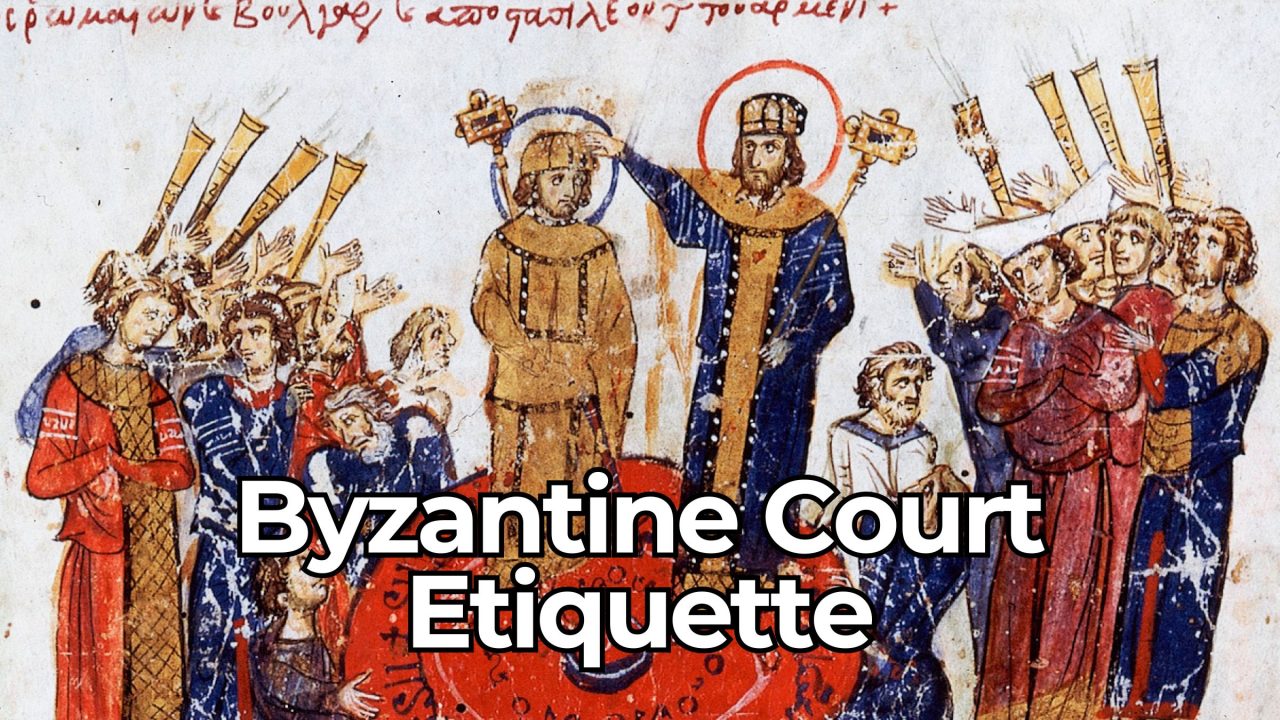
Historical imagery from the Byzantine period captures this dynamic vividly. One well-known manuscript illustration — from BnF Coislin 79 — depicts the Byzantine emperor Nikephoros III Botaneiates, or possibly Michael VII Doukas, seated on his throne and flanked by four court dignitaries, with two personifications of Truth and Justice at his sides. The composition is not accidental. Even in art, the emperor is the fixed centre around which all other figures are arranged.
That image tells you everything about how the Byzantines understood imperial authority: not as something earned or demonstrated through action alone, but as something expressed through position, symbolism, and the carefully managed perception of divine favour.
What This Tells Us About How Power Actually Works
The Byzantine court system is fascinating not just as a historical curiosity but as a case study in how power sustains itself. The empire lasted for over a thousand years, and its ceremonial culture was one of the tools that helped it do so.
Ritual, hierarchy, and spectacle are not ornamental additions to power — they are mechanisms of it. The Byzantines understood this with extraordinary sophistication, and they built a court system that made that understanding concrete in gold, silk, and stone.
Modern observers studying medieval governance increasingly point to Byzantine court etiquette as one of the most developed examples of what might be called symbolic statecraft — the deliberate use of ceremony and display to reinforce political authority. It was theatre, yes. But it was theatre with very real consequences for everyone who performed in it.
Frequently Asked Questions
What was Byzantine court etiquette?
It was an elaborate system of rituals, protocols, and ceremonial rules governing every aspect of life at the Byzantine imperial court, from how subjects approached the emperor to how banquets and official events were organized.
Why did the Byzantine emperor appear in public so rarely?
Public appearances were kept rare and carefully orchestrated to maximize their impact, reinforcing the emperor’s status as a semi-divine figure whose presence was a special and awe-inspiring event.
What was the purpose of the emperor’s mechanically elevated throne?
The throne mechanism physically raised the emperor above all others in the room, serving as a dramatic visual symbol of his supreme authority and divine elevation above ordinary mortals.
How did ceremonial robes function in the Byzantine court?
Robes were not simply clothing — they were official markers of rank and status, making the court hierarchy immediately visible to everyone present without any explanation needed.
Which Byzantine emperor is depicted in the BnF Coislin 79 manuscript?
The illustration depicts the emperor Nikephoros III Botaneiates, though historians note it may alternatively represent Michael VII Doukas, flanked by court dignitaries and personifications of Truth and Justice.
Were Byzantine court rituals only for internal audiences?
No — elaborate receptions for visiting ambassadors and foreign dignitaries were a key part of the system, designed specifically to impress outsiders with the emperor’s divine majesty and the empire’s grandeur.


Leave a Reply