
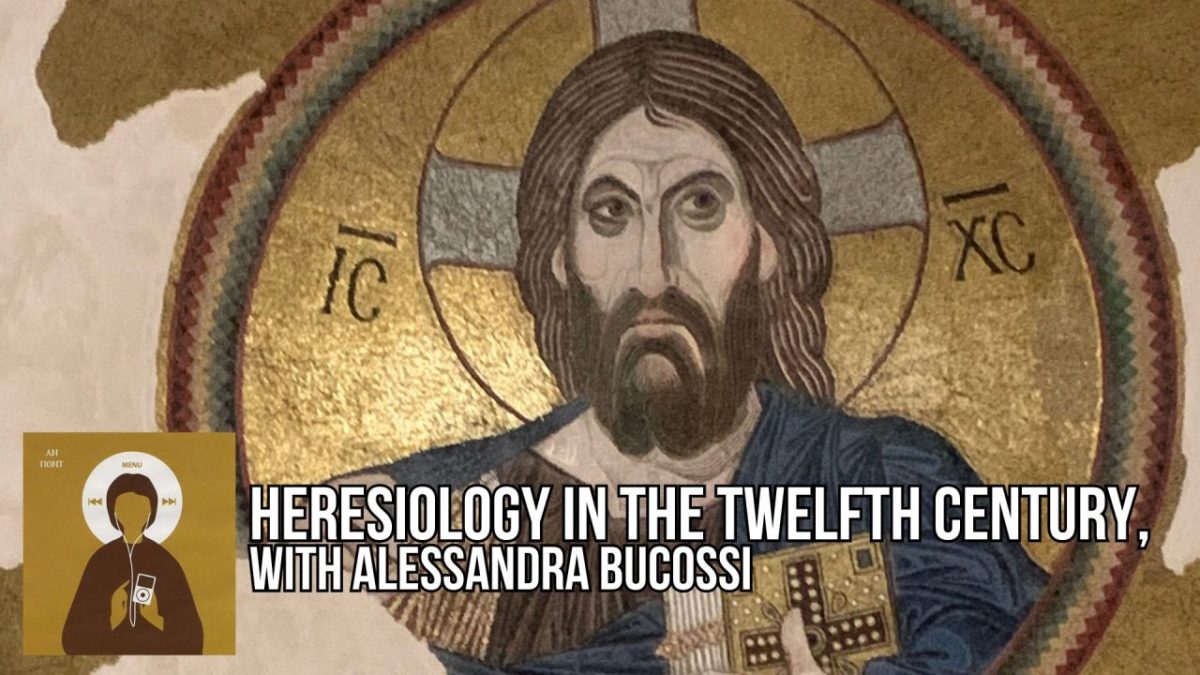
What happens when an empire starts to feel theologically surrounded? In twelfth-century Byzantium, that question wasn’t abstract — it drove the production of some of the most ambitious religious writing the medieval world had ever seen.
Scholars of Byzantine history have long recognized the twelfth century as a period of intense intellectual activity, but one particular strand of that activity stands out: a preoccupation with heresy so serious that it generated a wave of massive anti-heretical treatises. These weren’t short pamphlets. They were sprawling, systematic works designed to identify, catalog, and refute religious error in all its forms.
A recent episode of the podcast Byzantium & Friends brought this largely overlooked subject to wider attention, featuring a conversation between host Anthony Kaldellis — a Professor at the University of Chicago — and Alessandra Bucossi, Associate Professor of Byzantine Studies at Ca’ Foscari University of Venice. Their discussion sheds light on why twelfth-century Byzantium became so consumed with the problem of heresy, and what that tells us about the empire’s broader political and religious anxieties.
What Heresiology Actually Means — and Why It Mattered in Byzantium
Heresiology is, at its core, the systematic study and cataloging of heresy. It’s less about spontaneous theological argument and more about building a comprehensive record: here are the errors that exist, here is why they are wrong, here is how to counter them.
For the Byzantine Church and empire, this was serious business. Constantinople saw itself as the guardian of Christian orthodoxy — the correct form of the faith as defined through centuries of councils and theological debate. Any deviation from that orthodoxy, whether from within or from neighboring churches, was a direct challenge to that identity.
The twelfth century made that challenge feel especially urgent. The empire was increasingly engaging with two major Christian communities whose churches differed from Constantinople’s in significant ways: the Latins of Western Europe and the Armenians. These weren’t distant abstract threats. They were real political and ecclesiastical neighbors whose theological differences required a formal, authoritative Byzantine response.
The Historical Pressures That Produced These Texts
The Crusades had brought Latin Christians into direct, sustained contact — and conflict — with the Byzantine world. Whatever diplomatic cooperation existed between Constantinople and the crusader states, the theological gulf between the Greek East and the Latin West was real and growing. Differences over the nature of church authority, liturgical practice, and specific doctrinal points had been simmering for decades before the formal schism of 1054, and they did not disappear afterward.
The Armenian Church presented a different kind of challenge. Armenian Christianity had its own distinct theological tradition, shaped by councils and decisions that diverged from the positions Constantinople recognized as authoritative. As the empire’s engagement with Armenian communities deepened, so did the need to articulate exactly where and why those differences mattered.
Both pressures fed directly into the production of anti-heretical literature. These texts weren’t written in isolation — they were responses to a specific historical moment in which the Byzantine empire found itself navigating complex relationships with Christian communities it regarded as doctrinally compromised.
Key Figures and Context at a Glance
| Element | Detail |
|---|---|
| Period of focus | Twelfth century |
| Primary subject | Byzantine heresiology and anti-heretical treatises |
| Key scholar | Alessandra Bucossi, Associate Professor of Byzantine Studies, Ca’ Foscari University of Venice |
| Podcast host | Anthony Kaldellis, Professor, University of Chicago |
| Podcast name | Byzantium & Friends |
| Communities in conflict | Latins (Western Church) and Armenians |
| Nature of the texts | Large-scale, systematic anti-heretical treatises |
The research discussed in the podcast is not the work of a single scholar working alone. Bucossi headed a team project specifically focused on twelfth-century Byzantine heresiology — a collaborative effort whose full details are set to be covered in a follow-up episode of the same podcast.
What These Treatises Were Actually For
One of the more interesting questions the conversation raises is the function of these texts. Anti-heretical writing can serve several purposes simultaneously: it can be genuinely polemical, aimed at winning arguments with opponents; it can be internally directed, reinforcing orthodoxy among the faithful; or it can be political, demonstrating the theological seriousness and authority of the institution producing it.
In the Byzantine context, all three functions were likely in play. The sheer scale of these treatises — described as “massive” — suggests they were not casual productions. They represent a significant investment of intellectual labor, which points to an institutional seriousness about the problem of heresy that went beyond any single debate or controversy.
The increasing engagement with Latin and Armenian Christians gave these texts an immediate practical relevance. Knowing where the other church was wrong, and being able to articulate that clearly, mattered for diplomats, churchmen, and emperors alike.
Why This Research Still Resonates
Byzantine heresiology might sound like a narrow academic subject, but it touches on questions that remain relevant: how institutions define their own identity through opposition to others, how theological disagreement becomes political conflict, and how empires manage religious diversity at their borders.
The twelfth century was a pivotal moment in the long history of Christian division. The relationships between Constantinople, Rome, and the Armenian Church during this period helped shape the fault lines that still exist in global Christianity today. Understanding how Byzantine intellectuals thought about those relationships — and what they produced in response — fills in a part of that story that often gets overlooked in broader historical narratives.
The podcast Byzantium & Friends is available through Podbean, Spotify, and Apple Podcasts. A follow-up episode covering the team research project in more detail has been announced.
Frequently Asked Questions
What is heresiology?
Heresiology is the systematic study and cataloging of heresy — identifying religious errors, explaining why they are wrong, and providing arguments to counter them.
Why did heresiology become so prominent in twelfth-century Byzantium?
The Byzantine empire was increasingly engaged with the Latin Western Church and the Armenian Church, both of which differed from Constantinople’s theological positions, driving the production of major anti-heretical texts.
Who is Alessandra Bucossi?
Alessandra Bucossi is Associate Professor of Byzantine Studies at Ca’ Foscari University of Venice, and she headed a team research project on twelfth-century Byzantine heresiology.
What podcast discusses this topic?
Byzantium & Friends, hosted by Anthony Kaldellis of the University of Chicago, featured Bucossi in a conversation about heresiology; the podcast is available on Podbean, Spotify, and Apple Podcasts.
Will there be more detail about the research project?
Yes — a follow-up episode of Byzantium & Friends has been announced that will cover Bucossi’s team project on this topic in more detail.
How did the Latins and Armenians factor into Byzantine heresiology?
Both the Latin Western Church and the Armenian Church deviated from Constantinople’s positions on certain points, and the empire’s growing engagement with both communities provided direct context for the production of anti-heretical treatises during this period.



Leave a Reply