
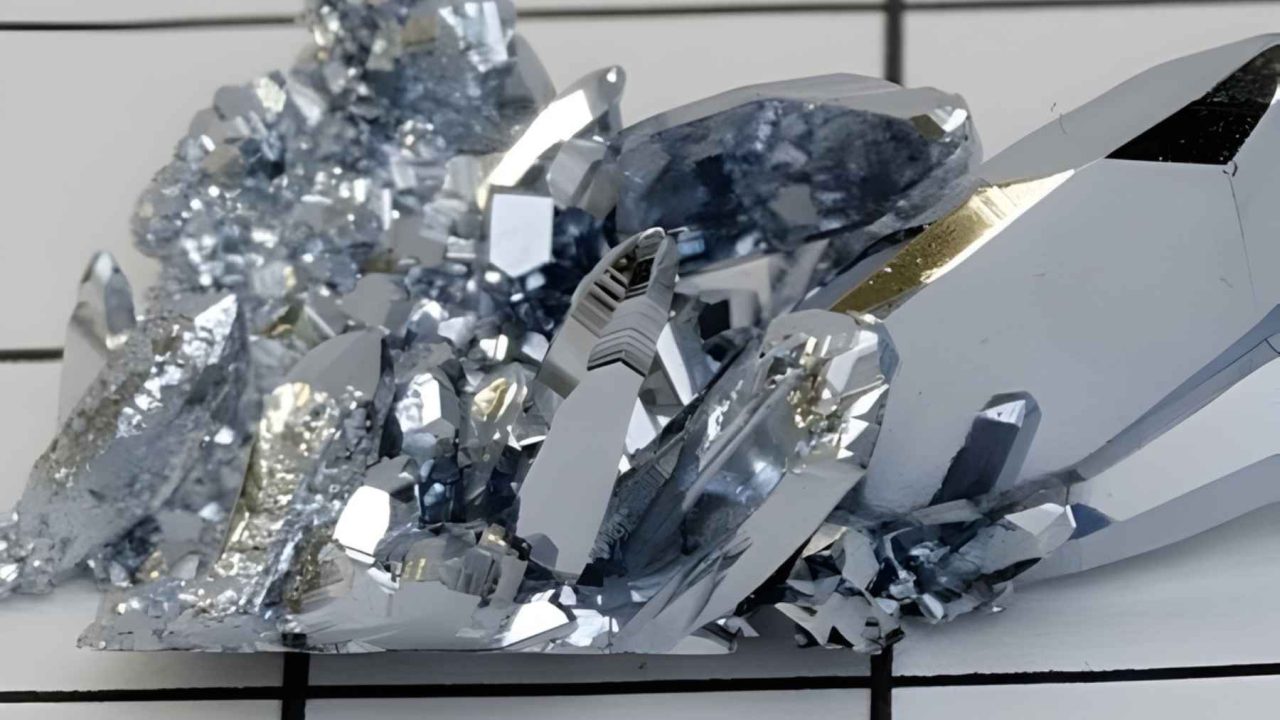
At $27 million per gram — roughly €23 million — californium-252 makes gold look like pocket change and diamonds look like costume jewelry. This synthetic metal is the most expensive material available for industrial use on the planet, and the vast majority of people have never heard its name.
It doesn’t glitter. You can’t wear it. And there’s almost none of it in existence at any given time. But the tiny amounts that do exist are powering some of the most critical technologies in modern medicine, energy, and materials science.
So what exactly is californium-252, why does it cost more than a luxury apartment in any major city in the world, and where does it actually come from? Here’s what the science tells us.
Why Californium-252 Is the Most Expensive Material on Earth
The price tag isn’t arbitrary. Californium-252 belongs to the actinide family of elements — a group of radioactive metals that sit at the bottom of the periodic table. Unlike gold, which you can mine from the ground, or diamonds, which form naturally deep in the Earth’s crust, californium-252 does not occur in nature at all.
Every single gram of it has to be manufactured from scratch, inside a specialized nuclear reactor, through a painstaking process that takes years. That combination — extreme difficulty of production, microscopic yields, and irreplaceable practical applications — is what drives the price to levels that seem almost fictional.
To put it another way: you could buy a private jet, a yacht, and several mansions for the price of one gram of this material. And yet the people who need it most aren’t luxury collectors. They’re scientists, engineers, and medical researchers.
How This Synthetic Metal Is Actually Made
The production process for californium-252 is unlike anything used to manufacture conventional materials. It starts with curium targets — themselves a rare and carefully managed radioactive material — which are placed inside specialized nuclear reactors and bombarded with neutrons over a period of years.
After that long irradiation process, scientists must chemically separate out the tiny amounts of californium-252 that have been produced. The yields are extraordinarily small, which is a major reason the price stays so high. You can’t simply scale up production the way you might with a pharmaceutical or an industrial chemical.
In the United States, this work is carried out at Oak Ridge National Laboratory, as part of the United States Department of Energy Isotope Program. Oak Ridge is one of only a handful of facilities in the world capable of producing this material, making it a genuinely rare global resource.
There’s another complicating factor: californium-252 has a half-life of approximately 2.645 years. That means its radioactive output — the very thing that makes it useful — drops off relatively quickly. Fresh material is constantly needed, which means the production process never really stops.
What Californium-252 Is Actually Used For
Given the cost and the complexity of production, you might expect californium-252 to have only one or two very narrow applications. In fact, it turns up across a surprisingly broad range of critical industries, all linked by one key property: it is an exceptionally powerful and reliable source of neutrons.
- Cancer treatment: Neutron-based therapies use californium-252 as a radiation source to target certain types of tumors, particularly those that are resistant to conventional radiation.
- Nuclear reactor technology: It is used in the startup and monitoring of nuclear reactors, where a reliable neutron source is essential for safe operation.
- Fuel analysis: The material can be used to analyze the composition of nuclear fuels, helping engineers understand what they’re working with at a molecular level.
- Building materials analysis: Californium-252 is also applied in the analysis of construction and building materials, using neutron activation to identify elemental composition without destroying the sample.
Each of these applications depends on the material’s ability to emit neutrons at a consistent and predictable rate — a property that very few other materials can match at the same level of reliability and intensity.
A Material That Cannot Be Substituted or Stockpiled
One of the reasons californium-252 commands such an extraordinary price is that it sits at a difficult intersection: it is both irreplaceable in its applications and impossible to stockpile in any meaningful quantity.
Because its half-life is just under three years, any supply that isn’t used relatively quickly will decay and lose its usefulness. Unlike gold, which can be stored indefinitely in a vault, californium-252 has an expiration date built into its atomic structure. Institutions that rely on it must continually source fresh material from the handful of facilities capable of producing it.
| Material | Approximate Price Per Gram | Natural or Synthetic | Primary Use |
|---|---|---|---|
| Gold | ~$90 | Natural | Finance, jewelry, electronics |
| Diamond | ~$55,000 (gem quality) | Natural | Jewelry, industrial cutting |
| Californium-252 | ~$27,000,000 | Synthetic | Medical, nuclear, materials analysis |
Note: Gold and diamond prices are general market estimates provided for context. The californium-252 price of $27 million per gram comes from
The Ongoing Challenge of Keeping the Supply Alive
Because californium-252 decays so quickly and is produced in such small quantities, the global supply chain for this material is fragile by nature. The United States Department of Energy Isotope Program at Oak Ridge National Laboratory plays a central role in keeping that supply available — but the work is slow, technically demanding, and resource-intensive.
The neutron bombardment process required to create californium-252 from curium targets doesn’t happen over weeks or months. It takes years of sustained irradiation before usable quantities of the isotope can be chemically separated out. That long lead time means demand spikes can’t simply be met by ramping up production quickly.
For the hospitals, energy facilities, and research institutions that depend on this material, that creates a constant logistical challenge — and helps explain why the price has remained at such an extraordinary level.
Frequently Asked Questions
What is californium-252 and why is it so expensive?
Californium-252 is a synthetic radioactive metal from the actinide family. It costs approximately $27 million per gram because it does not occur in nature, must be manufactured in specialized nuclear reactors over a period of years, and is produced only in tiny quantities.
Where is californium-252 produced?
In the United States, it is produced at Oak Ridge National Laboratory as part of the United States Department of Energy Isotope Program. Only a handful of facilities worldwide are capable of making it.
What is californium-252 used for?
It is used in cancer treatment, nuclear reactor technology, and the analysis of fuels and building materials — all applications that rely on its ability to emit neutrons reliably.
How long does californium-252 last?
It has a half-life of approximately 2.645 years, meaning its neutron output decreases relatively quickly and fresh material must continually be produced and sourced.
Is californium-252 more expensive than diamonds?
Yes, significantly. At $27 million per gram, it far exceeds the price of even high-quality gem diamonds, making it the most expensive material available for industrial use according to
Can californium-252 be stockpiled for future use?
Not effectively. Because of its short half-life of roughly 2.645 years, stored material decays and loses its usefulness relatively quickly, meaning users must continually source fresh supply.


Leave a Reply