
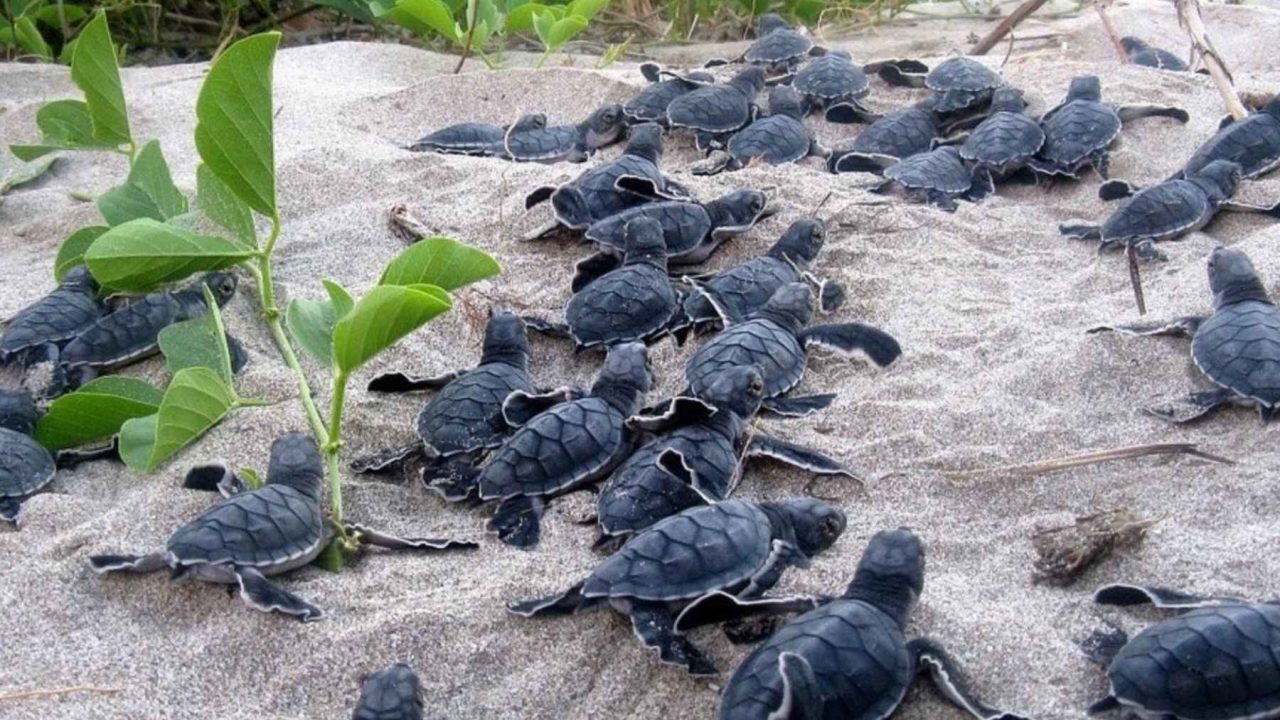
More turtle tracks in the sand should be a reason to celebrate. But a landmark 17-year study of loggerhead sea turtles nesting on the Cape Verde islands is revealing something far more unsettling beneath that encouraging surface: the average gap between a female’s breeding seasons has doubled — from roughly two years to roughly four — while the number of nests she lays and the eggs within them have both declined.
The beaches look busier. The turtles are arriving earlier than ever. And yet, by nearly every biological measure that actually matters, these animals are struggling in ways a simple nest count would never reveal.
Published on February 11, 2026, the peer-reviewed study tracked individual loggerhead females across Sal Island in Cabo Verde from 2008 through 2024. It is one of the longest continuous records of its kind for this population, and what it found should fundamentally change how scientists and conservationists assess whether a sea turtle population is genuinely recovering — or quietly declining.
Why Counting Nests Gives You the Wrong Answer
For decades, the standard way to measure sea turtle population health has been relatively straightforward: count the nests on the beach each season. More nests, more turtles, more hope. It is an approach that is practical, scalable, and — according to this new research — dangerously incomplete.
The Cabo Verde study found that while nesting beaches may appear more active, the per-female output has dropped significantly. Females are producing fewer eggs per nest, nesting less frequently within a single season, and taking far longer to return for their next breeding cycle. A beach that looks crowded could simply mean more individual females are showing up less productively, masking a deeper biological stress signal.
The researchers linked these changes to two converging environmental pressures: warmer sea surface temperatures near the nesting beaches, and lower productivity in the feeding areas off the West African coast. When the ocean produces less food, turtles arrive at nesting season with less stored energy — and less energy means fewer eggs, fewer nests, and a longer recovery time before the next breeding attempt.
What the 17-Year Data Actually Shows
The study’s findings, drawn from continuous monitoring on Sal Island, paint a detailed picture of how climate-related changes are reshaping loggerhead reproductive behavior over time. Here is what the data confirmed:
- Females are arriving at nesting beaches earlier than in previous years
- The average gap between breeding seasons doubled, from approximately two years to approximately four years
- The number of nests laid per female per season fell
- The number of eggs per nest also declined
- Warmer ocean surface temperatures near Cabo Verde were identified as a contributing factor
- Reduced food availability in West African feeding grounds was linked to lower stored energy in nesting females
| Metric | Earlier in Study Period | Recent Trend |
|---|---|---|
| Average gap between breeding seasons | ~2 years | ~4 years |
| Nests per female per season | Higher | Declining |
| Eggs per nest | Higher | Declining |
| Arrival timing at nesting beach | Later in season | Earlier in season |
| Study period | 2008–2024 (Sal Island, Cabo Verde) | |
The monitoring method itself was critical to these findings. Rather than conducting a single seasonal nest count, the research team tracked individual females across multiple years. That distinction matters enormously. Population-level nest counts cannot tell you whether the same turtles are returning more often or whether more turtles are returning less often — two very different biological realities with very different conservation implications.
The Part of This Story Most Reports Are Missing
There is something almost counterintuitive at the heart of this research. Cabo Verde hosts one of the largest loggerhead nesting populations in the eastern Atlantic. Seeing more activity on those beaches has, understandably, been read as a conservation success story. And in some respects, it may be — the population has not collapsed, and females are still returning.
But the study forces a harder question: if each female is producing significantly fewer offspring per decade than she did before, what does population growth actually look like over the long term? Loggerhead sea turtles are long-lived animals with slow reproductive cycles. Changes that compound quietly over years can take generations to fully register — by which point reversing the trend becomes far more difficult.
Researchers point to the combination of warmer waters and degraded feeding grounds as the mechanism driving these reproductive changes. When females cannot accumulate sufficient energy reserves in their foraging areas before undertaking the migration to nesting beaches, their bodies simply cannot support the same reproductive output. Earlier arrival may itself be a stress response — a shift in timing driven by changing ocean conditions rather than improved health.
What This Means for Sea Turtle Conservation
The practical message from this research is pointed: nest counts alone are not enough. Conservation programs that rely solely on season-by-season nest totals to assess population health risk missing a slow-motion decline hiding behind apparently stable or even rising numbers.
The study advocates for long-term individual tracking as an essential complement to traditional monitoring. Knowing how often the same female returns, how many nests she lays, and how many eggs those nests contain over her lifetime gives conservationists a much richer and more accurate picture of whether a population is genuinely thriving.
Beyond monitoring methods, the findings add to a growing body of evidence that ocean warming and declining marine food productivity are already shaping the reproductive biology of sea turtles in measurable ways. For a species that depends on precise energy budgets to complete one of nature’s most demanding journeys — crossing open ocean to lay eggs on the same beach where they were born — the margin for disruption is narrower than it might appear.
What Researchers and Conservationists Are Watching Next
The study covered 2008 through 2024, giving scientists a foundation to continue tracking whether these trends accelerate, stabilize, or reverse as ocean conditions continue to change. The loggerhead population at Cabo Verde remains one of the most important in the Atlantic, and what happens there will likely serve as an early indicator of pressures building across sea turtle populations globally.
Conservation groups and researchers are increasingly calling for monitoring frameworks that move beyond counting tracks in the sand — toward approaches that can capture the full reproductive story of individual animals across their lifetimes. The turtles are still coming. The question this research demands we ask is whether they are doing as well as the beach makes them appear.
Frequently Asked Questions
Where was this sea turtle study conducted?
The study tracked loggerhead sea turtles nesting on Sal Island in Cabo Verde, an island nation off the coast of West Africa.
How long did the research last?
The study monitored individual female loggerhead turtles from 2008 through 2024 — a period of 17 years — making it one of the longest continuous records for this population.
Why are the turtles arriving earlier at nesting beaches?
The study identified warmer sea surface temperatures near the nesting beaches as a contributing factor, though researchers noted this earlier arrival does not appear to reflect improved health in the turtles.
What caused the decline in eggs and nesting frequency?
Researchers linked the decline to lower food productivity in West African feeding areas, which leaves females with less stored energy — reducing both the number of nests they lay and the eggs within each nest.
Why isn’t counting nests on the beach enough?
Nest counts cannot distinguish between more turtles nesting less productively and the same turtles nesting more often — two very different situations with different implications for population health.
When was this study published?
The peer-reviewed study was published on February 11, 2026.




Leave a Reply