
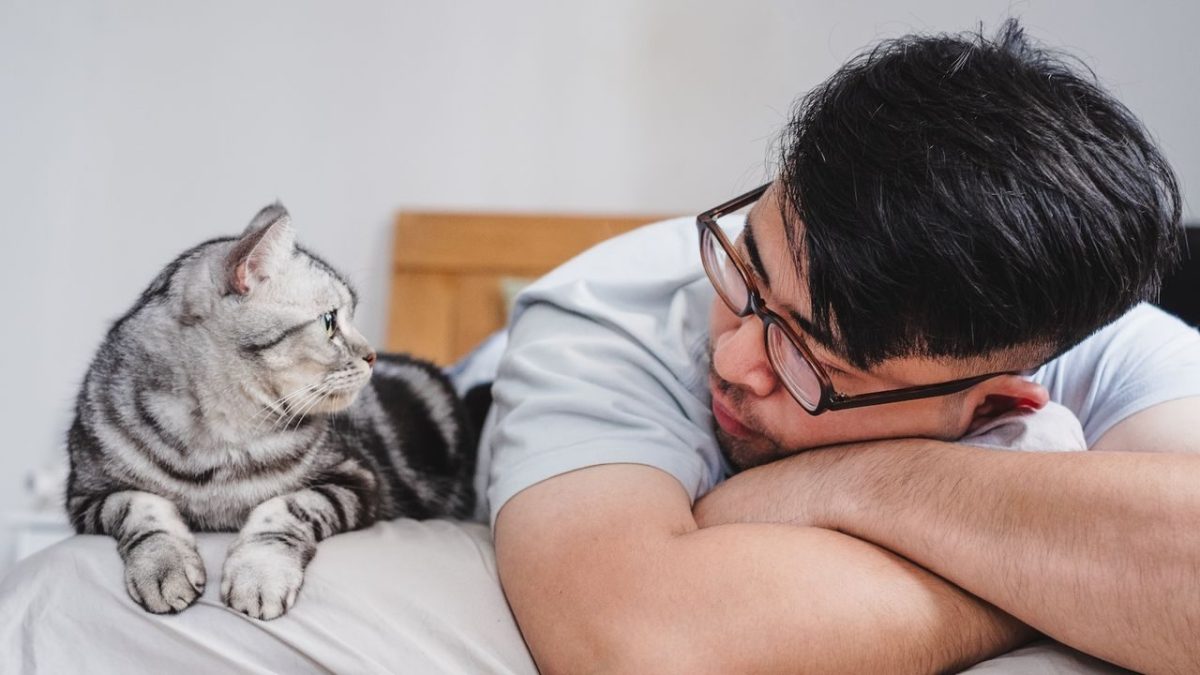
Cats have lived alongside humans for thousands of years — but a growing body of scientific thinking suggests the relationship may be far stranger, and far less equal, than most pet owners realize. Are we their companions, or have we simply become their hosts?
That provocative question sits at the heart of ongoing research into feline domestication. Unlike dogs, which were actively shaped by humans over millennia to serve specific roles, cats appear to have largely domesticated themselves — moving in on human settlements and never quite surrendering their wild independence. The dynamic that emerged from that arrangement is, by some scientific interpretations, less a partnership and more a quiet takeover.
According to Rob Dunn, a professor of applied ecology at North Carolina State University, relationships between species don’t stay fixed. What begins as a mutualism — a win-win arrangement where both species benefit — can shift over time into something that looks a lot more like parasitism.
What Mutualism Actually Means — and Why It Doesn’t Always Last
In ecology, a mutualism is a relationship between two different species where both sides gain something. Think of the classic example of bees and flowers: the bee gets nectar, the flower gets pollinated. Both walk away better off. These kinds of arrangements are common across the natural world.
But as Dunn has noted, these relationships are not permanent. Over time, the balance of benefit can shift. One species begins to extract more than it gives. The other continues to provide resources, shelter, or labor — sometimes without any obvious return. At that point, the relationship starts to resemble something closer to a parasite-host dynamic than a true partnership.
When researchers apply this framework to cats and humans, the results are thought-provoking. Cats, unlike most domesticated animals, were never selectively bred to perform tasks for humans in the way horses, dogs, or cattle were. They tolerated human proximity because it benefited them — grain stores attracted rodents, rodents attracted cats, and humans provided a reliable and relatively safe environment. The cats got food and shelter. What exactly did humans get in return, beyond the cats’ presence?
How Cat Domestication Actually Unfolded
The story of how cats came to live with humans is significantly different from the domestication stories of other animals. The prevailing scientific understanding is that wildcats began associating with early agricultural settlements thousands of years ago, drawn by the concentrations of prey that human food storage created.
Humans didn’t go out and tame wildcats. The cats, in effect, chose proximity to humans because it was advantageous for them. Over generations, the individuals most tolerant of human presence thrived and reproduced in these environments. The result was a gradual self-selection toward tameness — but not toward the deep behavioral and physiological changes seen in animals humans actively domesticated.

This is why domestic cats today still retain so much of their wild behavior. They hunt. They roam. They operate on their own schedule. They are, in many measurable ways, only semi-domesticated — sitting somewhere between wild animal and true domestic companion.
The Case for Calling Cats ‘Parasites of Human Societies’
The phrase is deliberately provocative, but it has a scientific basis worth taking seriously. Parasitism, in the biological sense, doesn’t require malice or intent. It simply describes a relationship where one organism benefits at the expense of another.
Consider what cats extract from modern human households: food, shelter, veterinary care, warmth, and consistent attention. The global pet industry spends billions annually catering to feline needs. In exchange, cats offer companionship — but companionship is, by definition, something that benefits the human, not a resource the cat is consciously providing.
There is also the well-documented case of Toxoplasma gondii, a parasite that cats carry and shed in their feces. Research has suggested this organism — which can infect humans — may influence host behavior in subtle ways. While the full extent of its effects on humans remains a subject of active scientific debate, its existence adds another layer to the already complicated story of what living closely with cats actually means for people.
| Relationship Type | Who Benefits | Example |
|---|---|---|
| Mutualism | Both species | Bees and flowering plants |
| Parasitism | One species, at the other’s expense | Tapeworm and host animal |
| Commensalism | One species, without harming the other | Barnacles on a whale |
| Cat-human relationship (debated) | Primarily cats, with emotional return to humans | Domestic cat in a modern household |
Why This Matters Beyond the Dinner Table Debate
This isn’t just an academic argument about terminology. Understanding how species relationships evolve over time has real implications for conservation, public health, and even how we think about the animals we choose to live with.
Domestic and feral cats are among the most significant predators of wild birds and small mammals on Earth. In some ecosystems, free-roaming cats have contributed directly to species decline and extinction. The same animal that curls up on a couch in the evening is, by instinct and design, a highly efficient killing machine during the day.
That tension — between the cat as beloved companion and the cat as ecological disruptor — is part of what makes this relationship so worth examining honestly. Humans have extended enormous resources and affection toward cats for thousands of years. Whether that arrangement has always served human interests as well as feline ones is a question researchers are still working through.
What the Science Is Still Figuring Out
The scientific conversation around cat domestication and the nature of the human-cat bond is ongoing. Researchers continue to study the genetic history of domestic cats, the behavioral differences between truly domesticated animals and semi-domesticated ones, and the broader ecological consequences of billions of cats living in close proximity to humans worldwide.
What’s clear is that the story of how we ended up so close to cats is not the simple tale of mutual affection most people assume. It began with opportunism — on the cats’ part — and evolved into one of the most widespread interspecies relationships in human history. Whether that makes cats our companions, our commensals, or something closer to our parasites may depend on who, exactly, you ask.
Frequently Asked Questions
When were cats first domesticated?
Cats are believed to have begun associating with human agricultural settlements thousands of years ago, though the precise timeline remains an area of ongoing research.
What is a mutualistic relationship?
A mutualism is a relationship between two different species in which both sides benefit, such as the relationship between bees and flowering plants.
Did humans actively domesticate cats?
Unlike most domesticated animals, cats are understood to have largely domesticated themselves by gravitating toward human settlements where prey was plentiful, rather than being selectively bred by humans for specific tasks.
Who described species relationships as potentially shifting from mutualism to parasitism?
Rob Dunn, a professor of applied ecology at North Carolina State University, has discussed how relationships between species can change over time, with mutualisms potentially evolving into parasite-host dynamics.
Are cats considered fully domesticated animals?
By most scientific measures, domestic cats are considered only semi-domesticated, retaining many wild behaviors and instincts that distinguish them from animals humans actively shaped through selective breeding.
Do cats have any negative ecological impact?
Free-roaming and feral cats are recognized as significant predators of wild birds and small mammals, and in some ecosystems have been linked to the decline of native species populations.



Leave a Reply