
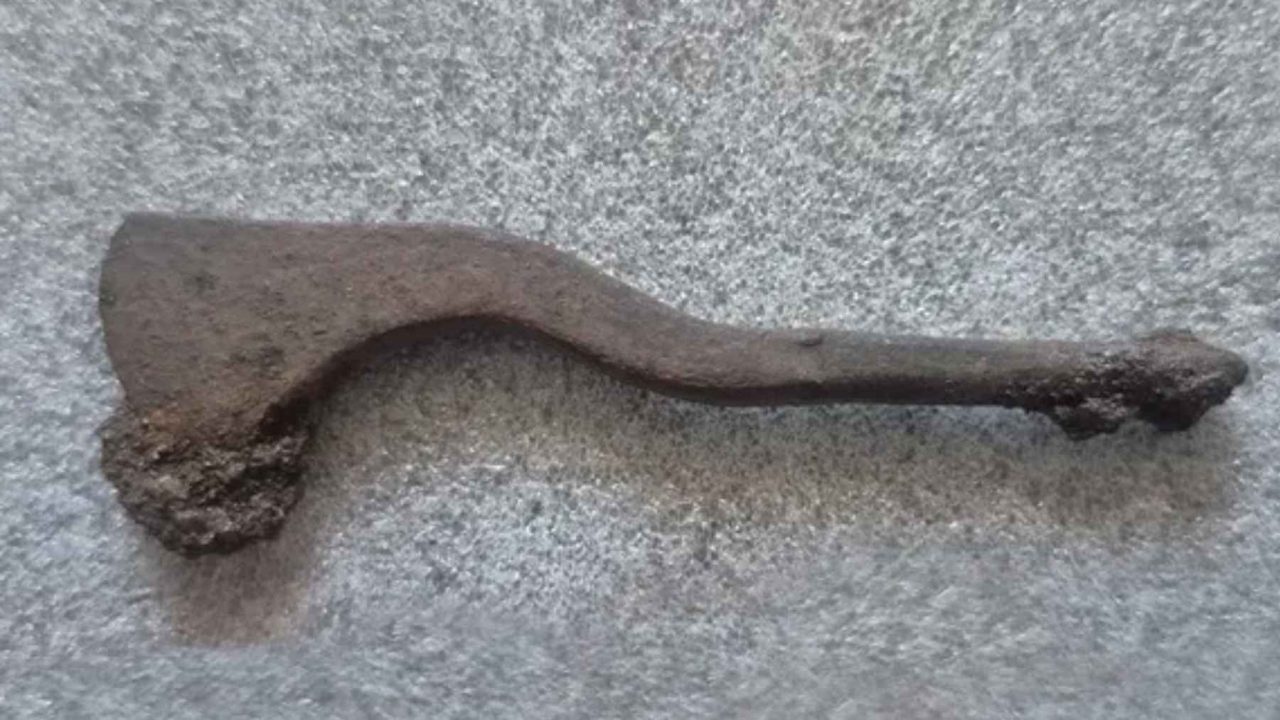
A small iron blade, barely remarkable at first glance, may be one of the most significant medical artifacts ever pulled from European soil. Discovered at a fortified settlement in Poland, the 2,300-year-old tool is believed to be a specialized surgical instrument used to cut into human skulls — evidence that Celtic communities in central Europe were performing cranial surgery during the middle of the Iron Age.
The find pushes back our understanding of organized medicine in this part of the world and raises a striking question: how sophisticated were Iron Age healers, really?
The answer, based on this discovery, appears to be far more sophisticated than most people would expect.
What Was Found — and Where
The instrument was unearthed at Łysa Góra, a fortified Celtic settlement in the Mazovia region of Poland. It is a slender iron blade that narrows into a sharp spike, almost certainly fitted into a wooden handle at some point — designed to function as a small, precise scalpel.
Researchers from the State Archaeological Museum in Warsaw, working alongside the University of Warsaw, identified the tool not as an ordinary knife or domestic implement, but as a purpose-built trepanation instrument. Trepanation — the deliberate drilling or cutting of holes into the skull — is widely regarded as the oldest known form of surgery, with evidence of the practice stretching back thousands of years across multiple continents.
What makes this particular tool stand out is the precision of its construction. Its shape and careful manufacture are described as typical of Celtic metalwork, and it closely matches surgical instruments recovered from better-documented Celtic sites in modern-day Romania, Austria, and Croatia.
Excavation leader Bartłomiej Kaczyński has noted these comparisons, placing the Łysa Góra tool within a broader tradition of Celtic medical practice that spanned much of central and eastern Europe during this period.
Why This Discovery Matters for Our Understanding of Iron Age Medicine
Trepanation is not a lost art — it is still performed in modern neurosurgery. But the practice in the ancient world has long fascinated researchers precisely because it requires not just the right tools, but real anatomical knowledge, steady hands, and some understanding of how to keep a patient alive through the procedure.
Finding a specialized instrument like this at a Celtic settlement in Poland suggests that cranial surgery was not an isolated or accidental occurrence. It points toward a community that had access to trained individuals — whether healers, shamans, or early surgeons — who possessed the knowledge and the proper equipment to perform deliberate operations on the human brain.
The researchers connect the tool to a long tradition of trepanation across Celtic Europe. The presence of similar instruments at multiple sites across Romania, Austria, and Croatia implies that this was not a local experiment but part of a shared medical culture that moved across Celtic networks of trade and knowledge.
As the researchers have observed, what looks at first like a simple piece of iron opens a window onto how people in this Iron Age community tried to manage trauma, relieve pain, and perhaps address what they understood as spiritual afflictions.
Key Facts About the Discovery
| Detail | Information |
|---|---|
| Estimated age of tool | Approximately 2,300 years old |
| Discovery location | Łysa Góra, Mazovia region, Poland |
| Type of settlement | Fortified Celtic settlement |
| Identified purpose | Specialized trepanation scalpel (cranial surgery) |
| Research institutions involved | State Archaeological Museum in Warsaw; University of Warsaw |
| Comparable sites | Romania, Austria, Croatia |
| Excavation leader | Bartłomiej Kaczyński |
- The blade narrows to a sharp spike, suggesting a design intended for precision cutting rather than general use
- It was likely fitted with a wooden handle, making it a proper handheld surgical instrument
- The style and quality of manufacture align with known Celtic metalworking traditions
- Trepanation is considered the oldest documented surgical procedure in human history
What This Tells Us About Celtic Communities in Poland
The Łysa Góra settlement is described as a fortified site, which already suggests a community with significant organizational capacity. The presence of a specialized medical tool adds another dimension to that picture — this was not a transient or purely agrarian group, but one that supported skilled practitioners and maintained connections to broader Celtic intellectual traditions.
Celtic culture during the Iron Age is often reduced in popular imagination to warriors and druids, but discoveries like this complicate that image in useful ways. The existence of purpose-built surgical instruments implies a degree of medical specialization — someone made this tool specifically to cut into skulls, and someone else knew how to use it.
Whether the procedures performed were intended to treat head injuries, relieve pressure from trauma, or address conditions the community understood in spiritual terms, the act of performing cranial surgery requires knowledge that does not develop overnight. It is passed down, practiced, and refined over generations.
This single iron blade, then, represents not just one operation but an entire tradition of medical learning that existed in central Europe over two millennia ago — and that we are only now beginning to piece together.
What Researchers Are Looking at Next
The discovery opens several avenues of investigation. Researchers will likely examine the broader Łysa Góra site for additional medical artifacts, human remains showing signs of trepanation, or other evidence of organized healing practices at the settlement.
Comparisons with the similar instruments found in Romania, Austria, and Croatia may also help build a clearer map of how medical knowledge traveled across Celtic Europe — whether through trade routes, the movement of healers, or shared cultural traditions.
The tool itself will undergo further material analysis to confirm its age, composition, and manufacturing techniques, all of which could provide additional confirmation of its Celtic origins and its specific surgical purpose.
Frequently Asked Questions
Where was the 2,300-year-old Celtic surgical tool found?
It was discovered at Łysa Góra, a fortified Celtic settlement in the Mazovia region of Poland.
What is trepanation, and why is it significant?
Trepanation is the deliberate cutting or drilling of holes into the human skull. It is considered the oldest known form of surgery, practiced across many ancient cultures worldwide.
Who led the excavation that uncovered this tool?
The excavation was led by Bartłomiej Kaczyński, with research conducted by teams from the State Archaeological Museum in Warsaw and the University of Warsaw.
Are there similar tools found elsewhere in Europe?
Yes. Comparable surgical instruments have been found at Celtic sites in Romania, Austria, and Croatia, suggesting a shared medical tradition across Celtic communities.
How do researchers know this was a surgical instrument and not an ordinary knife?
The tool’s specific shape — a slender blade narrowing to a sharp spike, with careful manufacture typical of Celtic metalwork — distinguishes it from ordinary domestic blades and matches known surgical instruments from other Celtic sites.
Is there direct evidence that surgeries were actually performed at this site?




Leave a Reply