
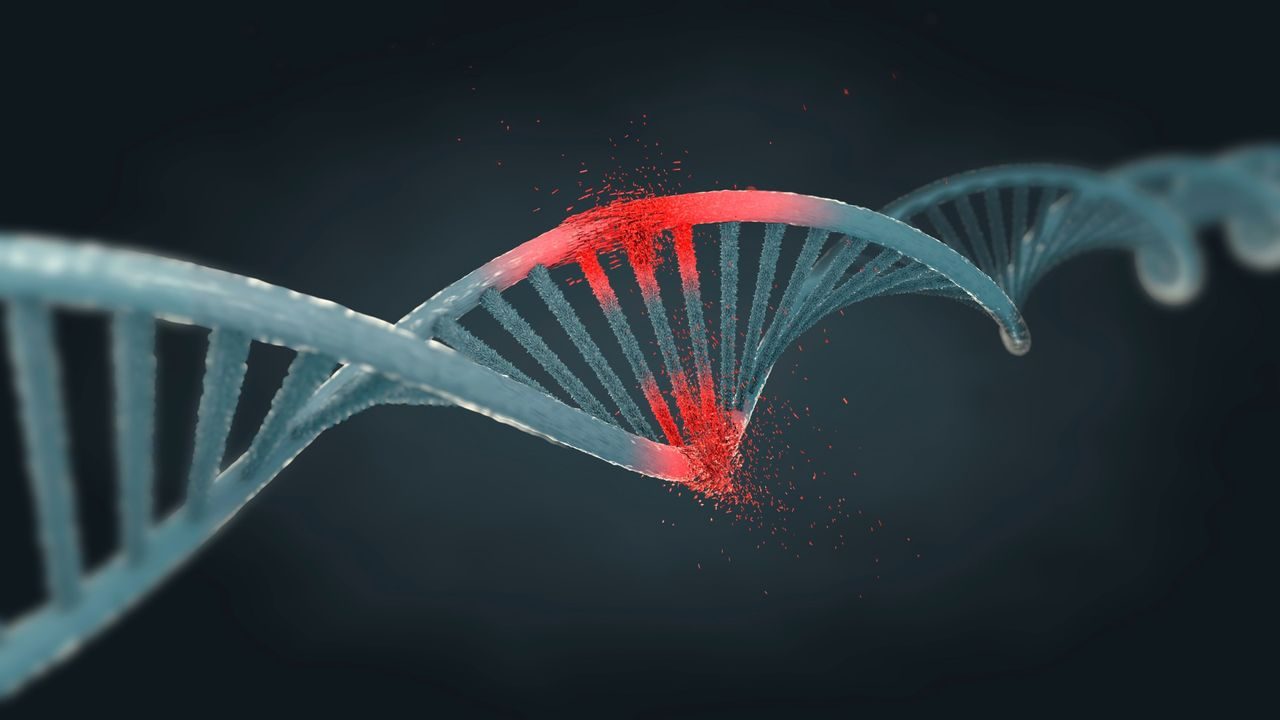
Just one DNA letter — out of approximately 2.8 billion — was enough to completely redirect the sexual development of female mouse embryos, causing them to grow male genitalia and testes. That is the striking finding from a new study that is reshaping what scientists thought they understood about how biological sex is determined at the genetic level.
The discovery, led by senior study author Nitzan Gonen, a senior investigator involved in the research, demonstrates that sex determination is not simply a matter of having XX or XY chromosomes. It can hinge on something far more precise — a single point in the genome, a solitary genetic “letter” that, when altered, sends the entire developmental blueprint in a different direction.
“This is a remarkable finding because such a tiny change — just one DNA letter out of ~2.8 billion — was enough to produce a dramatic developmental outcome,” Gonen said, according to the source reporting on the study.
What the Scientists Actually Did
Researchers worked with female mouse embryos, targeting a specific stretch of DNA. By tweaking just one nucleotide — the basic chemical unit that makes up a DNA sequence — they triggered the development of male sex organs where female anatomy would normally form.
To put the scale of that change in perspective: the mouse genome contains roughly 2.8 billion of these DNA letters. Changing one of them produced what the researchers describe as a dramatic developmental outcome. That is the equivalent of changing a single character in a document hundreds of millions of pages long and watching the entire story rewrite itself.
This is not a story about gene editing in the broad sense most people imagine — swapping out whole genes or deleting large sections of DNA. This is something far more precise, and in many ways, far more surprising.
Why This Finding Matters Beyond the Lab
For decades, the conventional understanding of biological sex has centered on chromosomes — XX for female, XY for male. But the biology has always been more complicated than that simple shorthand suggests. Conditions exist in humans where chromosomal sex does not align with anatomical development, and scientists have long suspected that regulatory regions of DNA — stretches that control how and when genes are switched on or off — play a critical role.
This study adds powerful new evidence to that picture. It suggests that the developmental pathway toward male or female anatomy is not locked in by chromosomes alone. Instead, it can be influenced by extraordinarily small changes in the regulatory code that governs gene activity.

That has real implications for understanding a range of conditions in humans, including differences of sex development (sometimes called intersex conditions), where anatomy does not follow the expected chromosomal pattern. Research like this helps explain the biological mechanisms that make such variation possible — and more common than many people realize.
The Science Behind a Single DNA Letter Change
Not all DNA encodes proteins directly. Large portions of the genome serve as regulatory regions — stretches that act like switches, telling other genes when to turn on or off during development. Scientists believe the single DNA letter altered in this study sits within one of these regulatory regions, affecting how nearby genes behave during a critical window of embryonic development.
When that one letter was changed in the female embryos, the downstream effect was significant enough to redirect the entire trajectory of sex organ development toward a male pattern.
| Key Detail | Confirmed Information |
|---|---|
| Subject of the study | Female mouse embryos |
| What was changed | A single DNA letter in a specific stretch of DNA |
| Total genome size (mouse) | Approximately 2.8 billion DNA letters |
| Outcome observed | Development of male genitalia and testes |
| Senior study author | Nitzan Gonen, senior investigator |
| Source of reporting | Live Science |
What This Tells Us About Sex Determination
One of the most significant takeaways from this research is how finely tuned — and how fragile — the process of sex determination actually is. Development does not simply follow a fixed script based on chromosomes. It is an active, dynamic process that depends on precise molecular signals firing in the right sequence at the right time.
A single misstep in that sequence, even something as small as one DNA letter in the wrong position, can redirect the outcome entirely. That is both a scientific revelation and a reminder of how complex human biology truly is beneath the surface.
Researchers in this field have long worked to identify the specific regulatory regions that govern sex development, and findings like this one help pinpoint exactly where those critical control points are located in the genome.
Where This Research Goes From Here
While this study was conducted in mice, mouse models are widely used in genetics research precisely because the fundamental mechanisms of development are highly conserved across mammals. Findings in mice frequently offer meaningful insights into how similar processes work in humans.
The next steps for researchers will likely involve identifying whether equivalent regulatory regions exist in the human genome, and whether similar single-letter variations might help explain some of the natural variation in human sex development that occurs outside chromosomal norms.
This research does not offer immediate clinical applications, but it significantly advances the basic scientific understanding of how sex is biologically determined — and why that determination is more nuanced than a simple XX versus XY framework has ever been able to capture.
Frequently Asked Questions
What did scientists change in the female mouse embryos?
Scientists altered a single DNA letter within a specific stretch of DNA in female mouse embryos, triggering the development of male genitalia and testes.
How large is the mouse genome compared to the change that was made?
The mouse genome contains approximately 2.8 billion DNA letters. The researchers changed just one of them to produce the observed outcome.
Who led this research?
The senior study author is Nitzan Gonen, described as a senior investigator on the project.
Does this mean chromosomes don’t determine biological sex?
The research suggests that sex determination is more complex than chromosomes alone — single regulatory DNA changes can dramatically redirect development, even in embryos with female chromosomes.
Does this research apply to humans?
The study was conducted in mice. While mouse models are commonly used to understand mammalian biology, direct application to humans has not yet been confirmed by this research.
What is the broader significance of this finding?
It helps explain how differences in sex development can arise from extremely small genetic variations, potentially shedding light on conditions where anatomy does not follow the expected chromosomal pattern.




Leave a Reply