
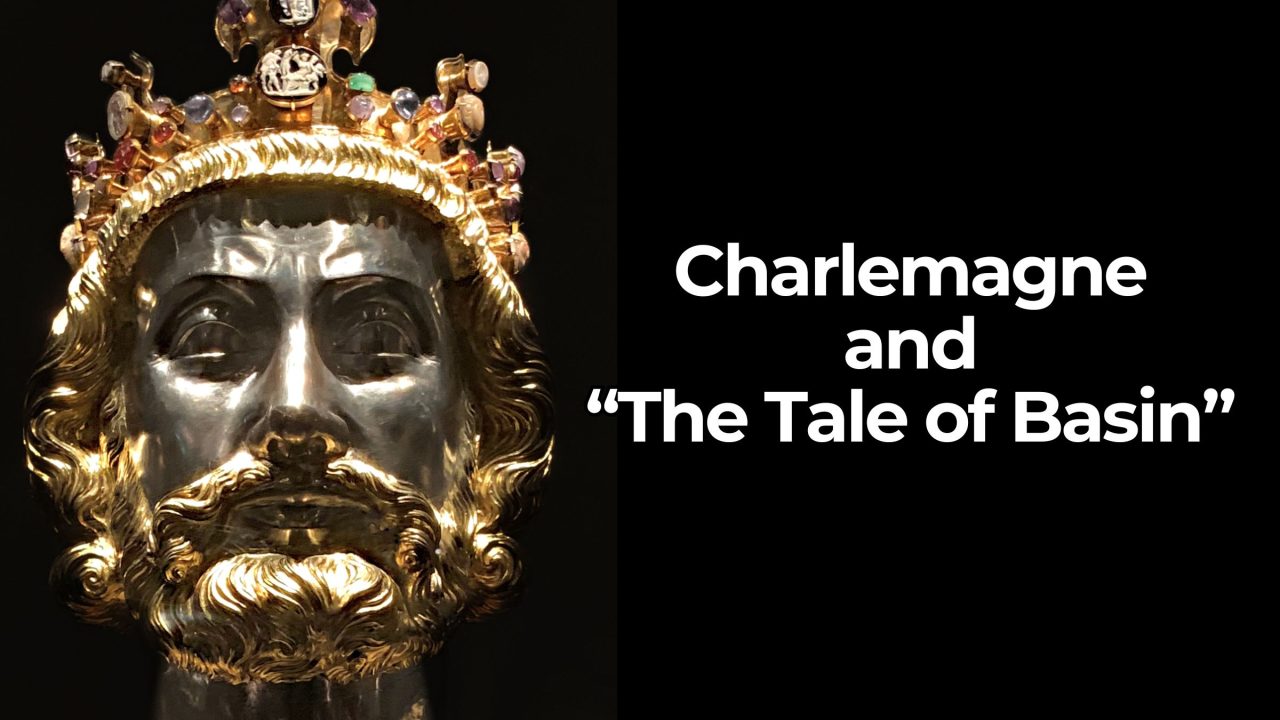
What if the most celebrated ruler of the medieval world was once cast in a story as a common thief? That is exactly the premise of a curious tale preserved in ancient sagas — and it reveals a surprisingly human side of Charlemagne, the emperor history remembers as the “Father of Europe.”
Charlemagne, who ruled from 800 to 814, is one of the most towering figures of the Middle Ages. He united Western Europe for the first time since the fall of the Roman Empire, and his legacy inspired dozens of French chansons de geste — epic poems celebrating heroic deeds. But not every story told about him was a straightforward tribute. Some were moral tales, strange and playful, designed to teach as much as to entertain.
One of those tales, known as “The Tale of Basin,” puts the great emperor in a role no one would expect: that of a thief, apparently instructed to steal. The original French manuscript has been lost to time. But the story survived — preserved in a thirteenth-century Norse text and in German translations — and it offers a window into how medieval storytellers used even their greatest heroes to explore questions of virtue, obedience, and power.
How Charlemagne Became a Legend Beyond France
The stories of Charlemagne and his knights did not stay within French borders for long. From their origins in Old French literature, these tales spread across Europe, translated into multiple languages and adapted for new audiences at royal courts from Scandinavia to the German-speaking lands.
One of the most significant vehicles for this transmission was the Karlmagnús saga, a thirteenth-century Old Norse compilation of Charlemagne stories. This is where “The Tale of Basin” survives today, long after the French original disappeared.
The deliberate effort to translate and circulate these stories was not accidental. According to scholar Liliane Irlenbusch-Reynard, writing in her 2011 work Translations at the Court of Hákon Hákonarson: A Well-Planned and Highly Selective Programme, monarchs like Norway’s King Hákon IV — who ruled from 1217 to 1263 — commissioned these translations for very specific reasons. It was partly about demonstrating proper courtly behavior and values. But it was also about cultural prestige: matching the great literary courts of England and France, which were producing celebrated romances and poems for their noble patrons.
Writers like Marie de France, active between roughly 1160 and 1215, and Chrétien de Troyes, who wrote in the twelfth century, were setting the standard for courtly literature across Europe. Norse and German courts wanted to be part of that conversation — and Charlemagne’s stories gave them the material to do it.
Charlemagne as a Model King — and an Unlikely Thief
In medieval literary culture, Charlemagne occupied a role similar to that of King Arthur. He was not just a historical figure but an ideal — a model of kingship, courage, and Christian virtue that later rulers were expected to admire and emulate.
That makes “The Tale of Basin” all the more striking. Placing a figure of such symbolic weight into the role of a thief — even within a story framework — was a bold narrative choice. Tales like this one were moral in nature, using unexpected scenarios to probe questions that mattered deeply to medieval audiences: What does a king owe his subjects? What does obedience require? Where does virtue end and compromise begin?
The survival of the tale in the Karlmagnús saga, despite the loss of its French original, speaks to how seriously these stories were taken. Translators and scribes preserved them not merely as entertainment but as a form of cultural and ethical instruction.
Key Facts About the Medieval Charlemagne Literary Tradition
- Charlemagne ruled as Frankish emperor from 800 to 814 and is known as the “Father of Europe” for uniting Western Europe after the Roman Empire’s fall.
- His legendary deeds inspired dozens of French chansons de geste — epic songs of heroic deeds.
- “The Tale of Basin” survives in the thirteenth-century Karlmagnús saga and in German translations, though the original French manuscript has been lost.
- Norway’s Hákon IV (r. 1217–1263) commissioned translations of these French works as part of a deliberate cultural programme.
- Scholar Liliane Irlenbusch-Reynard documented this translation effort in her 2011 study of Hákon’s court.
- Key French literary figures of the era included Marie de France (active c. 1160–1215) and Chrétien de Troyes (active twelfth century).
| Figure | Role | Period |
|---|---|---|
| Charlemagne | Frankish Emperor; subject of chansons de geste | r. 800–814 |
| Hákon IV of Norway | Commissioned translations of Charlemagne stories | r. 1217–1263 |
| Marie de France | French poet; model for courtly literature | c. 1160–1215 |
| Chrétien de Troyes | French romance writer; model for courtly literature | Active 12th century |
| Liliane Irlenbusch-Reynard | Modern scholar documenting Hákon’s translation programme | Published 2011 |
Why These Stories Still Matter
It might be tempting to treat these medieval tales as curiosities — relics of a distant world with little connection to the present. But the questions they raised are anything but obsolete. How should power be exercised? What moral obligations come with authority? What happens when a great leader is asked to do something that seems beneath — or against — his character?
The Charlemagne of the chansons de geste was a mirror held up to real rulers. Kings who read or listened to these stories were meant to see themselves in the emperor’s choices — and to be guided by them. A tale that puts Charlemagne in the role of a thief is not mocking him. It is testing him, and by extension, testing the audience.
The fact that these stories crossed borders so readily — from French manuscripts to Norse sagas to German poems — also tells us something important about medieval Europe. Ideas about kingship, virtue, and heroism were not confined to one culture. They traveled, adapted, and took root wherever there were courts ambitious enough to cultivate them.
What Survives and What Has Been Lost
The case of “The Tale of Basin” is a reminder of how fragile the written record of the Middle Ages truly is. The original French text is gone. What remains exists only because translators at distant courts — working on the orders of kings like Hákon IV — thought these stories worth preserving in new languages.
Scholars continue to piece together the full picture of the Charlemagne literary tradition from surviving manuscripts in Norse, German, and other languages. Each recovered text adds another layer to our understanding of how the medieval world thought about its greatest heroes — and what it expected of its rulers.
The story of an emperor told to become a thief may be lost in its original form. But the questions it raised have never really gone away.
Frequently Asked Questions
Who was Charlemagne, and why is he called the “Father of Europe”?
Charlemagne was a Frankish emperor who ruled from 800 to 814 and united Western Europe for the first time since the Roman Empire, earning him the title “Father of Europe.”
What is “The Tale of Basin”?
It is a medieval story featuring Charlemagne in the unexpected role of a thief. The original French manuscript has been lost, but the tale survives in the thirteenth-century Norse Karlmagnús saga and in German translations.
What is the Karlmagnús saga?
The Karlmagnús saga is a thirteenth-century Old Norse compilation of stories about Charlemagne and his knights, which preserved several tales — including “The Tale of Basin” — after their French originals were lost.
Why did King Hákon IV of Norway commission translations of French Charlemagne stories?
According to scholar Liliane Irlenbusch-Reynard, Hákon IV used these translations to demonstrate proper courtly values and to match the literary prestige of the great courts of England and France.
Who were Marie de France and Chrétien de Troyes?
Marie de France (active c. 1160–1215) and Chrétien de Troyes (active twelfth century) were influential French writers who produced poems and romances for noble patrons, setting the standard for courtly literature across medieval Europe.
Are the original French manuscripts of all Charlemagne stories still available?
No — some, including the original French version of “The Tale of Basin,” have been lost entirely and are known today only through translations into other languages such as Old Norse and German.


Leave a Reply